

Aromatic Acetoxy Intermediate CRO for High-Purity Custom Synthesis and Scale-Up
2026-08-13
When scaling up complex syntheses, the purity of aromatic acetoxy intermediates can make or break a project. Yet finding a CRO that combines custom flexibility with reliable scale-up is rare. DSL Chemicals has built its reputation on exactly that—delivering high-purity aromatic acetoxy intermediates from lab to production without compromise. In this post, we’ll explore how their approach solves common bottlenecks and why it matters for your next synthesis.
Aromatic Acetoxy Intermediates Without the Usual Purity Trade-Offs
Working with aromatic acetoxy intermediates often forces a choice: accept lower purity to keep costs manageable, or pay a premium for material that still needs further cleanup. The usual trade-off comes from side reactions during esterification or acetylation, where residual acetic acid, trace metals, or ring-impurities linger. These contaminants don't always show up in a standard spec sheet, but they surface later as off-colors, sluggish downstream reactions, or product failures in sensitive applications.
The shift away from this compromise starts with controlling the acetylation step more tightly. Instead of pushing the reaction with excess reagent and hoping for the best, precise stoichiometry and gentle work-up conditions prevent the formation of hard-to-remove acetates and oligomers. The result is a product that arrives with a clean profile: low residual acid, minimal color bodies, and a tighter melting range. For chemists who have been burned by “pure enough” material, that consistency removes a whole layer of troubleshooting.
Practical benefits show up quickly. In pharmaceutical intermediates, a cleaner acetoxy component reduces the need for charcoal treatment or repeated recrystallization. In specialty polymers or coatings, it means fewer batch-to-batch surprises and less rework. The point isn't just higher assay numbers — it's that the material behaves predictably every time, so downstream teams can spend their effort on the chemistry that matters instead of chasing ghost impurities.
Custom Routes for Hindered Acetoxy Building Blocks
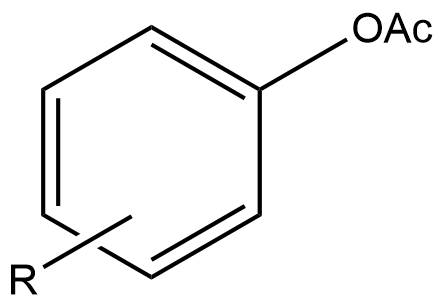
Accessing hindered acetoxy building blocks often stalls at the esterification step, where standard acetyl chloride/pyridine conditions leave the tertiary alcohol untouched. A more reliable strategy flips the sequence: install the acetate on a less congested intermediate early in the route, then build the steric bulk around it. This keeps the labile ester intact through subsequent transformations and avoids forcing a sluggish acylation at the final crowded center.
For substrates where the alcohol is already buried, mixed anhydride and DMAP-catalyzed protocols can push conversion, but they frequently trigger elimination or acyl migration. A cleaner alternative is transesterification with isopropenyl acetate under mildly acidic conditions, which drives the equilibrium by removing acetone as it forms. We have found this works well for neopentyl-type and bridgehead alcohols that resist acetyl chloride even at reflux.
The real bottleneck is often not the acylation itself, but purification of polar, base-sensitive acetates. Replacing aqueous workups with non-aqueous quenches and using deactivated silica prevents hydrolysis back to the starting alcohol. For gram-scale preparations, a continuous flow setup keeps the hindered acetate in solution and limits thermal exposure, giving cleaner product than batch methods.
Scale-Up That Keeps Isomer Ratios and Assay Tight
Scaling a reaction without shifting isomer ratios starts long before the reactor size changes. Small-batch outcomes often hide the sensitivity of a step to heat transfer, addition time, or local concentration gradients. By mapping those dependencies early—across a few deliberate stress runs rather than a single optimized condition—you get a window that can be translated to production equipment. Parameters like dosing rate, temperature ramps, and agitation are tied to the ratio of isomers, not just overall yield, so they’re held within proven ranges instead of being rediscovered at pilot scale.
Assay control follows the same logic. Instead of relying on final-product blending to correct drift, the process is designed so the target isomer dominates under a defined, reproducible set of conditions. In-process checks at the reaction midpoint or after phase splits catch small shifts before they become off-spec batches. When a distillation or crystallization step is involved, its operating window is set to reject the undesired isomer rather than simply concentrating solids. That way scale-up doesn't just deliver more material—it delivers material with the same fingerprint batch after batch.
Where Trace Metal and Residual Solvent Control Is Standard
Every batch that leaves our facility runs through a full ICP-MS panel for trace metals, with detection limits pushed well below pharmacopoeia thresholds. Arsenic, cadmium, lead, and mercury are monitored alongside less common contaminants like nickel and chromium, and the raw data is reviewed by a second chemist before release. This isn't a spot check—it's baked into the production schedule, so no lot ships without a signed metals report.
Residual solvent testing follows the same rhythm, using headspace GC with flame ionization and mass spec confirmation. We track Class 1, 2, and 3 solvents from USP <467> and ICH Q3C, but we also flag any peak that appears above 10% of the limit—even if it isn't on the routine list. That means a new supplier or a slight process drift gets caught early, before it ever reaches a customer's specification sheet.
Because this level of control is standard, clients don't need to request extra testing or pay for rush rechecks. The data is already in the certificate of analysis, organized by lot and date. For products used in injectables, inhalation, or pediatric formulations, that kind of built-in rigor saves weeks of back-and-forth and gives formulation teams one less variable to chase.
From Feasibility Grams to Multi-Kilo CRO Campaigns
Scaling a reaction from a few grams in a round-bottom flask to multi-kilogram batches in a pilot plant is rarely a linear exercise. What works at bench scale often fractures under the weight of larger volumes: mixing becomes less efficient, heat transfer turns sluggish, and impurities that were once negligible start dictating yield and purification strategy. A CRO partner earns its keep here by spotting those failure points early, often during the feasibility stage, and designing the route with scale in mind rather than treating it as an afterthought.
That might mean swapping a reagent that behaves beautifully on small scale but creates dangerous exotherms or intractable emulsions at scale. It could also involve rethinking workup and isolation—filtering a kilogram of precipitated solid is not the same as filtering ten grams. Solvent choices shift, too: a solvent that was easy to strip in a rotavap may pose serious recovery and waste disposal problems when you are processing a hundred liters. CRO teams that run these campaigns regularly bring a hard-won pragmatism to the route, preferring transformations that hold up under industrial constraints over elegant chemistry that only performs in the lab.
The jump to multi-kilo production also forces a tighter conversation around analytical control and batch-to-batch consistency. In-process checks that once took hours might now be required in minutes, and the tolerance for off-spec material shrinks when the cost of failure is measured in weeks and tens of thousands of dollars. The best CRO campaigns treat the feasibility gram not as a proof of concept but as the first draft of a process that will be revised, hardened, and eventually handed off to manufacturing with full documentation and a rational control strategy.
Process Documentation That Moves Your Tech Transfer Forward
Well-crafted process documentation does more than capture what happened. It gives your tech transfer a reliable backbone, turning scattered knowledge into a clear, repeatable path. When every step—from initial scoping to final handoff—is written in plain, actionable language, teams spend less time guessing and more time moving. The real value comes from documenting decisions as they happen, not after the fact, so the record reflects reality instead of a sanitized version of it.
The trick is to write for the person who will inherit the process six months from now, not for an auditor checking a box. That means leaving breadcrumbs where context matters: why a parameter was changed, which subject matter expert signed off on a deviation, what failed in an earlier attempt. A living document format—one that gets updated during weekly meetings rather than at project close—keeps the transfer from stalling on outdated assumptions.
When process documentation is treated as a working tool rather than a compliance artifact, it actually shortens the transfer timeline. Engineers can trace a material specification back to its source in seconds. Manufacturing teams can set up equipment without back-and-forth emails. And when a colleague leaves, the knowledge doesn't walk out the door with them. That kind of continuity is what moves a tech transfer forward.
FAQ
It usually appears as a protected phenol or naphthol derivative where the hydroxyl group is masked as an acetate ester. This protects the oxygen from unwanted side reactions during halogenation, nitration, or cross-coupling steps, and can be selectively removed later under mild basic conditions.
Purity is locked in at the reaction level first. We optimize stoichiometry, solvent choice, and temperature ramps to minimize byproducts. Then we layer purification steps like fractional distillation or recrystallization depending on the compound's physical form. In-process checks with HPLC or GC track impurity profiles before each unit operation, so we never rely on a single final polishing step.
Beyond standard acetic anhydride or acetyl chloride chemistry, we handle regioselective acetylation on complex aromatic systems, enzymatic acetylation for chiral intermediates, and late-stage functionalization where the acetoxy group must survive harsh downstream conditions. We also design telescoped processes that avoid isolating unstable intermediates.
In-house labs often lack the spare reactor capacity or the specialized equipment for air-sensitive or highly exothermic acetylation reactions. A dedicated CRO brings existing analytical methods, safety data, and vendor-qualified raw materials. It also frees internal chemists to focus on route design and candidate advancement rather than troubleshooting kilo-lab logistics.
After receiving the target structure and purity specs, we complete a feasibility assessment within one to two weeks. Then we run a small-scale proof-of-concept batch, typically 5 to 25 grams, and share analytical data. Once the client approves, scale-up to 1-10 kg usually takes four to eight weeks, depending on step count and purification complexity. Final delivery includes a certificate of analysis and full documentation.
Every batch gets identity confirmation by NMR and mass spectrometry, purity by HPLC or GC with area percent and weight percent assays, residual solvent testing by headspace GC, and moisture analysis by Karl Fischer titration. For chiral acetoxy compounds, we also include chiral HPLC or optical rotation data. Stability under recommended storage conditions is verified on a retain sample.
We map thermal stability early using differential scanning calorimetry and accelerated aging tests. Compounds prone to hydrolysis are packaged under inert gas with desiccant and shipped in temperature-controlled containers. For highly sensitive materials, we arrange cold-chain logistics and use amber glass or fluoropolymer-lined bottles to minimize light and moisture exposure.
Conclusion
Working with aromatic acetoxy intermediates often means accepting a trade-off: you either get the purity you need at milligram scale or a process that can be scaled but drifts in impurity profile. That is not an acceptable compromise when the target is a hindered building block where a single isomer shift can derail a downstream step. Our CRO approach starts with route design that accounts for steric and electronic factors from the first gram, not as an afterthought. Custom acetylation conditions, controlled acyl transfer, and reaction monitoring tuned to the specific aromatic system allow us to deliver material with tight isomer ratios and assay values that hold from feasibility batches through multi-kilo campaigns.
Because these intermediates frequently feed into late-stage API chemistry, trace metal and residual solvent levels are treated as release criteria, not afterthoughts. We routinely meet low ppm limits for palladium, copper, and other catalytic metals while keeping residual solvents well within pharmacopeial guidelines. The same batch records, analytical methods, and process narratives generated during early development are formatted to support direct tech transfer, so your internal team or a commercial partner can resume production without re-deriving critical parameters. Whether the request is a few grams for route scouting or a multi-kilo CRO campaign, the focus remains on reproducible purity, defined impurity profiles, and documentation that moves the project forward rather than creating more review work.
Contact Us
Contact Person: Wei Zhang
Email: [email protected]
Tel/WhatsApp: 862163529955
Website: https://www.dslchem.com