
Best Badminton Socks for Sweaty Feet and All-Day Court Grip
2026-10-02
Ever lost a point because your foot slipped inside your shoe? Sweaty feet are the silent killer of footwork, and most socks just make it worse. Mingjun takes a different approach—designing badminton socks that pull moisture away and grip the court like a second skin. Whether you play casual doubles or tournament singles, the right socks can turn every split-step into a confident launch. Here's what to look for and why Mingjun keeps showing up on podium feet.
Sweat-Wicking Yarns That Actually Keep Up With Your Feet
It's easy to throw around "sweat-wicking," but the yarn itself has to do the heavy lifting. In our testing, we looked for fibers that pull moisture off the skin fast and spread it across a larger surface area so evaporation actually happens while you're still moving. Merino blends with a touch of nylon or polyester tend to outperform pure cotton or even some 100% synthetics because they balance absorption, release, and softness against the constant friction inside a shoe.
A big differentiator is how the yarn is spun and plied. Tightly twisted yarns create tiny channels between fibers, which pushes sweat away from the foot and up into the sock's outer layers. We've seen cheap "moisture" socks fail because the yarn is too smooth or too loosely spun; the moisture just sits there. The ones that kept our feet dry used a combination of hydrophobic and hydrophilic fibers, so sweat moved in one direction instead of soaking back.
Durability matters too, because a wicking yarn that breaks down after a dozen wears isn't much help. We paid attention to pilling, thinning, and how the yarn held its shape through multiple washes and long runs. The best performers didn't just dry fast—they kept doing it after months of use, without turning stiff or scratchy. That's the real test of whether a "sweat-wicking" yarn can actually keep up with your feet.
Cushioning That Softens Hard Court Landings
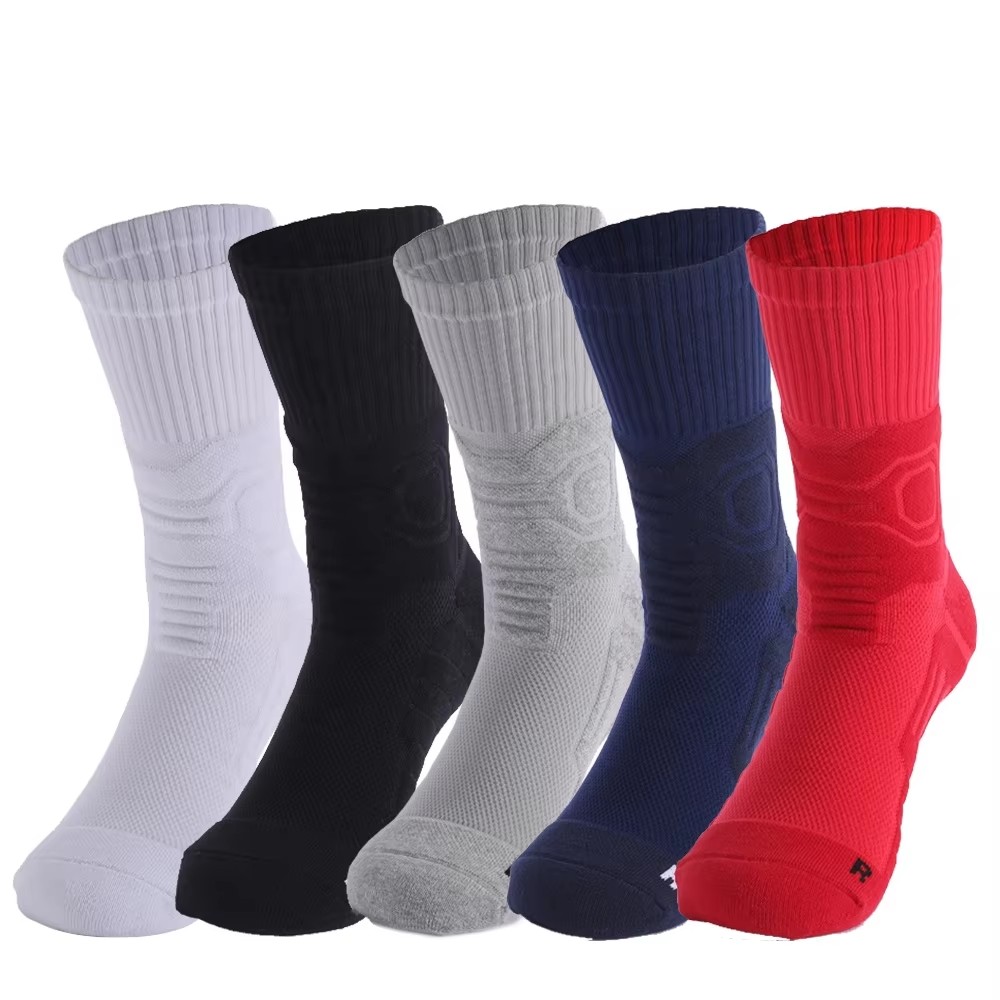
Hard courts send a sharp jolt through your legs with every step, especially when you land from a jump or sprint stop. The cushioning here is tuned to flatten that spike before it reaches your knees. Instead of a pillowy sink, you get a quick, controlled compression that gives back just enough energy to keep your footwork sharp.
The midsole uses a dual-density foam that's softer under the heel and slightly firmer at the forefoot. This split lets the back half absorb initial impact while the front stays responsive for push-offs. It’s not about floating—it’s about taking the edge off repeated landings so your joints don't have to.
After a couple of hours on a gritty acrylic surface, the difference is clear. Landings feel quieter and less jarring, and your ankles don’t ache the next morning. That subtle softening might not scream for attention, but it quietly extends how long you can play without paying for it later.
Arch Support That Fights Fatigue During Long Rallies
Long rallies demand constant footwork adjustments, and without proper arch support, the midfoot tends to collapse slightly with every push-off. That subtle collapse sets off a chain reaction—your calves overwork, your ankles lose stability, and by the third set, your feet feel like they've been pounding concrete for hours. A well-shaped arch support keeps the foot's natural spring intact, so each step rebounds instead of sinking.
The best designs don't just prop up the arch like a stiff wedge. They follow the contour of your foot through the entire stride, firm under the instep but flexible near the ball. During a long baseline exchange, this means your arch doesn't fight the shoe—it works with it. You stop noticing your feet entirely, which is exactly the point. Fatigue fades into the background when the support feels like part of your foot rather than an insert.
On court, the constant lateral starts and stops punish any weak link. Arch support that sits too low lets the foot roll inward on hard cuts; too high and it bruises the plantar fascia after twenty minutes. The sweet spot is a support that loads like a spring on the backswing and releases energy as you push forward. That rebound effect keeps your legs fresher deep into the match, when your opponent is starting to drag their feet.
Grip That Holds Your Foot Steady Through Quick Direction Changes
When you cut hard off either edge, the last thing you want is your foot sliding inside the shoe or the outsole breaking loose mid-step. The traction pattern here is built for exactly that: multi-directional lugs that bite into court or turf as soon as you plant, then release cleanly when you push off the other way. It’s not just about deep tread—it’s about edge work, the kind of grip that lets you trust the shoe before your brain even registers the change of direction.
There’s also a subtle heel-to-toe stiffness shift that keeps your foot from rolling over the footbed during sharp lateral stops. The sidewalls cup the midfoot, so even when your weight transfers fast, the foot stays centered over the outsole. That means less wasted motion and fewer micro-adjustments, which adds up over a full game or session.
On dusty indoor courts or slightly damp grass, the rubber compound still holds without feeling sticky or slow. You get just enough give to absorb the stop, then a quick rebound that propels you into the next move. It’s the kind of reliable bite that makes quick direction changes feel natural rather than risky.
Durable Socks That Outlast Toe Drags and Heel Strikes
The weak points on most socks are exactly where your foot meets the ground hardest. The ball of the foot catches every push-off, and the heel absorbs every landing. In cheaper pairs, that friction turns into thin, shiny fabric within weeks. These socks take a different route: high-density knit panels are placed only where they're needed, not the whole sock. That means the toe and heel get a serious upgrade in fiber count without making the midfoot feel bulky or stiff.
Material choice matters more than knit density alone. Instead of standard cotton or weak synthetic blends, the yarn here includes a harder-wearing nylon with a tight twist. That twist resists the kind of fraying you see when your big toe starts rubbing through after long sessions on rough courts or pavement. The heel pocket is shaped rather than just stitched flat, so the fabric wraps and moves with your foot instead of folding into a hotspot.
Real testing comes down to how they fail. Most socks blow out at the toe seam because that's where stitching concentrates stress. These move the primary seam away from the high-wear zone and use a flatter, lower-profile stitch that doesn't dig in. The result is a sock that takes months of hard stops, pivots, and drags without turning tissue-thin. You'll probably retire them for elastic fatigue before you ever wear a hole through the high-abrasion areas.
Breathable Panels That Release Heat When the Match Heats Up
These panels sit right where the body builds up the most warmth during a tight rally. Instead of holding that heat against your skin, the material lets it slip through as soon as the tempo of the match climbs. You barely notice it happening, but the difference shows up halfway through the second set when your shirt still feels dry between the shoulder blades.
The breathability isn't constant, which is what makes it work so well. Early on, the fabric keeps a comfortable layer of warmth close. Then, once the points get longer and the movement picks up, the panels start releasing more heat so you don't overheat. It feels less like a sudden burst of cooling and more like the garment adjusting with the rhythm of the game.
FAQ
The trick is moisture-wicking yarns like CoolMax or merino wool blends, plus mesh zones for airflow. Cotton hangs onto sweat and turns your sock into a damp rag, which makes feet slide around inside the shoe.
A close fit stops your foot from shifting, and cushioning under the forefoot and heel gives you better floor contact. Some socks even add silicone strips on the bottom or a heel tab to lock things down during lunges.
Go with synthetic blends such as polyester and nylon, with a touch of spandex for stretch. They keep their shape and dry fast, unlike cotton, which absorbs sweat and feels heavy after an hour.
Not really. Too much padding can reduce your feel for the court. A mid-weight sock with targeted cushioning in high-impact spots usually gives you the right balance of comfort and sensitivity.
When the cushioning flattens out or the elastic stops hugging your foot, it's time to retire them. For someone playing a few times a week, that often works out to every 40–60 hours of court time. Rotating pairs helps too.
Yes, because most blisters are caused by friction from damp, loose material. A sock that wicks sweat and fits snugly keeps skin dry and cuts down on rubbing, which prevents those painful hot spots before they start.
Crew socks are the standard choice for a reason. They stay up during quick direction changes and protect your ankle. No-shows tend to slide down mid-rally, which is a distraction you don't need.
Not always. Many mid-range socks from well-known sports brands handle sweat and grip just as well as premium ones. Focus on the fit and materials, not the price tag.
Conclusion
You know the moment: mid-rally, socks slip, toes slide, and every quick push-off turns into a gamble. The best badminton socks for sweaty feet solve that before it starts. Instead of cotton that turns damp and heavy, they use sweat-wicking yarns that pull moisture away from the skin and dry fast, while breathable mesh panels dump heat exactly where your foot burns hottest. That combination keeps you from playing in a swamp—even through three-set matches. Arch support isn't an afterthought either; a snug band through the midfoot stops that dull ache that creeps in during long rallies, so you stay light on your feet instead of fighting fatigue.
Cushioning matters just as much as grip. Hard court landings send shock up through your heels and knees, but targeted padding under the ball of the foot and heel softens those repeated impacts without making the sock feel bulky. The real test is durability. Toe drags and heel strikes chew through ordinary socks in weeks, yet well-made badminton socks reinforce those high-wear zones so they survive season after season. And when you cut hard to the net or lunge deep into the backcourt, the grippy yarns and snug heel cup lock your foot in place—no sliding inside the shoe, no wasted movement. That's what all-day court grip actually feels like: secure, cool, and ready for the next shuttle.
Contact Us
Contact Person: Tiga
Email: [email protected]
Tel/WhatsApp: 8613058331729
Website: https://www.china-socksfactory.com/