

Best Residual Current Transformer Options for Superior Electrical Safety
2026-08-16
Electrical safety isn’t just about circuit breakers and fuses—it’s about detecting the tiny leakage currents that often go unnoticed until it’s too late. Residual current transformers (RCTs) are the silent guardians in this equation, and choosing the right one can mean the difference between a close call and a catastrophe. In this guide, we’ll cut through the noise and highlight the best RCT options that truly deliver superior protection. Whether you’re upgrading an industrial panel or designing a smart home system, Xiasen brings a range of high-precision, reliable transformers that stand out in the field. But before we dive into the top picks, let’s explore what separates a mediocre RCT from a truly exceptional one—and why your next safety upgrade might depend on it.
Why a Transformer Built for Factories Fails in a Family Home
Industrial transformers are sized and wound for sustained three-phase loads that stay within a narrow band. A home runs mostly single-phase, and its draw swings from a few hundred watts to a spike of several kilowatts when an oven or dryer kicks on. That mismatch forces the core to operate far outside its designed flux range, so it hums, overheats, and delivers voltage that sags under modest demand.
The physical design compounds the problem. Factory units assume a ventilated, dust-controlled room with clearance for heat dissipation and scheduled maintenance. In a household, that same unit gets tucked into a closet or garage corner, surrounded by stored boxes and breathing in lint and humidity. Its cooling becomes inadequate, its terminals corrode, and the protective relays are not set for the quick-cycling nature of residential circuits.
Safety rules make the mismatch official. Industrial gear often relies on grounded three-phase separation and assumes trained personnel. A family home needs a lower touch-safe voltage, earth-leakage protection, and fail-safe behavior when a child touches a cover. A factory transformer offers none of that by default, so even a perfectly functioning industrial unit becomes a hazard when placed in a living space.
Toroidal vs. Split-Core Without the Marketing Jargon
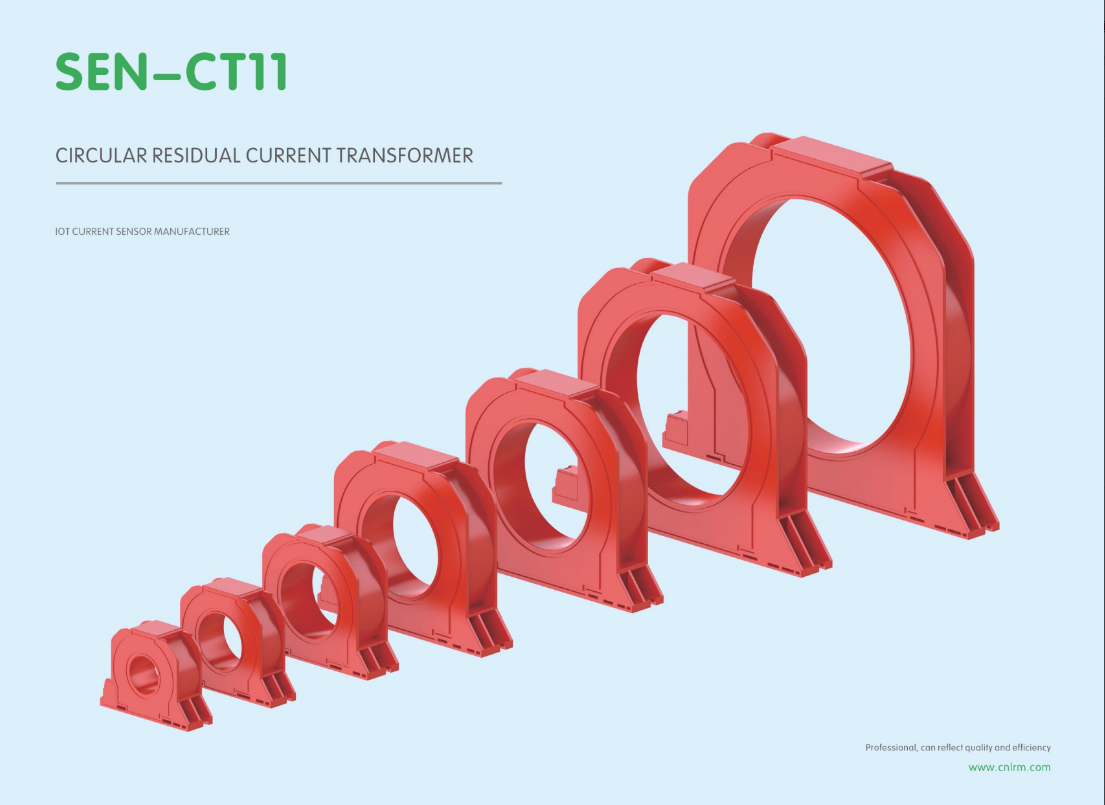
Toroidal current transformers wrap a solid iron ring around the conductor, meaning you have to disconnect the wire to install them. Split-core versions open up so you can snap them around an existing cable without breaking the circuit. The trade-off isn't just convenience—toroids typically deliver better accuracy and lower phase shift at light loads, while split-cores introduce a small air gap that can drift over time if the clasp wears down.
If you're metering a fixed panel where downtime is cheap, a toroid is the quiet workhorse: no hinges, no laminations separating, just a continuous magnetic path. But field retrofits almost always favor split-core because the labor savings dwarf any marginal accuracy hit. Just keep the mating surfaces clean and the clamp pressure consistent, and most split-cores will stay within 1% for years.
One thing nobody mentions: toroids are heavier per amp rating, and their solid core can pick up mechanical vibration that shows up as noise on the secondary. Split-cores, with their laminated halves, actually damp that a bit. So the right choice isn't about which is "better"—it's about whether you need to open the loop or not.
The Sensitivity Number That Prevents Nuisance Trips and Real Hazards
The number stamped on a residual current device is rarely chosen for comfort. At 30 mA, it sits just under the rough threshold where a shock can turn into cardiac arrest, while staying above the residual leakage that ordinary appliances produce as they age. That narrow band is what allows the device to interrupt a genuinely dangerous fault without punishing every minor earth leak from a damp cable or a worn heater element.
Crank that figure lower and nuisance tripping stops being an occasional annoyance and becomes a routine failure. Outdoor circuits after rain, office kitchens with stacked refrigeration, or even a few LED drivers can leak enough current to nudge a 10 mA device into action. The danger is that someone eventually replaces it with something far less sensitive, or starts bypassing it altogether, and the original protection quietly disappears.
Push the setting too high, though, and the hazard shifts from inconvenience to injury. A 300 mA device may catch the kind of persistent leakage that overheats connections, but it won't reliably save a person, because the current needed to stop a heart is considerably lower than its trip point. The right sensitivity number, then, is not a badge of caution; it is a calculated match between circuit conditions, expected leakage, and the worst outcome you are willing to live with.
Harmonic Loads Are Everywhere—Your Selection Should Reflect That
Walk into any modern facility and you'll find harmonic currents quietly flowing through the lines. Variable frequency drives, LED lighting, UPS systems, and even the chargers for electric vehicles all inject distortion into the network. The moment you add a capacitor bank without considering the existing harmonic profile, resonance can turn a minor issue into a serious overvoltage event. Selecting a power factor correction solution isn't just about choosing the right kvar anymore; it's about understanding what's already on the bus.
A conventional capacitor bank might handle a clean sinusoidal load without breaking a sweat, but feed it a steady diet of 5th and 7th harmonics and the impedance drops dangerously low. The result is overheating, blown fuses, and capacitor failures that keep maintenance crews busy. Detuned reactors shift the resonant frequency below the dominant harmonic order, protecting the capacitors while still delivering reactive power. Active filters, on the other hand, cancel out the harmonics directly. Each approach has its place, and the decision hinges on the specific harmonic spectrum you're dealing with.
Rather than treating harmonic mitigation as an afterthought, build it into the selection process from day one. Measure the total harmonic distortion, identify the dominant orders, and check for any existing resonance points. Then select equipment that can tolerate those conditions without derating or premature aging. The difference between a standard bank and a properly engineered solution often comes down to a few percentage points of THD—but those percentages determine whether your system runs smoothly for years or trips out on a hot summer afternoon.
Where You Mount and Wire It Changes Everything
Placement isn’t just a matter of convenience. The spot you choose changes how the unit breathes, how much noise it makes, and how easily you can reach the controls later. A clean run of cable can mean the difference between a setup that feels intentional and one that’s always fighting its own layout.
Wiring follows the same logic. Short, direct paths reduce clutter and the chance of interference, but they also limit where the device can sit. Longer runs give you freedom to hide the hardware, yet they demand more care with connections and strain relief. The best installs treat mounting and wiring as one decision, not two separate steps.
Once you see the relationship between position and cable flow, you stop forcing a product into a space and start shaping the space around it. That shift in thinking is what turns a basic setup into one that stays clean, reliable, and easy to live with.
Monthly Checks That Keep Your Safety Margin Intact
A safety margin only works if you check its edges every month. Start by pulling up your emergency fund balance and comparing it to three months of bare-bones living costs. If it has dipped below that line, schedule an automatic transfer to top it back up before the next billing cycle. Also scan last month's transactions for any failed or duplicate automated payments; those silent slips can quietly eat away at your cushion.
Then look at your credit lines and recurring charges. Log into each card and note the current utilization rate. If it creeps above 20 percent, hold off on large non-essential purchases until the balance drops. Check for subscriptions you forgot to cancel or price increases on services you rarely use. Even a five-dollar monthly leak becomes a sixty-dollar annual dent in your reserve.
Finally, do a quick insurance and investment pass. Confirm that your health, auto, and home policies still have deductibles you could cover without touching your emergency fund. If any beneficiary or coverage level no longer matches your situation, schedule the fix now, not after a claim. For investments, only rebalance when an asset class drifts more than five percentage points from your target; monthly tweaks usually create more friction than protection.
FAQ
Focus on the core material and its linearity at low currents. A high-permeability toroidal core with tight winding symmetry keeps false trips at bay while still catching genuine leakage. Also check the maximum continuous primary current and the temperature range; specs that look fine on paper can drift badly in a hot switchboard.
Because they can be fitted around existing live conductors without disconnecting the circuit. That saves downtime and avoids the risk of reterminating aging cables. The trade-off is a tiny drop in accuracy compared with a solid-core unit, but for most retrofit jobs the difference is negligible if the mating surfaces are clean and clamped correctly.
Not necessarily. Oversizing the transformer can reduce sensitivity to small leakage currents, because the core is designed for much larger primary currents. A 100 A unit works best for typical final circuits, while a 630 A unit belongs at the main incomer where the protection goal is different.
Check the relay's burden and the transformer's secondary output at the expected residual current. The transformer should stay well within its linear region at 10–30 mA for personal protection, and the relay's pickup setting should align with the core's accuracy class. Mismatched pairs often cause either dead zones or constant tripping.
Shielding prevents stray magnetic fields from nearby busbars or motors from coupling into the core and spoiling the residual signal. In crowded panels, a properly shielded transformer can be the difference between stable operation and random trips that nobody can reproduce.
Yes, you can pass all live conductors—including neutral—through the same core. The key is that the vector sum of currents should be zero under healthy conditions. You must not pass only the phase conductors if the neutral carries unbalanced current; that would create a false residual signal.
Leaving air gaps in split-core joints, tying the conductor off-center, or running a shielded cable's grounding wire back through the core all cause measurement errors. Even a small twist in the conductor inside the aperture can change the coupling enough to matter at low current levels.
If the load includes rectifiers, variable speed drives, or electronic ballasts, you need Class A detection for pulsating DC residual currents. A transformer built only for sinusoidal AC will not respond to the DC component, leaving a dangerous blind spot.
Conclusion
A residual current transformer that performs flawlessly on a factory floor often disappoints in a family home, and the root cause is rarely the component itself. Industrial settings assume steady loads, predictable cable routing, and a maintenance routine; residential panels are crowded, constantly modified, and packed with devices that leak current in irregular patterns. Toroidal and split-core designs address these conditions in distinct ways. The toroidal core surrounds the conductor completely, giving you stable readings and strong immunity to neighboring magnetic noise—ideal for new installations where you can route wires through the opening before termination. The split-core version, by contrast, opens around an existing cable, which saves you from dismantling live circuits. That convenience costs a little precision, but for many retrofit jobs it prevents a far more dangerous condition: leaving the old, insensitive transformer in place. Sensitivity selection is equally practical. A 30 mA residual operating current is the human-protection baseline; 300 mA units are better suited to fire prevention on circuits with unavoidable background leakage. Choosing the wrong tier does not just cause nuisance trips—it can lull you into bypassing protection altogether.
Harmonic loads are no longer rare. LED drivers, inverter-driven heat pumps, EV chargers, and variable-speed motors all push high-frequency currents onto residential wiring. A basic residual current transformer may respond unpredictably under that stress, either masking a real earth fault or crying wolf during a normal switching event. Look for a unit designed with a broad frequency response and low loss under harmonic conditions so the residual signal remains a true reflection of leakage to earth. Installation details are just as critical. Run the phase and neutral conductors through the same aperture, keep the secondary leads short and twisted, and route them away from noisy power cables. Reversing a connection or letting a stray earth wire pass outside the core can distort the reading enough to disable protection without any visible fault. Finally, build a quick monthly habit: press the test button to confirm the trip circuit, inspect for discoloration or loose terminals, and note any sudden change in background leakage. These small checks preserve the safety margin that separates a working residual current transformer from a false sense of security.
Contact Us
Contact Person: Liu Mengyang
Email: [email protected]
Tel/WhatsApp: 8618727589233
Website: https://www.cnlrm.com/en/