

China Automated Guided Vehicle: Driving the Future of Smart Logistics
2026-08-21
If you’ve ever wondered how packages move so quickly through China’s mega-warehouses, the answer often rolls quietly down the aisle on an automated guided vehicle. HANGCHA has been busy rewriting the rules of material handling—and the story is just getting started.
When Warehouses Learn to Drive: The Rise of Chinese AGV Fleets
A warehouse in Kunshan runs a night shift with zero lights on. Rows of squat, orange robots glide beneath steel racks, lifting them a few centimeters and ferrying them to picking stations where human hands do the final sort. No honking, no idling engines—just the soft whir of brushless motors and the occasional beep as two units negotiate right-of-way at an intersection. This is what it looks like when a building learns to move.
The shift didn't start with robots; it started with software that treats a warehouse floor like a city grid. Chinese AGV makers—Geek+, Quicktron, Hikrobot, among others—compete less on horsepower and more on traffic management: how many vehicles can share an aisle before throughput collapses, how quickly a bot can reroute after a spill, how gracefully it yields to a human with a pallet jack. The winning systems are the ones that make 200 robots feel like a single organism.
Price matters, too. A Chinese AGV often costs a third to half of a comparable European model, and deployment can happen in under a month. But the real draw is flexibility: a fleet can be reprogrammed overnight for a new product line or a flash sale, something fixed conveyor belts can't do. The trade-off is that you're betting on a relatively young company's software roadmap. For many operators squeezed by thin margins and tight labor, that's a bet worth making.
Beyond the Assembly Line: Unusual Places You’ll Find Smart Carts in China
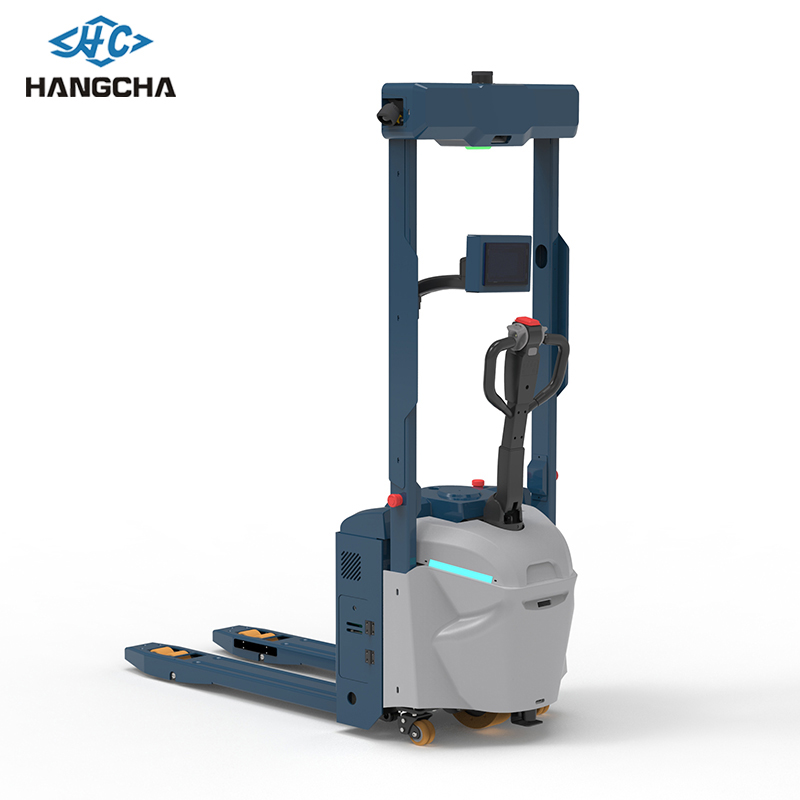
Walk into a Shanghai community hospital at 3 a.m., and you might see a knee-high robot cart gliding silently past the nurses’ station—no human pushing it, just a blinking light and a tray of blood samples. These aren’t the warehouse drones you’d expect; they’re hospital delivery carts that memorize elevator buttons, dodge wheelchairs, and even announce their arrival in soft Mandarin. What makes them unusual isn’t the tech, but where they’ve ended up: inside places designed for people, not pallets.
Meanwhile, in a Chengdu hotpot restaurant, a slim cart with a touchscreen rolls up to your table carrying raw beef slices and a bowl of sesame paste. It doesn’t take orders or chat—it just waits until a server unloads it, then scoots back to the kitchen. This same kind of smart cart shows up in hotel corridors delivering towels, in airports guiding lost passengers to gates, and even in a few public libraries, reshelving returned books after midnight. The thread connecting them? They all replace the dullest human errand, not the assembly-line worker.
Perhaps the strangest sight is at a tea plantation outside Hangzhou, where a solar-powered cart follows a picker along the rows, carrying baskets of fresh leaves and adjusting its pace to her stride. It’s not high-tech agriculture—it’s a pragmatic adaptation of a factory tool into a field companion. These deployments feel less like a robotics revolution and more like a quiet migration: smart carts moving out of the warehouse and into the rhythms of everyday Chinese life, one hallway, one table, one terraced slope at a time.
The Quiet Revolution in Chinese Logistics Hubs
The real story of China's logistics evolution is not unfolding in coastal megaports but in the quieter inland cities that now anchor the country's freight network. Zhengzhou, Chengdu, and Xi'an have converted their geographic disadvantages into operational advantages, building rail-to-road intermodal yards that bypass traditional bottlenecks. These hubs are less about spectacle and more about relentless small improvements: automated container handling, synchronized customs clearance, and warehouse layouts that shave hours off turnaround times.
What makes the shift revolutionary is the unusual willingness to share data across competing companies and municipal agencies. A truck entering the Chongqing logistics park triggers a chain of updates that reach rail operators, customs brokers, and inventory systems before the driver finishes parking. This quiet interoperability, more than any single megaproject, is changing how goods move from factory to consumer.
The new hubs also thrive on understated flexibility. Rather than betting on fixed corridors, they adjust routes and capacity month by month, responding to shifts in electronics, auto parts, and cross-border e-commerce. The result is a system that feels almost self-organizing—an unglamorous but deeply resilient layer of infrastructure that rarely makes headlines but keeps supply chains alive.
From Scripted Paths to Adaptive Swarms: How AGVs Are Getting Smarter
For years, automated guided vehicles moved like trams on invisible rails. Magnetic tape, embedded wires, or painted lines dictated every turn, and a single broken sensor or a spill across the lane could halt an entire shift. Adding a new pickup point meant physically re-laying tape and re-teaching the route, so flexibility was never part of the bargain.
The shift began when onboard lidar, stereo cameras, and inertial measurement units became cheap enough to mount on every unit. Instead of following a fixed path, each AGV now builds and refreshes a local map, then plans a route around obstacles in real time. A central fleet manager still assigns tasks, but the exact path, speed, and docking angle are decided by the vehicle itself.
The latest step is swarm coordination. Vehicles share near-miss events, congestion timestamps, and battery states over a mesh network, letting them negotiate intersections without waiting for a central server. If one aisle gets blocked, nearby units hear about it and reroute before they even see the obstacle. The result is a warehouse that behaves less like a timetable and more like a colony of ants: no single point of control, but a steady, adaptive flow.
Why Chinese Ports Are Trading Cranes for Autonomous Carriers
Walk through any major Chinese container terminal these days and the old rhythm of towering quay cranes swinging boxes onto trucks is fading. Instead, flat, driverless vehicles glide silently between the berth and the yard, shuttling containers with a precision that seems almost unnatural. The shift isn't about replacing one machine with another—it's about rethinking the entire flow of cargo from ship to stack. Cranes still matter for lifting, but the horizontal movement, the part that used to clog up with idling trucks and exhausted drivers, is now handled by fleets of autonomous carriers that never get tired, never miss a slot, and never need a shift change.
The economics push hard in this direction. Labor costs at Chinese ports have climbed steadily as younger workers shy away from grueling, round-the-clock terminal jobs. Every human-driven truck in the loop introduces variability—waiting at intersections, queuing behind a slow loader, taking a wrong turn. Autonomous carriers, guided by buried magnetic tape, lidar, or a mesh of sensors, move in tight, choreographed paths that squeeze more moves per hour out of the same footprint. Terminals like Shanghai's Yangshan or Qingdao's fully automated berth report double-digit gains in throughput per hectare once the last manned vehicle leaves the apron. That's not incremental improvement; that's a different operating system.
There's also a quieter reason many don't talk about: resilience. A port that relies on thousands of human drivers grinds to a halt during holidays, weather warnings, or even a local flu outbreak. An autonomous fleet, once integrated with the terminal's operating system, can run at 70 or 80 percent capacity through a typhoon alert, with drivers monitoring from a control room miles away. For global shipping lines facing relentless pressure to cut port stay times, a Chinese terminal that promises 24/7 container movement without union slowdowns or labor shortages becomes a hard offer to refuse. So the cranes aren't disappearing—they're just no longer the center of the show.
The Unsung Heroes of Same-Day Delivery: AGVs in Last-Mile Sorting
While delivery vans and couriers get the visible credit, the real pressure point in same-day shipping happens hours earlier inside sorting centers. That's where automated guided vehicles (AGVs) slip between crowded conveyor lines and loading docks, carrying bins of parcels that have to be grouped by neighborhood, not just by zip code. A single missed turn or delayed handoff can push a hundred packages past the cutoff for an afternoon route. These machines don't work from a fixed track; they read floor markers and adjust paths on the fly, which matters when a truck arrives late and the entire outbound schedule gets compressed.
Last-mile sorting is less about brute speed than about sequencing. AGVs are often assigned to the least glamorous tasks: shuttling empty totes back to packing stations, pulling misrouted items off a spur, or staging fragile packages in a temperature-controlled corner before they're loaded. Because they operate in tight loops, they accumulate a kind of quiet expertise about which dock door tends to jam, which chute overflows at 4 p.m., and which barcode label curls too easily. That granular knowledge lets them keep the flow moving when human supervisors are stretched thin.
What makes these systems feel almost invisible is that they rarely make headlines unless something breaks. Yet their real contribution is absorbing variability. Same-day delivery promises rest on the assumption that sorters can reset within minutes after a surge or a weather delay. AGVs do that without fatigue, swapping between tasks in the time it takes a forklift operator to cross the floor. For the crews who work alongside them, they're less a replacement than a buffer—handling the repetitive retrievals so people can focus on damaged boxes, address disputes, and the thousand small judgments that still decide whether a parcel actually arrives on time.
FAQ
China's warehouse and factory floors increasingly rely on AGVs to move materials around the clock. Unlike fixed conveyors, they can be rerouted through software, which lets e-commerce and manufacturing operations absorb seasonal spikes without reconfiguring entire facilities.
Many systems now combine LiDAR, visual SLAM, and inertial navigation instead of following magnetic tape. This lets vehicles build live maps and adjust paths when pallets, racks, or temporary workstations appear, so changes on the floor do not halt the fleet.
Labour shortages, especially during peak shopping periods, and rising wages have made repetitive pallet moving less attractive. AGVs handle that workload consistently and free workers for tasks like quality checks, packing, and exception handling.
In sorting centres, smaller AGVs often carry parcels to destination chutes after barcode scans. Because routes are centrally optimised, a fleet can process tens of thousands of packages per hour while cutting walking time dramatically.
Adoption is spreading beyond giants. Modular AGVs and pay-as-you-go robotics services lower upfront costs, so mid-sized third-party logistics providers and regional distribution centres can deploy small fleets without full automation overhauls.
Battery life, heavy-load stability, and seamless coordination with human-operated forklifts remain pain points. Docks and cold-chain environments also test reliability because lighting, floor condition, and temperature swings can degrade navigation sensors.
Domestic suppliers often pair aggressive pricing with rapid customisation for local warehouse management systems and quick service networks. Some integrate 5G modules for real-time fleet updates, but the real edge is adapting to high-throughput Chinese fulfilment rather than focusing purely on hardware precision.
Expect closer coupling with robot arms and automated storage systems. Instead of acting as isolated carts, AGVs will share tasks with picking robots and warehouse control software, enabling continuous material flow from receiving docks to outbound sorting.
Conclusion
Across China's sprawling warehouse districts, fleets of automated guided vehicles have moved beyond novelty and into the daily rhythm of work. What began as a few scripted carts on factory floors has grown into dense, coordinated networks that shuttle goods between storage racks, packing stations, and loading docks without missing a beat. These machines no longer stick to assembly lines; they now appear in pharmaceutical cold rooms, electronics cleanrooms, and even hospital corridors, where they deliver linens and meals. The change is quiet but profound: logistics hubs that once relied on forklifts and human runners now hum with the soft whir of electric motors and the occasional beep of a robot yielding to a coworker.
What makes this shift feel different is how the vehicles think. Early AGVs followed magnetic tape or fixed routes, but newer models in Chinese distribution centers talk to each other in real time, rerouting around congestion and reassigning tasks without a central planner. Ports have joined the experiment, replacing some crane-and-truck handoffs with autonomous carriers that move containers between quay and yard. Meanwhile, the pressure of same-day delivery has turned last-mile sorting hubs into showcases for robotic precision: small AGVs zip beneath chutes, catch parcels, and drop them into the right outbound bins faster than any manual crew. Each of these quiet upgrades chips away at old bottlenecks, making China's logistics backbone not just faster, but strangely more human in its coordination.
Contact Us
Contact Person: Liuxue
Email: [email protected]
Tel/WhatsApp: +86-19084200370
Website: https://www.hf-ec.com/