China Commercial Slush Machine Buying Guide for First-Time Buyers
2026-11-16
Buying your first commercial slush machine shouldn’t feel like a gamble. In China’s crowded market, specs blur and suppliers overpromise—so where do you start? This guide cuts through the noise, from capacity and cooling time to after-sales support, with one name you’ll keep seeing: YOMAN. Here’s what actually matters before you sign that order.
Why Most First-Time Buyers Choose the Wrong Slush Machine Capacity
Most first-time buyers size a slush machine based on their daily cup count, not the weekend rush. They picture a quiet Tuesday afternoon—two kids, maybe a neighbor—and grab the smallest tank that fits the counter. Then the first birthday party hits, and that three-gallon hopper is empty before the cake is cut. Capacity isn't about average thirst; it's about surviving the moments everyone wants a frozen drink at once.
On the flip side, some newcomers overcorrect and buy a monster unit that could serve a small festival. It sits in the garage, hogging space and needing a deep clean after every use because nobody wants to run ten gallons of syrup through it for a family of four. The right size usually sits in the middle—big enough for a full blender of guests, small enough that you won't dread pulling it out.
Air-Cooled vs. Water-Cooled: Which Chinese Model Fits Your Space?
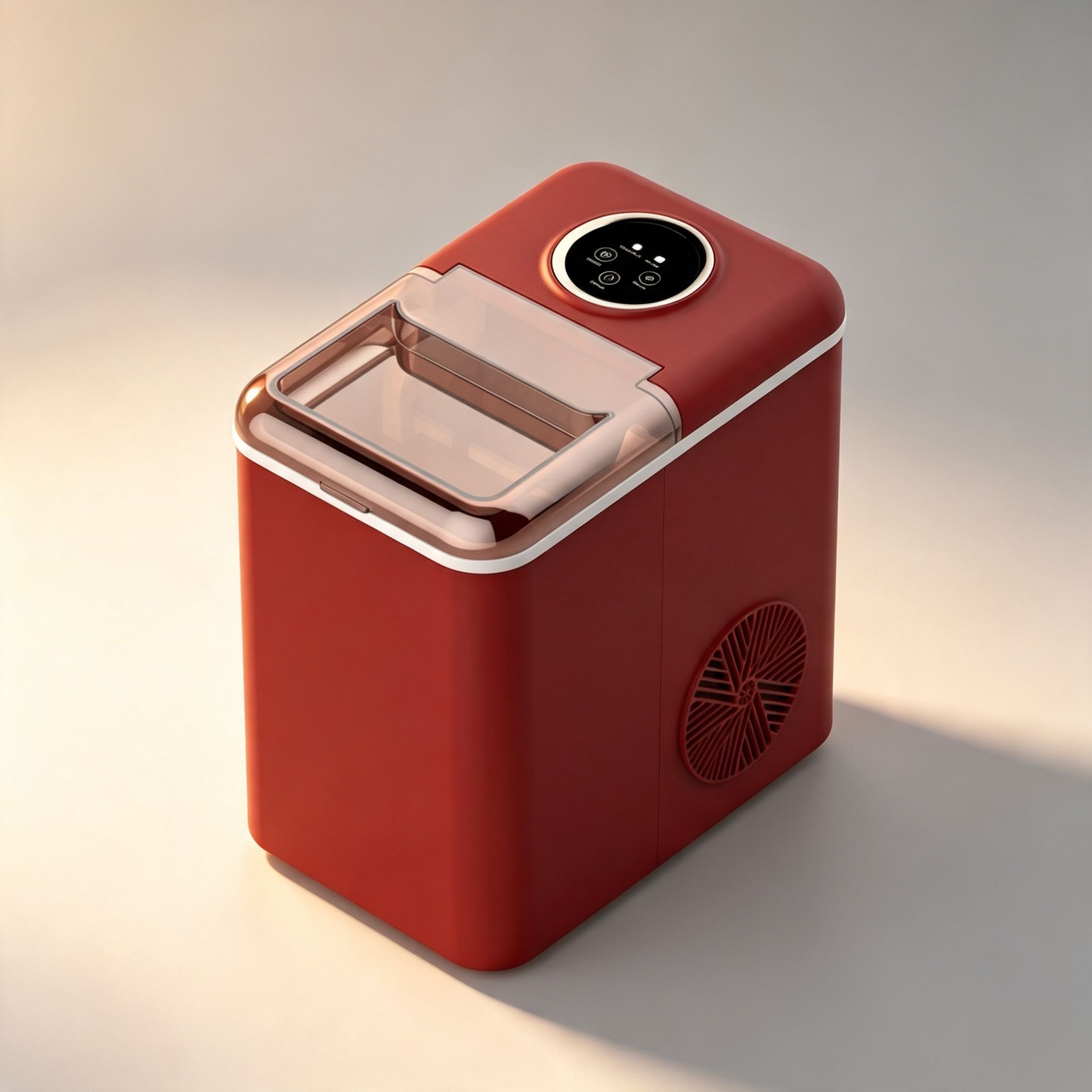
Start by measuring the actual footprint and airflow around the installation spot, not just the machine dimensions. Many air-cooled Chinese units from brands like S&A or Han's Cool need at least 30–50 cm of clearance on the intake and exhaust sides. If that space is available and the room has decent ventilation, an air-cooled model is usually the easiest drop-in choice—no external plumbing, no water quality checks, just plug in and let the fans do their job. But the trade-off is real: they push hot air out, which can turn a small workshop into a sauna within an hour.
Water-cooled models make more sense when you already have a chilled water loop, a cooling tower, or a basement sump nearby. They keep the heat rejection off-site, so the machine itself stays quieter and doesn't warm up the room. Many Chinese suppliers offer compact water-cooled chillers for laser welders and CNC spindles that are actually smaller in depth than their air-cooled siblings because they don't need internal fan bays. The catch is that you must plan for pipe routing, antifreeze if temperatures drop, and a reliable water source—something easily overlooked until the first summer heatwave trips the thermal alarm.
If you're torn between the two, look at the room's heat load over a full shift rather than the peak rating. A 1.5 kW air-cooled chiller can raise a 20 m³ closed room by several degrees in under two hours, while the equivalent water-cooled unit keeps that heat outside. But water-cooled systems quietly consume water through evaporation or bleed-off, and the maintenance of filters and pumps adds up. In practice, small studios with open windows and occasional use lean air-cooled; production floors with constant loads and existing plumbing lean water-cooled. Choose based on how long the machine runs, not just how much space it occupies.
Reading Between the Lines of Chinese Supplier Spec Sheets
Chinese supplier spec sheets often look straightforward on the surface, but the details hide in what isn't stated. A listed tolerance of ±0.1mm might apply only to certain dimensions, not the entire part. If the sheet doesn't specify the material grade beyond a generic 'stainless steel,' assume the cheapest variant unless your purchase order locks it down. Suppliers rarely volunteer information that would raise costs or invite scrutiny, so every blank space in a spec table is a decision point you didn't know you were making.
Look closely at the testing columns. Many sheets will include a row for 'inspection standard' without naming the actual test method or acceptance criteria. When you see phrases like 'according to national standard,' ask which standard and which revision. Production batches can drift if the standard is outdated or if the supplier interprets it loosely. A lack of specified surface finish, hardness range, or packaging method usually means these are left to factory discretion, and that discretion often favors speed over consistency.
Dates and revision numbers are another quiet signal. A spec sheet that hasn't been updated in years may still reflect the factory's original capability, not the line running today. Compare the sheet's stated lead time with the actual quoted time—if they differ, the spec is stale or the supplier is overbooked. Real supplier evaluation starts by annotating every missing value and vague phrase on the sheet before you ever place an order.
The Real Cost of a ‘Cheap’ Slush Machine from China
A $400 slush machine can look like a steal until the freight quote arrives. By the time it clears customs, you’ve paid freight, duties, a customs bond, and possibly a broker fee. Then there’s the hidden cost of plugging a 220V/50Hz unit into a North American kitchen: step-up transformers and phase converters add hundreds, and they’re another failure point. Many buyers realize the “savings” evaporated before the machine ever makes its first slush.
Once it’s running, the cheap parts start showing themselves. Seals, drive belts, and condenser fans fail earlier than on commercial-grade machines, but sourcing replacements from a Shenzhen supplier means waiting weeks for overseas shipping—or paying high markup from a US importer who happens to stock them. During peak summer weekends, one dead machine can cost more in lost sales than the entire purchase price.
Then there’s the compliance issue. A machine without NSF or UL certification can get flagged during a health inspection, and your insurance carrier may refuse coverage if it causes a fire or injury. You might also find that local repair techs won’t touch an unbranded import, leaving you to handle diagnostics and repairs yourself. In the end, the real cost isn’t the slush machine—it’s the downtime, the rigged fixes, and the stress of running a business around a machine that was never built for it.
Questions to Ask Before You Pay a Deposit to a Chinese Factory
Paying a deposit to a factory in China often feels like a leap of faith, especially when you've only exchanged emails and maybe a video call. Before you wire any money, you need to know exactly what you're committing to. Ask for a written breakdown of the production timeline: when materials will be ordered, when the first articles will be made, and what happens if they miss the shipping date. Vague answers like "soon" or "we will try our best" are red flags. A factory that can't give you a week-by-week schedule before receiving payment probably won't magically become organized after the deposit clears.
Next, dig into quality control. Who checks the goods before they leave the factory? Is there an in-house QC team, or do they rely on the production line workers to catch their own mistakes? Ask how they handle defective units — will they remake them, refund a percentage, or just ship them anyway? Also clarify material specifications in writing: exact fabric weight, hardware finish, packaging thickness. If you've approved a pre-production sample, ask them to confirm in writing that bulk production will match that sample and what tolerance is allowed. If they hesitate to put these details in an email or contract, reconsider the deposit.
Finally, get clear on refund and liability terms. What happens if the factory goes bankrupt, loses your deposit, or delivers goods that are unsellable? Many Chinese factories will offer to hold your deposit for a future order rather than refund cash, which might not work for you. Ask if they can accept a smaller initial deposit — 10% or 20% instead of 50% — and tie the rest to a verified inspection report. You can also request a video walkthrough of the factory floor, including their equipment and current workload, before paying. A factory that is transparent about its operations and willing to put answers in writing is far less likely to disappear with your money.
Spare Parts and After-Sales Support: What to Demand Upfront
Before signing any purchase agreement, pin down exactly how the manufacturer handles spare parts. Ask for a written commitment on parts availability—not just the vague promise of "we stock everything." You want a specific list of critical components, their typical lead times, and whether they're kept in a regional warehouse or shipped from overseas. If a single seal or sensor can halt your entire production line for three weeks, that part needs to be on your shelf or within 24 hours of your site.
After-sales support often sounds impressive in a brochure but falls apart in practice. Demand the names and direct contact details of at least two service engineers who know your specific machine model, not a generic hotline. Ask how many technicians the company employs per region and what their average response time has been for the past year—not what they hope it will be. You should also clarify whether software updates, diagnostic tools, and remote troubleshooting come at an extra cost or are bundled into your warranty. These details matter far more than a glossy service-level agreement.
Finally, don't accept training that consists of a single afternoon with a sales rep. Insist on hands-on maintenance training for your own staff, including tear-down and reassembly of wear parts. Get a written quote for a recommended spare parts kit stocked at your facility, with each item priced individually. If the vendor hesitates to provide this level of transparency upfront, treat that hesitation as a warning sign about the long-term cost of ownership.
FAQ
Most standard units run on 220V/50Hz or 110V/60Hz depending on the target market. Always confirm with the supplier before paying and ask for a photo of the rating plate. Many factories can wire for 110V/60Hz for North America or 220V/60Hz for some regions, but this usually adds a few days to production. Never assume a machine is dual voltage unless the label says so.
Ask for a live video call showing their workshop floor and assembly line. Request their business license and check if the registered scope includes manufacturing. You can also ask for recent export records or a copy of a CE or UL certificate. If they hesitate to show the factory or only send stock photos, treat that as a red flag.
For a single flavor with moderate demand, a single 12L or 15L bowl is usually enough. If you want two flavors, a twin 10L+10L or 12L+12L unit gives flexibility without taking up too much counter space. Avoid the smallest 5L models unless you only expect occasional use, because they can struggle to keep up during a rush.
At minimum get an extra set of gaskets, a spare faucet or dispensing handle, one extra drive belt if the model uses one, and a couple of circuit board fuses. If you can afford it, add a spare compressor capacitor and a set of beater blades. These are the parts that usually fail first and are cheap to ship with the machine.
Ask the supplier to pack the machine in a wooden crate, not just a cardboard box with foam. Request photos of the crate before shipment and insist on insurance for the full invoice value. When the machine arrives, record a video while unboxing and check for dents, loose panels, or refrigerant leaks before signing the delivery receipt.
After you confirm the order and wire the deposit, most factories need 7 to 15 days to build and test a standard model. Shipping by sea to the US or Europe typically takes 25 to 40 days, plus a few days for customs clearance. If you need it faster, some suppliers offer air freight for smaller models, but that can add significant cost.
Yes, always ask for a video of your actual unit running with water or slush mix before you pay the balance. The video should show the machine freezing and dispensing properly. If a sample unit is available for a small extra cost, that can be even better, but for most first-time buyers a detailed video test is enough.
Expect support mostly through WhatsApp, WeChat, or email with photos and short videos. Reputable suppliers will offer a one-year warranty on the compressor and can send replacement parts, but you will likely handle local repairs yourself. Clarify in writing whether they cover parts under warranty, who pays shipping for warranty parts, and if they can provide wiring diagrams or repair videos.
Conclusion
Most first-time buyers fixate on the sticker price and pick a machine built for a packed cinema lobby when their actual need is a modest cafe counter—or they go too small and end up refilling constantly. Spec sheets rarely spell this out: air-cooled units are cheaper and easier to install but wilt in cramped, hot kitchens, while water-cooled models hum along during long shifts yet need a steady water line and a drain. Chinese suppliers habitually quote bowl volume as 'capacity' and stay silent on real hourly output or compressor duty cycles. A rock-bottom quote stops looking cheap once freight, import fees, motor failures, and the wait for a part nobody local carries are added in.
Before you wire any deposit, pin down the compressor brand, the exact food-grade plastic in the bowls, and whether the auger and seals are certified and stocked as wear items. Ask for a raw 30-minute running video, not a slick promo reel. Get a written price list for common spare parts with realistic lead times, and clarify what support looks like after the standard warranty expires. If the supplier can't point to a distributor in your region or won't promise a 24-hour technical response, treat that as a red flag. The factories worth trusting are rarely the cheapest—they're the ones that treat your first order as the beginning of an ongoing support relationship rather than a one-off transaction.
Contact Us
Contact Person: Mr. Sun
Email: [email protected]
Tel/WhatsApp: 8618867635088
Website: https://www.nbyoman.com/