

China Gray Iron Casting: Key Benefits and Manufacturing Insights
2026-10-01
Gray iron casting may not be the flashiest topic in manufacturing, but it quietly powers everything from automotive blocks to heavy machinery. China has become the epicenter of this essential material, offering a compelling mix of cost savings, machinability, and dependable performance. Yet, the real story lies in the manufacturing insights—how foundries control graphite structure, manage cooling rates, and ensure consistency batch after batch. In this guide, we dig into the key benefits and share practical know-how, with on-the-ground perspective from Zhaoyuqi, a company that understands the nuances of top-tier gray iron production.
Why Chinese Gray Iron Remains a Staple in Heavy Machinery
In heavy machinery, vibration isn’t just a nuisance—it’s a slow-acting destroyer. Gray iron has a graphite flake structure that absorbs shock and dampens resonance better than most steels or ductile irons. Machine beds, engine blocks, and large gearboxes rely on this damping to keep tolerances tight and noise levels down over years of constant load.
Casting economics also keeps gray iron on the floor. The flake graphite improves fluidity, so foundries can pour complex cores and thin walls without excessive risers or chills. Shrinkage is predictable and low, which means fewer rejects and less rework on large castings. On top of that, the graphite acts as a dry lubricant in sliding wear applications—something that machined steel simply doesn’t offer without added coatings.
Machinability is the quiet advantage. Gray iron’s graphite breaks chips and reduces cutting forces, so large housings, bases, and frames can be finished faster with less tool wear. Its high thermal conductivity also spreads heat away from bearings and friction surfaces, preventing local hot spots that cause distortion. Those properties compound into a material that heavy equipment builders keep coming back to, not out of habit, but because alternatives still struggle to match the total cost-to-performance package.
Balancing Cost and Consistency in Chinese Gray Iron Production
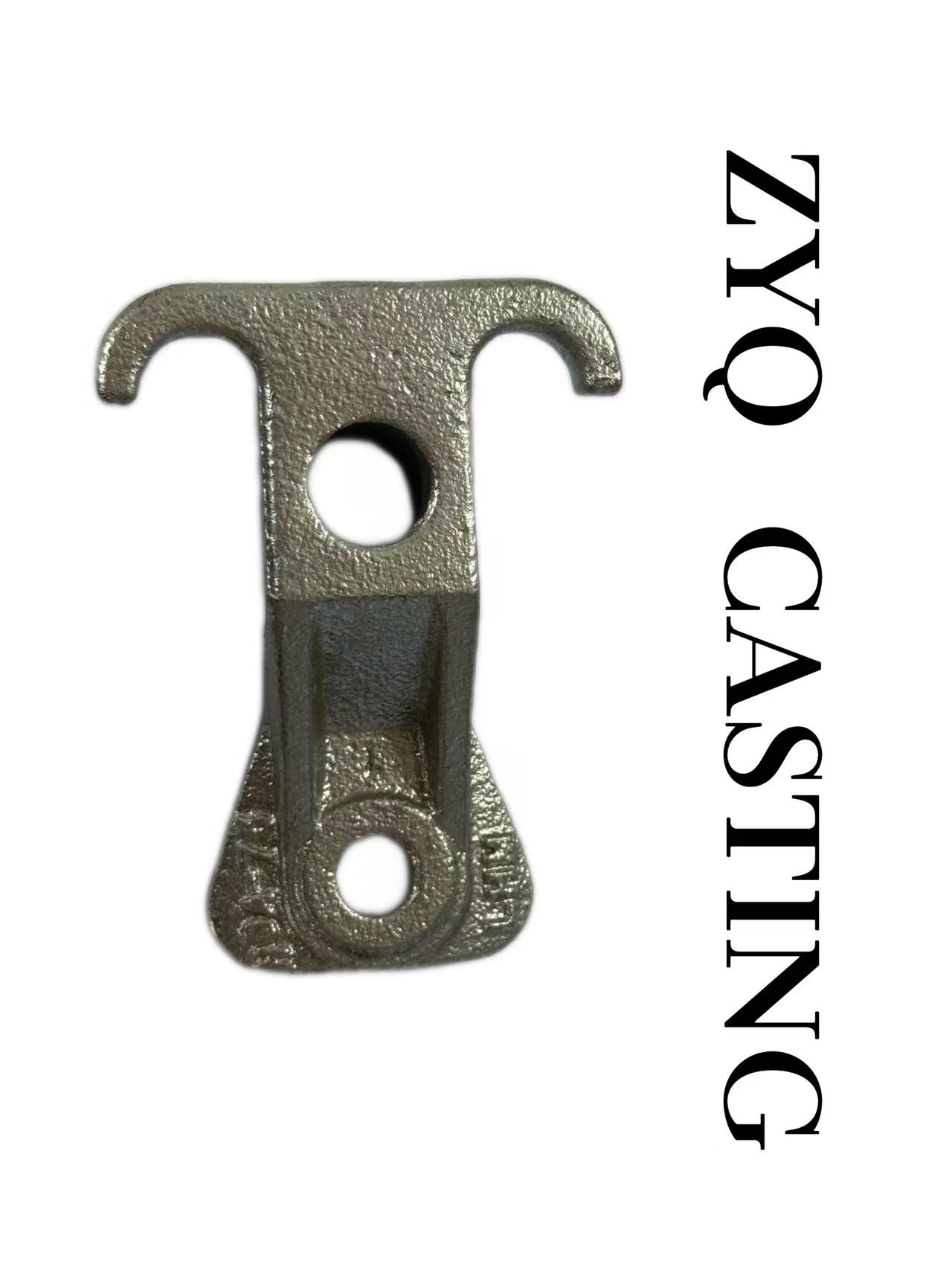
The cost-consistency dilemma in Chinese gray iron production often gets reduced to choosing between cheap scrap and expensive pig iron, but the real balance lies in understanding charge heredity and melt variation. Many foundries lower per-ton melt cost by loading up on returns and low-manganese scrap, yet overlook how trace elements like lead or titanium disrupt graphite morphology, causing hardness swings of over 20 HB within the same batch. Controlling cost is not about the lowest raw material price; it is about cutting scrap and rework that stem from poor consistency.
A practical route to balance is fast feedback on carbon equivalent and inoculation response. For induction melting, holding tapping temperature at 1480-1520°C and using strontium-bearing inoculant in-stream can shrink the tensile strength variation between heats and within a heat without adding alloy cost. Sorting and pre-testing scrap by grade also prevents high-grade gray iron from contaminating lower-grade charges, which is cheaper than adjusting chemistry after the fact.
Experienced shops rely on statistical process control charts for eutectic cell count and chill depth instead of final inspection alone. When a downward trend in cell count appears, they adjust inoculation or carbon equivalent early, preventing batch-level hardness failures. This preventive consistency approach has a modest upfront investment, but the comprehensive cost per ton of good castings usually beats rivals who chase the cheapest charge materials.
The Damping and Machinability Edge of Chinese Gray Iron
The graphite flake structure in Chinese gray iron gives it an unusually high damping capacity compared with steel and ductile iron. Vibrations travel poorly through the interconnected flakes, so components like machine beds and brake discs absorb resonance instead of ringing. This property is particularly valued in precision tooling, where chatter can leave visible marks on machined surfaces. Chinese foundries often fine-tune the carbon equivalent and silicon content to keep the flakes long and well distributed, which further improves noise and vibration damping without sacrificing strength.
Machinability is another practical advantage. The graphite flakes act as a solid lubricant at the cutting edge, reducing friction and tool wear. They also encourage the chips to break into small, manageable pieces rather than forming long curls that tangle around the tool. In production shops, this translates into faster cutting speeds and longer insert life. Chinese gray iron grades designed for automotive and compressor parts typically balance manganese and sulfur to stabilize the microstructure, so machinability remains consistent from batch to batch.
Combining these two characteristics gives designers a cost-effective material for housings, engine blocks, and machine tool structures. Instead of adding rubber isolators or secondary machining steps, the material itself handles vibration and cuts cleanly. For manufacturers who value throughput and surface finish equally, that blend of damping and free-machining behavior is hard to match. Chinese suppliers often highlight these properties with controlled cooling practices that avoid carbides at the casting surface, keeping both edge retention and dimensional stability in tight ranges.
How Chinese Foundries Control Graphite Flakes and Shrinkage
Chinese foundries manage graphite flake morphology and shrinkage largely through tight control of iron chemistry. Carbon equivalent is held within a narrow band, often paired with a carefully selected silicon level to promote type A graphite while suppressing undercooled forms. The sulfur-to-manganese balance receives particular attention; too little sulfur weakens inoculation response, while too much coarsens the flakes and raises the risk of dispersed shrinkage.
Inoculation practice is where many shops differentiate themselves. Composite inoculants containing barium, calcium, or rare earths are added in the stream or directly to the ladle to multiply graphite nuclei and refine flake size. This not only improves graphite distribution but also uses the expansion of precipitating graphite during solidification to offset liquid and solidification contraction, reducing microporosity and sink marks in heavier sections.
Pouring and cooling control complete the picture. Foundries adjust pouring temperature, mould cooling rate, and the placement of risers and chills to steer solidification sequence so that graphitic expansion assists feeding rather than fighting it. Increasingly, process engineers rely on thermal analysis and solidification modelling to tune these variables, keeping flake shape stable while holding shrinkage defects to a level acceptable for critical castings.
Reading Between the Lines of a Chinese Gray Iron Quote
Chinese gray iron quotes often look straightforward at first glance, but a surprising amount of critical detail hides beneath the surface. Many buyers focus only on the unit price, ignoring the ambiguity in material specifications. For instance, a quote may simply state “gray iron HT200” without clarifying whether it adheres to GB/T 9439 or an internal factory standard. HT200 denotes a minimum tensile strength of 200 MPa, yet within that same grade, variations in carbon and silicon content, inoculation practice, and alloy additions can significantly affect casting performance. A responsible foundry will include key element ranges or offer reference samples in the quote, while cut-rate quotations frequently omit these details, setting the stage for future scrap rates and machining headaches.
Beyond the raw material, delivery terms and ancillary charges demand careful scrutiny. Many Chinese foundries quote EXW (ex works) prices that exclude packaging, inland freight, and port fees. If the buyer does not specify otherwise, a low quote may rely on minimal packaging, leaving castings vulnerable to rust or damage during long ocean transit. Tooling costs also raise questions: are they amortized into the piece price or billed separately? If machining is included, does the quote account for proper stock allowances and dimensional tolerances? Some suppliers deliberately understate machining allowances to lower the quoted price, but later cannot hold required tolerances, forcing the buyer into secondary operations. Payment terms also influence real cost—a quote demanding a high upfront deposit may reflect the supplier’s cash-flow strain, which often foreshadows delivery delays.
An experienced purchaser reads a gray iron quote not just for what it says, but for what it omits. Does the document specify an inspection standard such as ASTM A48 or ISO 185? Is there a commitment to provide material certificates and dimensional reports? How are rejects handled? These seemingly minor points separate professional foundries from small workshops. Rather than chasing the lowest price and then wrestling with quality issues, a wise buyer asks for clarification at the quoting stage. In the end, a cheap quotation coupled with rework, air freight for replacements, and customer complaints can cost far more than a transparent, slightly higher initial price. Learning to decode the hidden messages in a quote is the first step toward controlling supply chain risk.
New Moves in Chinese Gray Iron Casting Worth Watching
Gray iron casting in China has quietly shifted from chasing volume to chasing precision. Foundries that once leaned on heavy risers and loose tolerances now run tighter process windows. A handful of shops in Hebei and Shandong are pushing inoculation control and late-stream magnesium treatment to stabilize graphite morphology in thin sections. The result: castings under 6 mm wall thickness with far fewer hard spots than buyers expected five years ago.
Another change worth noting is the move toward scrap chemistry forensics. Instead of blending generic steel scrap and pig iron, some plants now spectrograph every incoming heat and adjust carbon equivalent in real time. This lets them cut costly alloys while keeping tensile strength above 250 MPa. It is a practical fix, not a headline technology—but it quietly rewrites what a mid-size foundry can quote.
The real signal, though, is in tooling and simulation. A few aggressive suppliers now run solidification software on every new pattern before cutting metal. They dial in chills, venting, and gating ratios to avoid shrinkage porosity in bosses and flanges. That upstream discipline shortens sampling loops. For overseas buyers tired of three or four trial shipments, these moves are the ones actually worth a second look.
FAQ
Chinese foundries often have dedicated pattern shops that can rework or replace tooling at a fraction of the cost seen in Western markets. Combined with accessible raw materials like pig iron and scrap, and a deep pool of foundry engineers familiar with traditional sand casting, this allows for fast iteration without locking a buyer into expensive permanent molds. Many suppliers also run small-batch production lines using green sand or resin sand, so minimum order quantities can be negotiated more flexibly than with highly automated plants. The result is a practical balance of cost, lead time, and adaptability for equipment builders.
The interconnected graphite flakes act as internal stress concentrators and micro-cracks that absorb and dissipate vibrational energy as heat. When a machine tool base or engine block vibrates, the flakes disrupt wave propagation and convert mechanical energy into thermal energy more efficiently than the spheroidal graphite in ductile iron. This damping capacity reduces chatter in precision machining and lowers noise in automotive components, which is why gray iron remains the material of choice for lathe beds, milling machine columns, and compressor housings despite its lower tensile strength.
Cupola melting provides continuous production and introduces sulfur and carbon pickup that can aid machinability, but it requires careful emission controls and gives less precise chemistry control. Induction furnaces, increasingly common in China due to environmental regulations, allow tighter control of carbon equivalent and trace elements, reducing batch-to-batch variation. However, induction-melted iron can have fewer nucleation sites, so foundries must compensate with stronger inoculation practices. Buyers should ask which melting method is used and how inoculation is adjusted, because it directly influences chill tendency, graphite morphology, and final hardness.
A common approach is late inoculation with a fine-grained ferrosilicon or barium/calcium-bearing alloy added to the metal stream just before pouring or directly in the mold. This creates numerous nucleation sites for graphite, reducing undercooling and preventing the formation of iron carbide in thin sections or sharp corners. Some foundries also use preconditioning agents in the furnace to stabilize the base iron. The timing and method, such as in-stream inoculation versus in-mold inoculation, are tailored to section thickness and cooling rate, and are verified through thermal analysis and chill wedge tests on each heat.
Beyond the standard material certificate, request a detailed heat-by-heat report showing carbon equivalent, silicon, manganese, sulfur, and phosphorus levels, along with tensile strength from separately cast test bars. Ask for Brinell hardness maps across representative castings, not just a single spot reading. Metallographic photos at 100x magnification should confirm Type A graphite flakes of acceptable size and distribution. For critical components, require ultrasonic or X-ray inspection records for internal soundness. A capable supplier will also share process control charts, sand lab results, and corrective action reports from previous nonconformances, giving you confidence in consistency.
Thick sections cool slowly, promoting coarse graphite and interdendritic shrinkage if not managed. Foundries typically raise the carbon equivalent, lower phosphorus to below 0.08%, and use chills or insulating sleeves to direct solidification toward risers. Molding sand with good thermal conductivity helps extract heat faster. Computer solidification simulation is now widely used in mid-size Chinese foundries to optimize riser placement before cutting metal. Pouring temperature is kept as low as practical to reduce liquid shrinkage and minimize graphite flotation in hypereutectic compositions.
The flake graphite network gives gray iron high thermal conductivity, which pulls heat away from the friction surface quickly and reduces hot spotting and thermal cracking. Its naturally occurring graphite also acts as a solid lubricant, improving wear resistance and preventing galling under boundary lubrication conditions. In brake discs, the material's damping properties reduce squeal. These functional advantages outweigh the weight penalty, which is why automotive and heavy-duty equipment manufacturers continue to specify gray iron for components exposed to repeated thermal cycling and sliding contact.
Stricter enforcement of air emissions, wastewater, and solid waste rules has pushed many small, poorly equipped foundries out of business, while survivors have invested in dust collection, sand reclamation, and electric melting. This consolidation generally improves quality and reliability for buyers, but it also means some low-cost sources have disappeared. Buyers should verify that a supplier holds valid environmental permits and pollution discharge licenses, as shutdowns for noncompliance can disrupt supply. Increasingly, Chinese foundries are also adopting ISO 14001 and energy management systems, which align with corporate sustainability requirements from Western customers.
Conclusion
China's gray iron foundries have held onto heavy-machinery work for a reason that goes beyond price. The flake graphite structure built into gray iron gives it a natural ability to swallow vibration, which matters a lot in engine blocks, gearbox housings, and large machine frames. Chinese suppliers have learned to control this structure through careful inoculation and cooling practice, keeping graphite flakes consistent enough to preserve machinability and avoid hard spots. Shrinkage, the defect that ruins tight castings, is managed with riser placement and pour temperature control rather than guesswork. Cost remains a factor, but the bigger draw is repeatability: buyers want castings that machine the same on Tuesday as they do on Friday.
A close look at a Chinese gray iron quote usually reveals why two identical drawings can come back with very different numbers. Some prices include fettling, primer, and packaging; others leave those as add-ons. Tooling ownership, tolerance bands, and sampling requirements are where misunderstandings start. Beyond pricing, the quiet changes inside Chinese foundries are worth noting. Thermal analysis is becoming common enough to predict graphite form before the metal is poured. Automated grinding is reducing handwork and improving surface consistency. A few plants are experimenting with synthetic inoculants and lower-cement refractories to stretch melt life. These are not flashy upgrades, but they push gray iron casting toward tighter process control and fewer surprises. That shift, more than any single cost line, is what makes Chinese gray iron a serious long-term option.
Contact Us
Contact Person: Nico Yin
Email: [email protected]
Tel/WhatsApp: 8618561567088
Website: https://www.ductileironparts.com/