

China Investment Casting: Achieving Complex Geometries with High Accuracy
2026-11-16
Complex internal passages, thin walls, and near-net shapes that need minimal machining—investment casting has long been the quiet workhorse behind critical components. In China, the process is now reaching new levels of precision and repeatability, making complex geometries more accessible than ever. At BOYIKUN, we see this capability reshaping how engineers approach everything from turbine blades to surgical instruments. This post explores the technical edge behind China's investment casting and how it can deliver high-accuracy parts for your most demanding designs.
Thin Walls and Deep Cavities Without Compromise
Achieving thin walls alongside deep cavities used to mean accepting a trade-off: either the wall thickness increased to support mold filling, or the cavity depth was reduced to avoid defects. Modern tooling and material advances have erased that compromise. High-flow polymers, precision temperature control, and optimized gate placement allow a part with wall sections under a millimeter thick to incorporate cavities that extend several centimeters deep without sink marks, warpage, or short shots.
The key lies in controlling how the melt front advances through the geometry. Rather than relying on a single uniform wall thickness, designers now use local thickening at stress points and strategically placed ribs that draw material into deep features without visible surface blemishes. Conformal cooling channels in the mold pull heat out of the thin sections quickly while keeping the deep cavity area hotter for longer, ensuring the polymer fills every corner before it freezes. This means the final part holds tight tolerances and a clean cosmetic finish on both the exterior and the hidden internal walls.
That capability shows up in products where space is tight but performance cannot slip. Thin-walled enclosures for portable electronics, surgical instruments with deep internal channels, and automotive sensor housings all benefit from designs that were previously considered un-moldable. The result is lighter, stronger components that pack more functionality into a smaller footprint—without the usual penalty of fragile edges or inconsistent wall thickness.
Tolerances That Survive Heat Treatment
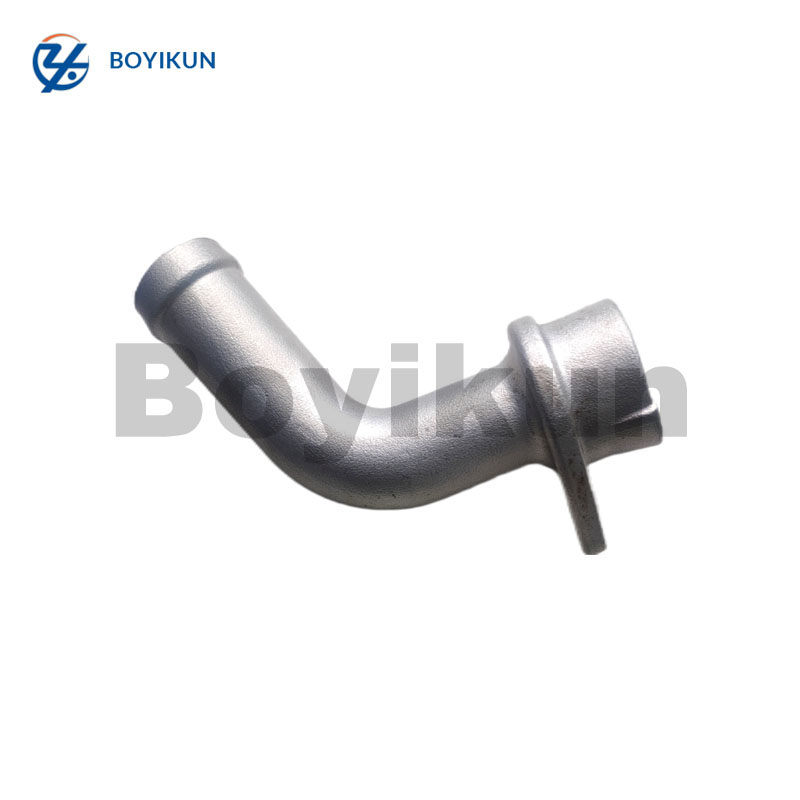
Heat treatment is rarely kind to tight dimensional tolerances. Phase changes, thermal gradients, and quenching stresses all pull metal in ways that can turn a carefully machined feature into a scrap call. Tolerances that survive this process aren't just numbers left over from the drawing; they're the result of deliberately planning for movement before the part ever enters the furnace. That often means leaving extra stock on critical surfaces, accepting wider bands on features that won't be finished after heat treat, and knowing how much growth or shrinkage a specific alloy tends to exhibit.
A practical approach starts with real process data rather than generic handbook values. Running test coupons through the exact furnace and quench setup reveals how much a bore will close, a shaft will bow, or a flat face will distort. This data makes it possible to set pre-heat treat dimensions that land within final tolerance after transformation. For tight features, post-heat operations like grinding, honing, or wire EDM are often the only reliable way to hold precision, because they remove the distorted layer and bring the part back to size under controlled conditions.
Material choice also shapes what tolerances can realistically survive. Some grades are far more stable through hardening than others, and secondary treatments like deep freezing or multiple tempers can lock in dimensions and reduce later drift. If a surface cannot be machined after heat treatment, the tolerance band should reflect the full range of measured distortion from the actual process, not an optimistic average. In many shops, this means intentionally loosening non-functional dimensions while reserving tight tolerances for the few surfaces that truly affect performance.
Alloy Selection for Stability in Complex Shapes
Getting a complex shape to hold its form starts with choosing an alloy that resists shifting during machining, heat treatment, and everyday use. Some materials look promising on paper but warp or creep once you cut away enough stock. For intricate profiles, look beyond basic strength ratings and pay attention to how the metal behaves under localized stress. A high-silicon aluminum or a free-machining brass often outperforms a generic steel simply because it sheds internal tension more predictably.
Thermal stability matters just as much as mechanical stiffness. Complex geometries trap heat unevenly, so an alloy with a low coefficient of expansion and a narrow solidification range will stay truer between operations. Magnesium alloys, for example, can surprise you with their dimensional reliability in thin-walled sections, while certain stainless grades need careful stress-relieving cycles to avoid gradual distortion. The key is matching the alloy's temper and thermal history to the part's cross-section, not just its final hardness.
Don't overlook how the alloy pairs with your finishing steps. A component that holds tolerance through roughing can still twist after anodizing or plating if the surface layer introduces new residual stress. Test small batches with the exact coating or heat treatment you plan to use, and measure critical features before and after each stage. That feedback loop will reveal which alloy truly earns its place in a demanding, intricate design.
Distortion Control Inside the Ceramic Shell
Ceramic shells rarely fail from a single dramatic event; distortion builds gradually as each slurry layer dries at a different rate than the one beneath it. The silica binder loses water from the surface first, pulling the outer skin tighter while the inner layers remain swollen. This imbalance shows up as a slow bowing of flat sections or a twisting along long edges, often becoming visible only after the wax has been removed. Controlling that movement starts with keeping the slurry's viscosity in a narrow band and applying stucco so that every dip contributes the same mechanical restraint to the shell.
A practical countermeasure is to stop treating drying as a simple waiting period. By holding the shell at a steady relative humidity between 40 and 55 percent and using low-velocity air movement across all faces, the moisture gradient through the wall stays shallow enough for the polymer and colloidal silica to redistribute stress. Rotating the tree every few hours prevents one side from lagging, and adding a small amount of nylon fiber to the intermediate coats gives the green shell more tensile give before it reaches the bisque stage. These adjustments matter most on cores and thin trailing edges, where a restrained contraction can tear the shell internally.
The wax pattern itself is also part of the distortion picture. Lower-expansion blends with a melting range below 70°C reduce the outward push during dewax, but even a well-chosen wax cannot rescue a shell whose layering schedule was rushed. Logging the weight loss of a witness shell through each dry cycle provides a reliable early warning; if the overnight loss drops below 12 percent while the surface still feels tacky, the shell has not reached equilibrium. Firing then follows a slow ramp to 300°C before climbing higher, giving residual moisture an escape path that does not rely on steam pressure cracking the wall from within.
Replacing Assemblies with One Near-Net Shape
Conventional manufacturing often splits a complex part into several smaller pieces that get welded, bolted, or bonded together later. This approach leaves room for alignment drift, adds labor, and creates weak spots at every joint. Near-net shape processes turn that logic on its head. By casting, forging, or printing a single piece that already sits close to the final geometry, you remove entire assembly steps from the workflow. Designers can fold what used to be three brackets and a base plate into one organic, stress-tailored body. The result isn't just fewer parts in a bin—it's a different way to think about how a component should carry load and fit into the space around it.
Take an engine mount or a suspension knuckle as an example. Instead of machining five separate pieces and then pressing in two bushings and a bolt, a single investment casting can replicate the same mounting points with internal ribs placed exactly where the load path needs them. This cuts down on fixture time, eliminates tolerance stack-ups between mating surfaces, and often sheds twenty to thirty percent of the weight. Because near-net shape means only a thin skin of material gets removed in finishing, you also waste less raw stock. On the maintenance side, fewer connections translate to fewer places for corrosion or fretting to hide. Teams that make the switch usually find the savings show up twice: once on the shop floor, and again over the life of the product.
China Investment Casting for High-Accuracy Production Runs
When dimensional tolerances tighten and surface finish becomes a make-or-break factor, Chinese investment casting shops have quietly raised the bar. The process itself isn't new—wax patterns dipped in ceramic slurry, burned out, then filled with molten metal—but the level of process control now common in specialized foundries across Zhejiang and Guangdong is something else entirely. For components like turbine blades, surgical instrument bodies, or complex valve internals, the ability to hold ±0.1 mm across a 150 mm part length isn't a stretch goal; it's the baseline. What sets these facilities apart is not just the equipment, but the accumulated know-how in gating design, shell permeability, and cooling curve management that only comes from running thousands of similar geometries.
High-accuracy investment casting in China also benefits from a dense supplier ecosystem. Local producers of high-grade silica sol binders, fine zircon sands, and precision wax blends operate within short shipping distances, reducing lead time and cost for the foundries. This proximity allows for rapid iteration on shell recipes when a customer's part demands an unusually smooth as-cast surface—say, under Ra 3.2 µm without secondary machining. Rather than relying on a one-size-fits-all slurry, many Chinese foundries maintain multiple slurry lines tuned for different alloys and wall thicknesses. The result is that a single order can include thin-walled stainless steel housings, cobalt-chrome orthopedic blanks, and small carbon steel levers, all produced to the same tight dimensional report without cross-contamination or schedule slippage.
What often surprises first-time buyers is the emphasis on pre-production simulation. Before a single wax pattern is injected, Chinese investment casting engineers now routinely run solidification modeling and mold flow analysis to predict shrinkage porosity, hot tears, and distortion. This front-loaded approach reduces the traditional trial-and-error cycle, cutting weeks off development time for high-accuracy parts. Combined with in-house CNC finishing for critical bores and threads, the final component often arrives ready for assembly. It's a pragmatic blend of old-world craftsmanship and modern digital tools—no flashy marketing, just a disciplined focus on hitting numbers that many Western foundries would quote as a separate, premium service.
FAQ
They often use soluble wax cores or preformed ceramic cores, and the ceramic shell is built up in controlled humidity rooms so each layer dries evenly. This reduces distortion in thin unsupported areas.
Most established Chinese foundries routinely hold ±0.15 mm to ±0.25 mm on small features, with tighter ±0.10 mm possible after tooling compensation and process stabilization. ISO 8062 CT4 to CT5 is common.
304/316 stainless, 17-4 PH, carbon steel, and aluminum A356 are workhorse alloys. For more demanding specs, 2205 duplex, Inconel 625, and cobalt-chrome are also available, but it is worth auditing the foundry's melt practices.
The first two slurry coats use fine zircon or fused silica, which controls roughness; later backup coats use coarser stucco for strength. That layering typically yields 3.2 μm Ra on accessible surfaces, though deep recesses may run slightly rougher.
Many use digital radiography or CT scanning for first article approval, and then switch to X-ray sampling for production lots. Fluorescent penetrant inspection and structured light dimensional scanning are also used for surface and geometry checks.
The combination of lower tooling cost, short wax pattern iteration cycles, and access to a dense network of secondary processes such as heat treating, passivation, and CNC machining allows a single supplier to deliver ready-to-assemble parts.
They adjust gating design to create directional solidification, use vacuum-assisted pouring for certain alloys, and control shell preheat temperature. Hot isostatic pressing is sometimes offered for critical aerospace or medical parts.
Tooling usually takes 2 to 4 weeks, first samples another 2 to 3 weeks, and production can start within 6 to 8 weeks after approval. If ceramic cores or soluble cores are involved, add another week or two.
Conclusion
Investment casting in China has proven uniquely capable of producing parts with thin walls and deep cavities that would challenge other manufacturing methods. Rather than forcing designers to compromise on wall thickness or internal passage geometry, foundries rely on carefully controlled ceramic shell builds and wax pattern assemblies to hold intricate features intact. Tolerances are not just achieved in the green state—they are designed to survive heat treatment cycles that many assume will introduce distortion. Alloy selection becomes an integral part of this stability: stainless steels, nickel-based alloys, and other materials are matched to the part’s geometry and post-cast thermal processing so that dimensional drift is minimal.
Distortion control inside the ceramic shell is managed through gating design, shell thickness, and cooling profiles, reducing the need for straightening or extra machining. Where a designer once would have bolted or welded several pieces together, a single near-net-shape casting now replaces that assembly, eliminating leak paths and alignment errors. Chinese investment casting operations have turned these capabilities into reliable high-accuracy production runs, not just one-off prototypes, with repeatable dimensions across thousands of parts. The result is a process that handles complexity without sacrificing the precision needed for demanding applications. This capability proves especially valuable in aerospace, medical, and energy sectors where failure is not an option.
Contact Us
Contact Person: Xianchen Hu
Email: [email protected]
Tel/WhatsApp: 86-13248645200
Website: https://www.hexnb.com/