

China Surge Protective Device Guide: Choosing the Right Protection
2026-08-16
Power surges don't announce themselves—they strike in milliseconds, often when you least expect it. In China's fast-evolving electrical landscape, the right surge protective device isn't a luxury; it's the quiet guardian between your equipment and costly downtime. But with so many specs, standards, and claims out there, how do you cut through the noise? Whether you're safeguarding a factory floor or a smart home, the choices you make today define your system's resilience tomorrow. This guide strips away the jargon and walks you through what actually matters—so you can choose protection that fits, not just one that's marketed well. And when it comes to proven reliability, ETEK has been in the trenches, turning technical complexity into practical safety for projects across the globe.
What Matters More Than Brand When Picking SPDs in China
After years of specifying surge protective devices for projects across China, I’ve learned that the logo on the housing rarely predicts field performance. What actually separates a dependable SPD from a costly callback is how well it matches the local power quality and grounding conditions. Many imported units carry impressive datasheets but struggle with the frequent neutral-to-ground voltage swings or harmonic-heavy loads common in Chinese industrial parks. A mid-range device selected for the actual fault current and protection level usually outperforms a premium brand that was never tuned for the site.
Certification and compliance are the real gatekeepers here. A unit without valid CQC or CCC marking (or the newer GB/T 18802.11 test reports) can stall an entire inspection, no matter how famous the label. I always ask for the full type-test report from a Chinese-accredited lab, not a translated overseas certificate. That single document tells you whether the SPD survived the claimed impulse ratings under local test conditions. If the supplier hesitates to share it, walk away.
Local support and replacement speed matter more than most buyers expect. SPD modules wear out after repeated surges, and if you can’t get a matching replacement module within a few days, you’re left with a gap in protection or a dangerous bypass. I’ve seen facility managers disable protection entirely because a proprietary module took six weeks to import. Choose a design with widely available plug-in modules and a distributor that stocks them in the same province. That practical detail saves more downtime than any brand name.
Reading the Fine Print on Chinese Surge Protection Standards
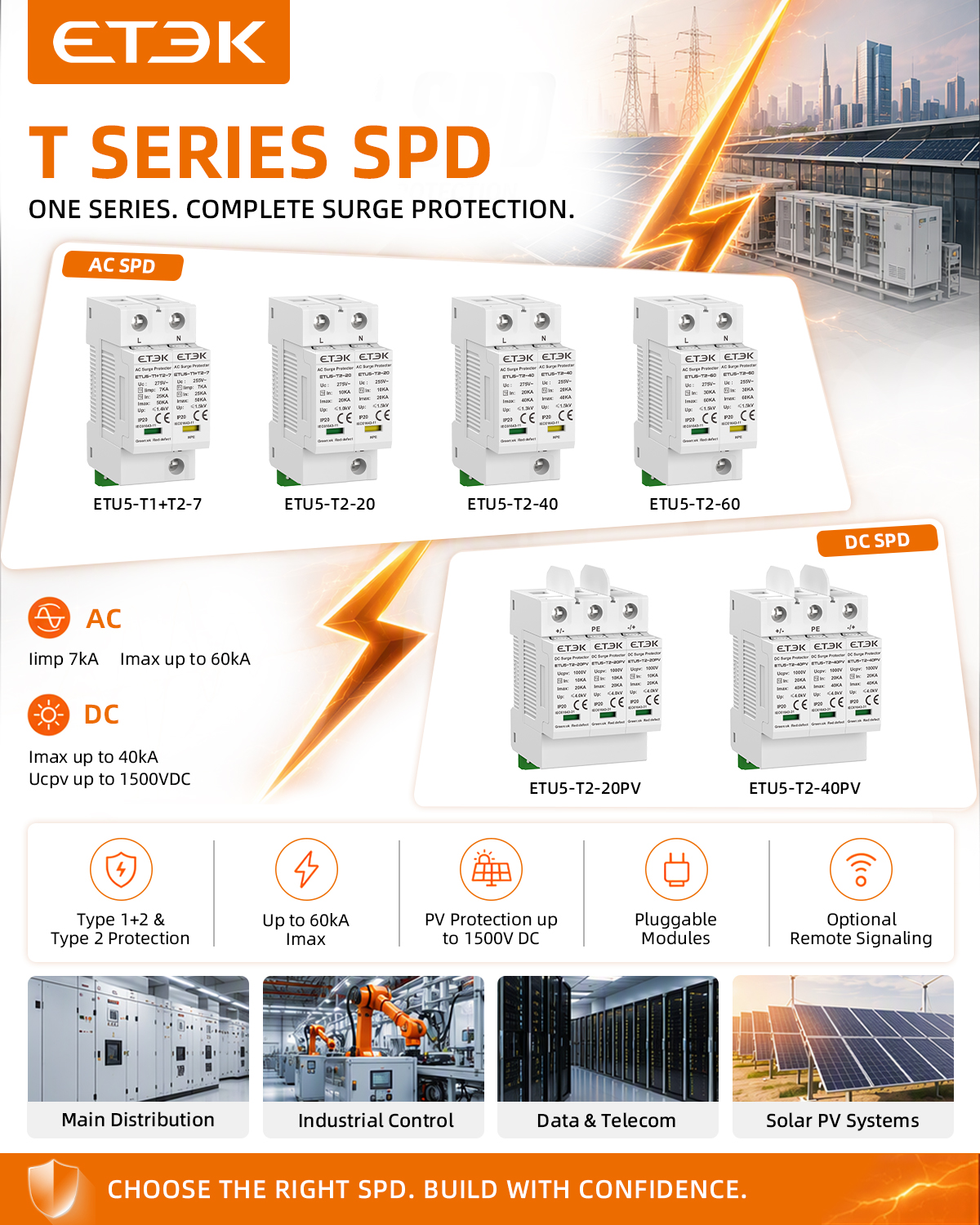
Chinese surge protection standards often hide critical nuances in their testing conditions and application scopes. A device rated for one voltage level might not perform as expected under the country's frequent grid fluctuations, and many importers overlook how local certification categories differ from IEC or UL models. Without reading the exact clauses on clamping voltage and endurance cycles, users can end up with units that fail prematurely in real-world Chinese electrical environments.
The fine print also reveals disparities between nominal discharge currents and actual surge capacity under repeated strikes. Some domestic standards allow lower energy ratings for residential use, while commercial installations demand stricter thermal stability over longer durations. Field engineers who skip the footnotes often discover that protective devices degrade faster in high-humidity regions of southern China, where seasonal lightning activity stresses components beyond the lab benchmark.
Another overlooked detail is the coordination requirement with upstream breakers and residual current devices. Chinese standards frequently mandate specific wiring configurations or backup protection that are absent in generic international guidance. Contractors who assume global compatibility may install surge protectors that create nuisance tripping or fail to disconnect safely during a cascading fault, turning a simple safeguard into a liability.
Why Voltage Ratings Alone Won't Save Your Equipment
A voltage rating tells you the nominal operating range of a device, but it says nothing about the chaotic reality of real-world power. Transients, sags, and harmonic distortion routinely push equipment beyond its stated limits—even when the average voltage sits comfortably within spec. An industrial motor rated for 480 V, for instance, can be destroyed by repeated 600 V spikes that last only a few microseconds, long before any thermal overload relay ever trips.
The deeper problem is that voltage ratings assume a stable, sinusoidal supply. Modern facilities rarely deliver that. Variable frequency drives, LED lighting, and switch-mode power supplies inject harmonic currents that distort the voltage waveform, creating peaks far higher than the RMS value printed on the nameplate. Your equipment may be rated for 230 V, but if the waveform is flattened and notched, the true peak voltage can approach 400 V—enough to degrade insulation and shorten capacitor life dramatically.
What actually saves equipment is a layered approach: surge protection devices to clamp transients, harmonic filters to clean up waveform distortion, and continuous power quality monitoring to catch anomalies before they become failures. Relying on voltage ratings alone is like trusting a seatbelt that only works when the car is parked.
The Installation Mistake Most Chinese Electricians Still Make
Walk into almost any older apartment in China and you'll find the same shortcut: the ground terminal on a socket bridged to neutral with a scrap of wire. It looks tidy enough from the outside, and the socket tester even shows "correct" if you don't pay attention. But that little jumper is exactly where things go wrong.
The logic behind it is simple: if neutral is already earthed at the transformer, connecting ground to neutral should give the same protection. What gets missed is that neutral is a current-carrying conductor, not a safety path. When the neutral connection loosens or breaks, that "ground" becomes live, and every metal appliance case tied to it turns into a shock hazard. RCDs also won't trip reliably because the fault current returns through the same neutral path instead of leaking to earth.
A proper fix means pulling a separate protective earth wire back to the main earthing terminal, or using double-insulated appliances where no earth exists. If rewiring isn't an option, at least install a residual current device on the circuit — but never bridge ground to neutral again.
Matching SPDs to Your Building's Actual Risk Profile
Actual surge risk varies widely from one building to the next, and it rarely lines up with the one-size-fits-all ratings printed in generic spec sheets. A medical clinic with sensitive imaging gear near a lightning-prone ridge has a different exposure than a concrete warehouse fed by underground service in a dense urban area. Before picking an SPD, take stock of the local lightning flash density, how utility lines enter the site, and which internal loads actually generate switching transients.
The entry point sets the baseline. Overhead lines in open areas tend to carry larger induced surges than buried feeders, and buildings with multiple service entrances or long branch circuits can see reflected waves that double up at panelboards. Internal sources matter too: VFDs, elevator drives, and large contactor coils produce repetitive transients that degrade unprotected electronics over time. Use site-specific data—utility fault current, cable lengths, and existing insulation coordination—to estimate the real surge current, not just a nominal category.
Once that risk profile is clear, SPD selection becomes simpler. A Type 1 or Type 2 device at the main service should handle the expected 10/350 µs or 8/20 µs surge magnitude without blowing fuses unnecessarily. Downstream, coordinate a second stage at subpanels with lower clamping voltage for sensitive circuits, and treat critical endpoints separately rather than over-specifying every panel. The goal is a staged defense that matches the actual exposure, not a random collection of the highest kA ratings you can find.
When to Replace a Surge Protector Before It Fails
Most surge protectors don't die with a bang; they degrade quietly until the day they just pass voltage straight through to your gear. If yours is past the five-year mark, treats every brownout like a minor inconvenience, or has a "protected" LED that's gone dim or flickers when the fridge kicks on, it's already running on borrowed time. The metal oxide varistors inside wear down with each hit, and once they're spent, the unit becomes a very ordinary power strip with extra steps.
Physical clues matter more than the warranty card. A burnt smell near the outlets, scorch marks, a case that's warped from heat, or plugs that no longer grip tightly are all signs the internal components have taken real damage. Even if it still powers your devices, a surge protector with loose sockets can arc internally, which is exactly the kind of slow failure that fries electronics without warning.
Think of replacement as cheap insurance tied to your actual environment. If you live where storms knock out power a few times a year, or your building has old wiring and flickering lights, plan on swapping the protector every two to three years instead of waiting for the manufacturer's lifetime promise. A $25 unit replaced on schedule costs far less than a motherboard, a NAS, or a decade of photos.
FAQ
China's grid often experiences voltage fluctuations from industrial loads and frequent lightning in southern provinces, so devices need higher nominal discharge current ratings and robust thermal disconnection to cope with sustained overvoltage rather than just short spikes.
The key standard is GB/T 18802.1 (equivalent to IEC 61643-1) for performance and testing, but also check GB 50057 for lightning protection zoning and GB 50343 for electronic information systems. For products used in low-voltage distribution, the CQC voluntary certification mark indicates compliance with national safety requirements.
Type 1 goes at the main distribution board to handle direct lightning currents (10/350 µs waveform). Type 2 installs at sub-distribution boards for switching surges and induced lightning (8/20 µs). Type 3 sits near sensitive equipment for fine protection. In Chinese practice, high-rise buildings often need Type 1 at the service entrance, Type 2 on each floor, and Type 3 for critical electronics like servers or medical devices.
For residential panels, a Up of 1.5 kV or lower is usually enough. For commercial or industrial sites with sensitive automation, aim for 1.2 kV or lower. However, the actual protected equipment's impulse withstand voltage (Uw) should guide the final choice; keep Up at least 20% below Uw to provide a safe margin.
Many domestic brands now produce high-quality units that meet GB/T 18802.1 and have passed CQC or TÜV Rheinland testing. The key is not origin but certification and real-world failure mode. Look for units with visual fault indicators and replaceable modules, as poor thermal disconnection is a common failure in cheap SPDs regardless of brand.
There is no fixed replacement interval. Inspect the status window every six months; if red or black indicates failure, replace immediately. In heavily polluted or high-lightning areas like Guangdong, check quarterly and consider using units with remote signaling contacts to alert maintenance staff when the varistor degrades.
No, a single SPD at the main breaker cannot stop surges generated inside the home from appliances or coupling from other circuits. You need coordinate protection: Type 2 at the distribution box, Type 3 at the smart home panel or individual power strips, and also protect data lines (network, CCTV, PoE) because smart devices are often damaged through communication cables.
Many prioritize the highest I_max number on the label while ignoring the actual operating voltage. Since China's nominal 220/380 V system can experience long-term overvoltage of up to 260 V phase-to-neutral in some areas, choosing a device with Uc below 275 V may cause premature failure or even fire. Always verify Uc is at least 320 V AC for single-phase installations.
Conclusion
When it comes to surge protective devices in China, many buyers still fixate on brand names, but that rarely tells you whether an SPD will actually protect your equipment. Far more important is how well the unit complies with Chinese standards like GB/T 18802.11 and whether the manufacturer provides clear test data for nominal discharge current and voltage protection level. Reading the fine print means checking not just the maximum continuous operating voltage, but also the actual clamping voltage under surge conditions. A device rated for 275V may still let through enough residual voltage to damage sensitive electronics, so relying on voltage ratings alone is a dangerous shortcut.
Another overlooked factor is installation quality. Even a top-tier SPD can fail if the connecting leads are too long or if the grounding path is poorly bonded, a mistake still common among local electricians. Matching the SPD to your building's real risk profile matters more than buying the highest kA rating. A coastal factory with frequent lightning needs a different approach than an urban apartment with stable grid conditions. Finally, surge protectors degrade with every strike, and waiting for a visible failure is often too late. Check indicator windows or replace units after major storms or every few years, especially in high-exposure areas. Choosing the right protection is not a one-time purchase; it is an ongoing judgment about standards, wiring, and actual site conditions.
Contact Us
Contact Person: Andy
Email: [email protected]
Tel/WhatsApp: +86 13356133008
Website: https://www.etek-china.com/