

China Vacuum Loader: Key Features and Industrial Applications
2026-08-31
Dust clouds, clogged pipes, and inconsistent feed rates are familiar frustrations in many production environments. China's vacuum loader technology has quietly solved these problems, turning messy material transfer into a clean, closed-loop process. Fanchang Machinery has been refining these systems to handle everything from fine powders to coarse granules with remarkable precision. But what key features actually drive this performance, and which industrial applications benefit the most? Let's unpack the real-world advantages behind the buzz.
Why China's Plastics Processors Rely on Vacuum Loaders for Raw Material Transfer
Many Chinese plastics processing facilities are laid out vertically or with tight machine spacing, leaving little room for manual material carts and floor-level hoppers. Moving virgin pellets or regrind by hand not only consumes labor hours but also exposes material to ambient moisture and dust. A vacuum loader pulls resin through sealed tubing from a central silo, gaylord, or bag dump station directly into each machine's drying hopper or throat, so the feed path stays enclosed from source to screw. For high-cavitation injection molding lines or continuous extrusion, that closed transfer prevents the kind of short shots and burn marks that appear when a hopper runs dry mid-cycle.
Beyond continuous feeding, vacuum loaders cut down the fine dust and streamers that tend to accumulate around granulators and material handling areas. Because the system uses negative pressure, leaks draw air inward rather than blowing fines across the floor, which helps processors meet tighter workplace air-quality rules without installing extra dust collection hoods. The same loader can switch between different regrind ratios, color concentrates, or dried resins by purging the line with a reverse air pulse, reducing the risk of cross-contamination when a plant runs multiple products on adjacent machines.
Maintenance is another practical reason these systems have become standard in Chinese plants. Most vacuum loaders sold locally use modular filter cartridges and quick-release clamps, so replacing a clogged filter or worn seal takes minutes instead of stopping production for a full teardown. With labor rates rising and raw material margins thin, the payback comes from fewer operators per shift, less spillage to sweep, and more predictable machine uptime. That combination of closed handling, low upkeep, and floor-space savings makes vacuum loading a baseline requirement rather than an optional upgrade for many processors.
Dust Control as a Selling Point: How Vacuum Loaders Keep Powders Contained
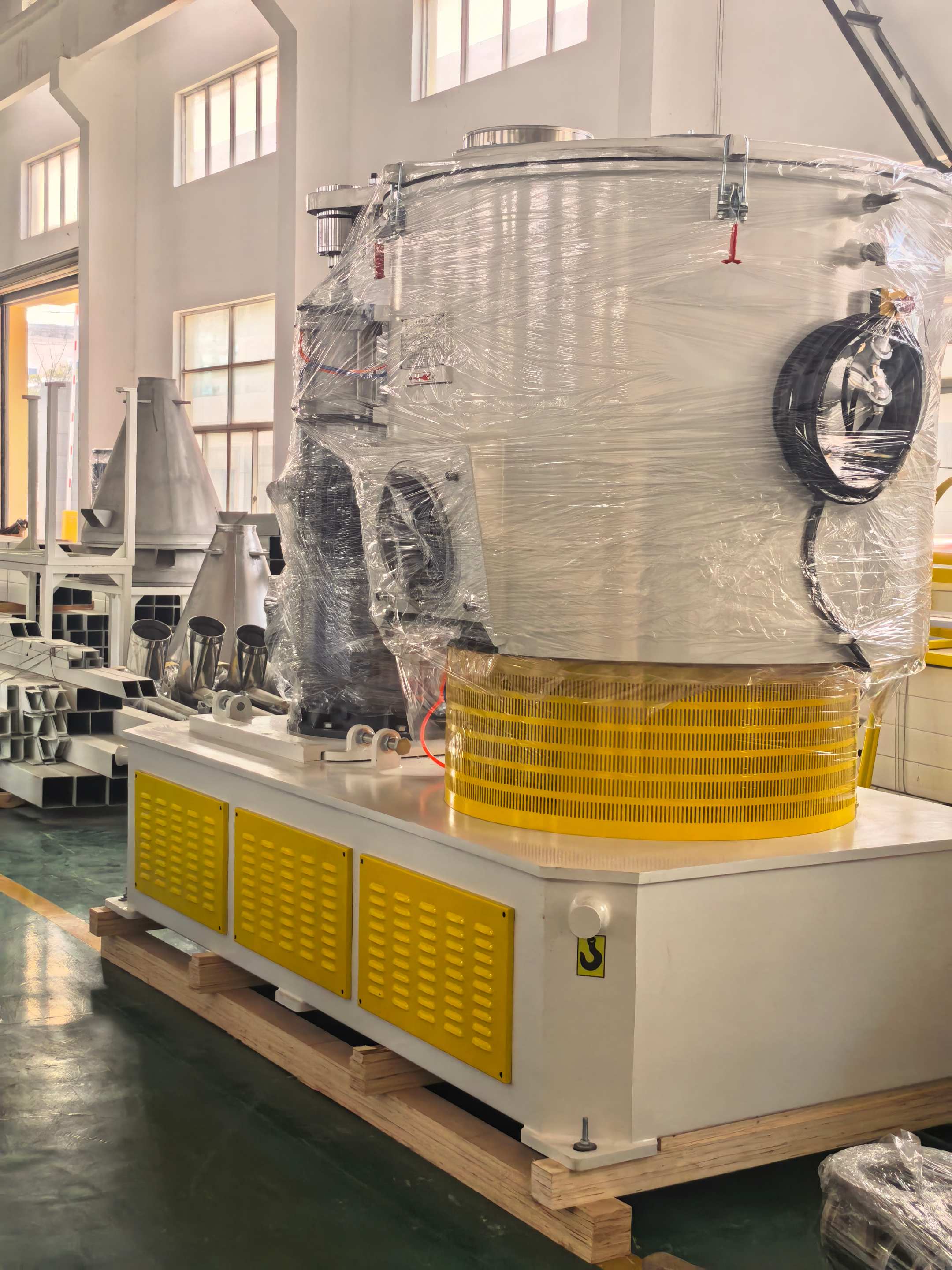
In material handling, airborne dust is more than a nuisance—it can compromise product quality, create safety risks, and drive up cleanup costs. Vacuum loaders address this directly by moving powders through a sealed system, so the material never gets a chance to escape into the surrounding air. Unlike open transfer methods, which often rely on gravity or manual scooping, a vacuum loader uses negative pressure to pull product from a drum, bag, or hopper into a receiving vessel, with filters trapping any residual particles before the air is exhausted.
The real advantage for buyers lies in how this containment translates to practical benefits. For one, less dust means fewer cross-contamination issues in multi-product facilities, a major concern when switching between different powders. It also reduces the need for operator exposure to potentially hazardous or irritating ingredients, something that matters more as workplace health standards tighten. And because the system is closed, ingredient loss from dusting is minimized, so the actual yield stays closer to what was intended.
Facilities that prioritize clean transfer often find that a vacuum loader pays for itself through reduced housekeeping time and fewer rejected batches. The ability to contain dust at the point of transfer keeps work areas visibly cleaner, which can be a deciding factor for customers who tour a production floor. In short, framing dust control as a feature means showing how it supports better product integrity, safer operations, and a more professional operation overall.
Matching Vacuum Loader Capacity to Material Density and Flow Characteristics
Capacity ratings on vacuum loaders usually assume a free-flowing material with a moderate bulk density around 40–50 lb/ft³. Real powders rarely behave that way. Heavy materials with high bulk density may exceed hopper weight limits or require deeper vacuum and a larger line diameter to reach rated throughput, while light, fluffy materials can occupy excessive volume and blind filters before the hopper even fills. Matching starts with working backward from the actual conveying rate required, using the material’s bulk density to determine the true volumetric flow, then selecting a loader whose pickup velocity and filter area can handle that volume without settling in the line.
Flow characteristics complicate this further. Cohesive or bridging materials need steeper hopper angles, air pads, or vibrators; otherwise a loader that works on paper starves or surges unpredictably. Free-flowing abrasives demand wear-resistant elbows and possibly lower pickup velocity to protect components. For cohesive fine powders with low permeability, a higher air-to-material ratio may keep the stream fluidized, but it also increases filter load. Capacity should be derated when the material has poor flow or a high angle of repose, since actual ingestion at the wand is rarely continuous.
A practical approach is to run a short conveying trial with the actual material, measuring pickup rate over a fixed time rather than trusting published curves. Track how much material remains in the line after shutoff and watch filter differential pressure. If the loader’s blower cannot hold rated vacuum at the target rate, or if material builds up in the hose, reduce batch size or increase line diameter and filter area. Matching capacity to density and flow is less about a single number and more about keeping the material suspended, moving, and released at the destination without overloading the filter or wasting energy.
Vacuum Loaders on the Factory Floor: Integration with Silos, Hoppers, and Molding Machines
On a busy production floor, the vacuum loader often sits above the molding machine's material hopper, connected by a flexible or rigid conveying line to a central silo located outside or at the mezzanine level. The loader's pickup wand or receiver pulls pellets from the silo through vacuum, then drops them into the machine hopper after each fill cycle. Routing the piping with minimal bends and using proper grounding helps maintain steady material flow and prevent static buildup that can jam the line.
Integrating the loader with the hopper usually means fitting a level sensor—either a capacitance probe or a rotating paddle—directly into the hopper wall. When the pellet level drops below the sensor, it triggers the vacuum pump to start and the loader's discharge valve to open. The hopper refills in a matter of seconds, and the cycle pauses until the next low-level signal. This on-demand action keeps the molding machine fed without overfilling, which can cause bridging or dust leaks around the lid.
For tighter control, the loader can tie into the molding machine's controller via a dry contact or a simple 24V signal. The machine sends a "material request" pulse after a certain screw recovery count or shot number, and the loader responds only then. Such coordinated timing avoids unnecessary vacuum cycles that waste energy and wear filters. It also lets operators run multiple machines from one central vacuum pump, with each loader's receiver valve opening sequentially so the system never starves the line during simultaneous refills.
From Food Processing to Chemical Blending: Where Vacuum Conveying Excels
Vacuum conveying earns its keep in food processing plants where delicate powders, flours, and granules demand both hygiene and gentle handling. Instead of pushing material with mechanical force, the system pulls it through sealed tubing under negative pressure, so fragile particles aren’t crushed and dust never escapes into the production area. That enclosed path matters when you’re moving everything from icing sugar to whey protein—cross-contamination risks drop, washdown procedures stay simpler, and operators aren’t breathing in airborne fines. Bakeries, dairy facilities, and snack manufacturers often find that a well-tuned vacuum line handles recipe changes with far less downtime than auger or bucket systems.
The same principles translate cleanly into chemical blending, where containment and precision become even more critical. Vacuum conveying keeps aggressive or toxic powders fully enclosed from pickup point to mixer, protecting workers and preventing fugitive dust from settling on equipment or neighboring lines. It also pairs naturally with weigh batching and inert-gas blanketing, letting a blender pull exact amounts of raw materials without opening hatches or creating static discharge risks. Whether the task is moving titanium dioxide pigment, flame retardants, or specialty additives, the ability to convey dry ingredients consistently across varying distances gives chemical processors a level of control that manual dumping and mechanical screws simply can’t match.
Common Wear Points in Vacuum Loaders and How to Extend Service Life
Vacuum loaders rely on a handful of components that take the brunt of daily operation. The pickup wand and its flexible hose are frequent casualties — abrasive materials gradually erode the inner walls, leading to air leaks that slash conveying efficiency. Similarly, the filter element inside the receiver sees constant flexing and fine-particle impingement. Once the filter develops micro-tears or becomes blinded with dust, the vacuum pump has to work harder, accelerating wear on seals and bearings.
The material discharge valve and its gaskets are another common trouble spot. Every cycle of opening and closing under negative pressure stresses the hinge points and sealing surfaces. Powder buildup on the valve seat can prevent a tight seal, causing material to trickle out between cycles or forcing the system to over-cycle. Vibratory motors or air knockers, if fitted, also suffer from loose mounting bolts and worn internal springs after extended use.
To extend service life, start with a weekly visual inspection of wands, hoses, and clamps — replace any hose that shows flattening or internal ridges. Keep spare filters on hand and clean them with a gentle pulse rather than aggressive brushing. For discharge valves, wipe the sealing faces after each batch and re-torque fasteners monthly. Lubricate moving pivots with a dry film spray to avoid attracting dust. Small habits like these often double the interval between major rebuilds.
FAQ
Many Chinese manufacturers now use thicker steel plates in cyclone bodies and reinforced weld joints, targeting harsh environments like ports, mines, and chemical plants. Filtration systems often combine a cyclone pre-separator with pulse-jet cartridge cleaning, and differential pressure sensors trigger automatic filter purging. This practical approach reduces clogging and extends filter life without overly complex controls.
Plastics processing, chemicals, food and beverage, pharmaceuticals, cement, mining, and battery material production all rely on these machines. The rapid growth of lithium battery plants in China has pushed suppliers to develop vacuum loaders specifically for handling fine, moisture-sensitive cathode and anode powders, which is a notable specialization compared with generic models.
For abrasive powders, manufacturers offer ceramic-lined elbows, hardened rotary valves, and replaceable wear plates in the pick-up nozzle and separator. High-temperature versions use stainless steel collectors, heat-resistant filter bags or cartridges, and sometimes water-cooled cyclones. Several models are rated for continuous operation with inlet temperatures up to 200 C, but it is wise to confirm the exact limit for the material you are moving.
Daily checks should include filter differential pressure, seal integrity around the discharge valve, and the vacuum pump oil level if it is a rotary vane unit. Cyclone pre-separators need regular emptying, and flexible hoses should be inspected for internal wear, especially at bends. Replacing filter cartridges before the pressure drop becomes excessive avoids motor overload and keeps energy consumption stable.
Yes, but not every model meets the requirements. Look for product-contact parts in 304 or 316L stainless steel with mirror polishing, food-grade silicone seals, and filter media that comply with FDA or EU food contact regulations. Some suppliers provide cleaning-in-place options and document material traceability. Always request certificates and, if possible, a factory audit focused on sanitary welding and surface finish.
The purchase price is typically 30 to 50 percent lower for a comparable capacity. Total cost of ownership depends less on the initial saving and more on spare parts availability, energy efficiency, and local service. Established Chinese brands now keep warehouses in Europe and North America and offer same-week dispatch for common wear parts, which narrows the long-term cost gap and can make them more economical than perceived.
Beyond the quoted price, ask for a recent factory audit report, three or more customer references in your industry, and a clear list of local spare parts stock. Check whether the supplier provides on-site commissioning, operator training, and a detailed electrical schematic. A supplier that customizes control logic to match your upstream and downstream equipment is generally more reliable than one offering only a standard machine.
Yes, many manufacturers offer ATEX or IECEx compliant options, including explosion-proof motors, anti-static filter cartridges, conductive hoses with grounding straps, and inert gas purging connections. Some designs use a liquid ring vacuum pump to eliminate ignition sources. However, the hazardous area classification must be specified precisely, and the final assembly should be certified by a recognized body rather than relying on a component-level certificate alone.
Conclusion
Plastics processors across China have turned vacuum loaders into a default choice for moving resin and regrind, not because the machines are flashy but because they solve a daily headache: keeping material flowing without letting fines escape into the air. The enclosed conveying path means powders and granules stay contained from pickup to discharge, which matters just as much for operator safety as it does for housekeeping. Yet a loader that works beautifully on free-flowing pellets can choke on a dense, sluggish masterbatch, so matching suction power and receiver volume to bulk density and particle behavior is where experienced buyers spend their time. It is rarely about buying the biggest unit; it is about sizing the vacuum curve so the material arrives at the hopper in a steady, predictable stream.
On the factory floor, these loaders do not operate in isolation. They sit between silos, day bins, and the feed throat of an injection molding machine or extruder, often triggered by a level sensor and expected to run unattended for shifts at a time. The same basic vacuum conveying principle extends far beyond plastics, showing up in food plants moving flour and sugar, and in chemical blending rooms handling pigments or additives. Long service life comes down to watching the usual trouble spots: flexible hoses that wear through at bends, filter elements that blind over with fine dust, and seals that lose their grip after thousands of cycles. Replacing those parts before they fail, rather than after, keeps a vacuum loader running quietly in the background where it belongs.
Contact Us
Contact Person: Darye WANG
Email: [email protected]
Tel/WhatsApp: 86-13501017897
Website: https://www.fcntd.com/