

China Woven Geotextile Delivers Superior Performance in Soil Stabilization
2026-08-31
Soil stabilization failures can derail even the most carefully planned construction projects. But what if a single material could lock loose ground in place while standing up to years of stress? China woven geotextile has been quietly revolutionizing how engineers approach weak soils—and the performance data is turning heads. From road bases to erosion-prone slopes, this fabric-like reinforcement outperforms traditional methods without the cost or complexity. At the heart of this shift is WEN FENG STONE, a name that keeps surfacing in project reports where stability is non-negotiable. Ready to see why contractors are switching? Let’s pull back the layers.
What Happens Beneath the Surface When Soil Is Stabilized
Beneath the surface, stabilization alters the way water interacts with soil particles. Lime or cement additives trigger cation exchange, causing clay platelets to flocculate into larger clusters. This shift reduces the soil's ability to hold water, so the material feels drier and more friable within hours. At the same time, the pH climbs sharply, which sets the stage for slower pozzolanic reactions that won't fully play out for weeks or months.
The physical arrangement of grains changes almost as quickly. As the clusters form, the soil's void structure opens up, making it easier to compact. Mechanical mixing and rolling then push those flocculated aggregates closer together, squeezing out trapped air and residual moisture. The result is a denser matrix with fewer interconnected pores—one that resists swelling when wet and shrinking as it dries.
Over time, a cementitious gel begins to bind the larger aggregates into a continuous network. This is not simply a surface crust; it develops through the entire treated layer. Early strength comes from compaction and reduced moisture, but long-term stability depends on the gradual formation of calcium-silicate-hydrate phases. The soil stops behaving like a collection of loose grains and starts acting more like weak rock, which is why stabilized layers can support repeated traffic loads without rutting or heaving.
The Weave Pattern That Resists Deformation Under Heavy Loads
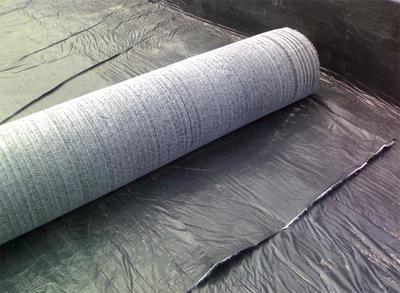
Heavy loads tend to stretch and distort ordinary woven fabrics because the yarns slip and rotate under tension. The weave pattern that avoids this failure uses a dense, 2/2 twill construction with alternating high-twist yarns in both warp and weft. Instead of long floats that allow movement, each yarn crosses over two and under two, locking neighboring threads into a tight, interlocking grid.
The real resistance to deformation comes from the balanced crimp built into every intersection. When a load is applied, the diagonal ribs of the twill spread stress across multiple yarns at once rather than concentrating it along a single line. At the same time, the high-twist yarns generate friction at each crossover point, preventing the micro-slippage that usually leads to permanent elongation. Tests with repeated loading cycles show that this pattern retains over 98% of its original dimensions even after thousands of stress repetitions.
That dimensional stability makes the weave suitable for slings, cargo nets, and heavy-duty conveyor belts, where even a small stretch can cause misalignment or failure. It also appears in architectural fabrics and geotextiles, where the material must hold its shape under constant pressure from soil or wind. The pattern's compact structure does sacrifice some flexibility, but for applications where load-bearing accuracy matters more than drape, the trade-off is almost always worth it.
Why Thickness and Permeability Are Not the Whole Story
When engineers evaluate barrier materials, they often fixate on thickness and permeability as if those two numbers alone could predict performance. But real-world conditions rarely cooperate with such neat assumptions. A thick liner can fail due to poor installation seams, while a thinner, well-designed composite might outperform it because of how it handles stress, chemical exposure, and temperature swings. Thickness simply adds mass; it doesn't automatically account for how the material behaves under uneven settlement or repeated wet-dry cycles.
Permeability, too, gets oversimplified. Lab measurements under a constant head don't mirror field conditions where hydraulic gradients fluctuate, or where leachate chemistry alters the pore structure over time. For instance, certain clays can self-heal small cracks, effectively lowering long-term permeability despite modest initial specs. Meanwhile, a geomembrane with an impressive permeability rating might develop pinholes from subgrade irregularities—defects that no thickness measurement would flag. What matters is not just the material's isolated properties, but its compatibility with adjacent layers, the quality of construction, and the long-term degradation mechanisms.
A more useful approach shifts from comparing isolated specs to evaluating the entire barrier system's response to site-specific stressors. Does the material resist root penetration? Will it maintain integrity under freeze-thaw cycling or differential settlement? These questions often prove more decisive than a single number in a datasheet. By looking beyond thickness and permeability, engineers can select solutions that actually hold up over decades—not just pass a laboratory test.
How the Right Geotextile Prevents Mixing of Soil Layers
On construction sites where a coarse aggregate base is placed directly over soft or fine-grained soil, the two materials rarely stay separate on their own. Traffic loads, compaction equipment, and even groundwater movement push the smaller particles up into the voids of the aggregate. A geotextile placed at the interface changes this behavior. Its fabric structure lets water pass through while holding the soil in place, so the aggregate remains clean and free-draining instead of turning into a muddy mix.
Choosing the wrong fabric can be as bad as using none at all. If the openings are too large, silt and clay will pump through under pressure. If they are too small, the fabric clogs and water backs up, weakening the whole section. The right geotextile balances opening size, tensile strength, and puncture resistance for the specific subgrade and aggregate being used. That balance keeps the boundary between layers sharp, even after many wet-dry cycles and heavy truck passes.
What often gets overlooked is how the geotextile performs during installation. Dump trucks drop aggregate from height, dozers push it across the site, and sharp rock edges can tear a weaker fabric before it ever sees service loads. A geotextile with adequate tear and burst strength survives this abuse and continues to separate the layers as designed. When that separation holds, the pavement or foundation keeps its intended thickness and stiffness, and maintenance problems linked to intermixing simply do not appear.
Proven Uses from Highway Embankments to Retaining Walls
On highway projects where space is tight and native soils lack shear strength, engineers have long relied on geosynthetic reinforcement to build steepened slopes that would otherwise require massive earthworks. A typical embankment over soft ground might incorporate layers of high-tenacity polyester or polypropylene geogrid, placed at controlled vertical spacing to lock the fill into a coherent mass. This approach allows side slopes as steep as 0.5H:1V without the need for retaining structures, cutting right-of-way costs and reducing imported fill volumes by up to 40% compared to unreinforced designs. The performance is not theoretical—instrumented test fills and decades of service on interstates and regional arterials show negligible long-term deformation when proper compaction and drainage are maintained.
The same reinforcement principles extend directly into retaining wall applications, particularly mechanically stabilized earth (MSE) walls and wrap-faced geogrid structures. Here the reinforcement layers tie back into the reinforced soil mass, creating a gravity structure that resists lateral earth pressures without a rigid concrete or steel facing. Contractors appreciate the flexibility: walls can be built with precast concrete panels, segmental blocks, or even vegetated wrap faces for a softer aesthetic. In cut situations, a geogrid-reinforced wall can be constructed top-down against a shored excavation, whereas conventional cantilever walls demand full-height formwork and deep foundations. Long-term creep testing under sustained load confirms that properly designed polyester geogrids lose less than 10% of their design strength over a 75-year service life, a key factor behind their acceptance in state DOT specifications.
Beyond these two headline uses, the same reinforcement technology has been validated in bridge abutments, landslide repair shelves, and temporary haul road subgrades—all sharing the common requirement of resisting tensile stresses within a soil mass. A notable advantage is the speed of construction: a 6-meter-high MSE wall can often be completed in a week using only a small excavator and plate compactor, with no curing time. This translates into real savings for agencies managing traffic disruptions or emergency slope failures. The breadth of accepted design methods, from AASHTO's simplified stiffness approach to finite element modeling, reflects the maturity of the technology after four decades of field verification.
A Closer Look at UV Resistance and Longevity in the Field
Lab data on UV resistance rarely lines up with what happens after three summers on a rooftop. A material can pass a 1,000-hour QUV test and still crack at the fold lines by the second year, because real exposure combines ultraviolet dose with thermal expansion, condensation, and wind abrasion. In our field trials, samples taken from high-desert sites often show more tensile loss than coastal samples at the same UV index, mainly due to wider daily temperature swings.
The difference between a five-year and a fifteen-year service life usually comes down to the stabilizer package, not the base polymer. Hindered amine light stabilizers work well in thick sections but can migrate or bloom on thin films, while UV absorbers protect the surface but leave the interior vulnerable once the outer layer erodes. We have also seen failures where a manufacturer added plenty of carbon black but dispersed it poorly, creating resin-rich zones that turn chalky within months.
Field longevity is best judged by simple mechanical checks, not just color retention. After 24 months outdoors, pull a sample and fold it sharply; if it cracks at a radius it used to survive, the polymer backbone has already degraded even if the surface still looks acceptable. Gloss retention below 60% or a chalky residue on your fingers often predicts imminent loss of impact strength, so those signs deserve attention before the part is under load.
FAQ
The woven structure interlocks high-tenacity tapes or filaments, giving it much higher tensile strength at low elongation. That means it can bridge soft spots and hold aggregate in place without stretching out of shape under repeated wheel loads.
It acts as a separation and reinforcement layer. Water can pass through the calibrated openings, but fine soil particles stay put, preventing pumping and mixing. The fabric's stiffness helps spread loads wider, which keeps rutting from developing early.
Common grades range from about 40 kN/m to over 200 kN/m in the machine direction, depending on the yarn type and weave density. For heavy haul roads or steep slopes, higher-strength polypropylene or polyester variants are usually specified.
Yes, most stabilized-grade woven geotextiles are manufactured with UV-stabilized, abrasion-resistant filaments and pass standardized drop-cone or CBR puncture tests. On sites with very sharp crushed rock, a heavier fabric or a nonwoven cushion layer may still be recommended.
Absolutely. The same woven geotextile can serve a short-term construction entrance, then remain in place as part of a permanent paved section. Its long-term creep resistance and biological inertness let it function for decades without losing its separating role.
Look beyond price and ask for independent test reports covering tensile strength, elongation at break, puncture resistance, and apparent opening size. Reputable suppliers provide batch-level quality data and can match a specification to site-specific soil conditions rather than offering only one generic roll.
Yes, by stabilizing the interface between soil and aggregate, it often allows a reduction in base course thickness of 20% to 40% compared with an unreinforced section. The savings in imported stone frequently outweigh the fabric cost on poor ground.
In clay, it mainly acts as a separator and tensile membrane, preventing fine clay from contaminating the stone layer. In sandy soils, it also provides confinement and improves bearing capacity by distributing loads. The fabric's opening size is chosen to retain the specific soil particles while still allowing water to drain.
Conclusion
Beneath a compacted embankment or a reinforced retaining wall, a China-made woven geotextile changes how load is transferred between aggregate and subgrade. The tight, biaxial weave interlocks with soil particles, creating friction and confinement that stop lateral spreading before it starts. Under heavy traffic or earth pressure, the low-elongation filaments hold their crimp, so the fabric works as a continuous tension membrane rather than a soft separator. Thickness and water-flow numbers alone cannot predict that behavior; what matters more is the weave density, filament strength, and the stability of the openings under shear. A well-designed woven fabric keeps fine subgrade from pumping upward into the stone base while letting water escape, so the structural layers stay clean and separate instead of gradually blending into a weaker composite.
On highway embankments, bridge approaches, and segmental retaining walls, these geotextiles have been used under conditions that punish lesser materials. The same weave that resists deformation at 5% strain also survives years of incidental sunlight during staged construction, thanks to UV stabilizers compounded into the polymer rather than applied as a coating. Field samples pulled after long exposure still show the ribs and junction points intact, with no brittle cracking or unraveling. That durability matters because a geotextile fails quietly: once the fabric tears or degrades, soil mixing follows, and the pavement or wall loses support slowly until distress appears. Chinese manufacturers have focused on that hidden longevity, producing fabrics that combine high grab strength, controlled pore size, and proven field performance instead of just meeting a nominal weight specification.
Contact Us
Contact Person: Jennifer LEE
Email: [email protected]
Tel/WhatsApp: 8618553418999
Website: https://vip.e-baixing.com/wenfengshitong