

Commercial and Industrial Energy Storage System (C&I ESS) Company: Top Innovators Shaping the Future of Power Management
2026-11-16
Commercial and industrial energy storage has moved past early pilot projects into a critical role in power management. As grid instability and rising energy costs squeeze margins, the real differentiator is who can deliver reliable, scalable systems. That's where companies like UNC are making their mark—combining hardware engineering with smart software to help businesses take control of their energy future. Below, we explore the top innovators shaping this space.
Beyond Backup: Energy Storage as a Revenue-Generating Asset
Most facility managers still think of batteries as an insurance policy—a silent box waiting for the next blackout. That mindset misses the bigger opportunity. When paired with intelligent controls, an energy storage system becomes a dynamic participant in electricity markets. It can charge during low-price periods and discharge when rates spike, turning daily price volatility into a steady stream of savings. Some operators even stack multiple value streams: shaving peak demand charges, providing frequency regulation to the grid, and earning incentives for reducing load during stressed conditions.
The economics have shifted dramatically over the past five years. Battery costs have fallen far enough that standalone storage projects now pencil out without relying on solar co-location. Software plays a crucial role here—algorithms that predict load patterns, weather-driven generation, and market prices can extract significantly more value from the same hardware. Rather than a fixed schedule, the system responds in real time to whatever the grid offers, often capturing revenue opportunities that last only minutes. This turns storage from a depreciating asset into one that actively works to pay itself off.
The most successful adopters treat storage like a financial instrument. They model different market scenarios, factor in tariff structures, and continuously rebalance between reliability and revenue goals. It's not about abandoning backup power—it's about recognizing that the same battery can serve both roles without compromising either. When grid conditions are normal, the system trades and optimizes. When an outage hits, it seamlessly switches to protecting critical loads. That dual capability is what finally makes energy storage a compelling line item on a balance sheet rather than an afterthought.
Peak Shaving in the Real World: Why Timing Matters More Than Capacity
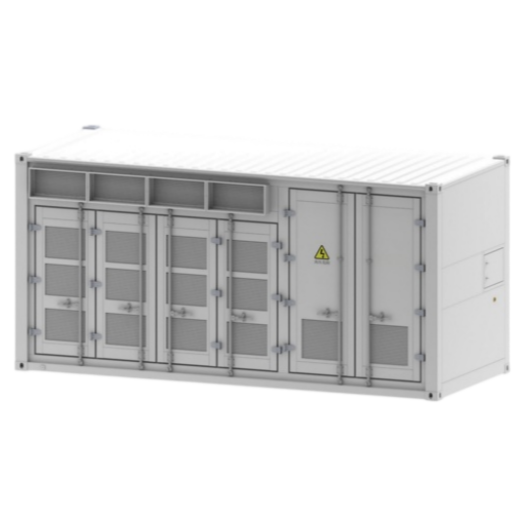
Most facility managers fixate on battery size when chasing peak demand charges. They assume a bigger system automatically yields deeper savings. But in practice, a perfectly sized battery paired with sloppy discharge timing often underperforms a smaller one triggered at the right moments. Utility peaks rarely line up with your building's internal load spikes, and missing those narrow windows by fifteen minutes can erase an entire month's reduction.
The real skill lies in reading the demand meter's interval data and overlaying it with operational rhythms. A grocery store's refrigeration defrost cycles, a factory's shift changes, an office tower's pre-cooling blast at 6 a.m. — these predictable yet non-obvious events create the spikes worth shaving. When you discharge during those exact intervals rather than across a broad afternoon plateau, the same kilowatt-hour output removes two or three times the demand charge. Timing converts capacity into actual financial return.
Weather introduces another layer. Cloud cover rolling over a solar array or a sudden heat wave driving rooftop units harder can shift your peak by hours, not minutes. Systems that rely on static schedules fail here. The ones that consistently save money watch live load, weather forecasts, and rate tariffs together, then make second-by-second discharge decisions. That responsiveness, not raw amp-hours, separates a good month from a wasted one.
Battery Chemistry Trade-Offs: Selecting the Right Cells for Harsh Industrial Settings
Temperature range often drives the first decision. Lithium iron phosphate (LFP) stays stable at high heat and resists thermal runaway, but its discharge capacity drops noticeably below -20°C. Lithium thionyl chloride (Li-SOCl2) handles extreme cold and holds a flat voltage curve, yet it is non-rechargeable and creates disposal headaches. Nickel-cadmium (NiCd) still appears in sub-zero applications with heavy pulse loads, even though its weight and memory effect are drawbacks. So the first trade-off is operating temperature versus rechargeability and energy density.
Mechanical stress separates cell formats quickly. Pouch cells can delaminate or swell under constant vibration unless the pack includes compression plates and careful mounting. Cylindrical steel-cased cells usually survive shock and vibration better, but they pack less efficiently into odd-shaped enclosures. Lead-acid remains common in stationary backup roles because it tolerates abuse and costs little upfront, though its low energy density and need for periodic watering add hidden labor. Nickel-metal hydride offers a middle ground in density and cold performance, but its higher self-discharge rate makes it a poor fit for long dormant periods.
Safety and lifecycle cost narrow the field further. In petrochemical, mining, or confined spaces, any cell that vents with flame is unacceptable, so LFP and lithium titanate (LTO) gain favor despite LTO's low nominal voltage and higher price per watt-hour. Sealed lead-acid is inherently safe but wears out fast under deep cycling, forcing frequent replacement. The practical approach is to identify the dominant stress—temperature extremes, constant vibration, or zero-tolerance safety—and accept the trade-off in energy density or cost that comes with the cell chemistry best suited to that stress.
From Demand Response to Dynamic Dispatch: The Role of Predictive Algorithms
Traditional demand response programs have long relied on blunt signals—utilities asking large customers to cut load during peak hours or adjusting thermostats remotely. While these measures can shave demand, they are often reactive, tied to fixed schedules, and blind to the nuanced availability of distributed energy resources. Predictive algorithms change this picture by turning a sporadic, event-driven response into a continuous planning function.
With dynamic dispatch, software forecasts load, solar generation, and market prices minutes to hours ahead, then coordinates batteries, electric vehicle chargers, HVAC systems, and industrial processes as a single flexible portfolio. Instead of waiting for a demand response event, the system pre-positions storage to absorb midday surplus and discharge during evening ramps, or pre-cools a building before a heat spike. The algorithm weighs hundreds of variables—weather patterns, occupancy data, equipment efficiency curves—and issues granular setpoint adjustments that no manual operator could match in real time.
The economic payoff shows up in reduced capacity charges, lower imbalance penalties, and better utilization of behind-the-meter assets. Yet predictive dispatch is not a set-and-forget solution. Model drift, data latency, and the occasional mismatch between forecast and reality still require human oversight and well-designed fallback rules. Organizations that treat the algorithm as a decision-support layer rather than an autonomous black box tend to extract the most value, blending machine-speed optimization with operator judgment during abnormal grid conditions.
Financing the Transition: How Creative Models Unlock C&I Storage Deployments
Commercial and industrial storage projects rarely fit the underwriting box favored by traditional lenders. The revenue puzzle includes demand-charge savings, time-of-use arbitrage, and sometimes grid services—each tied to local tariff rules and a facility’s load shape. Banks typically want a predictable, contracted cash flow, but C&I savings depend on operations that can shift with production schedules or seasonal demand. This mismatch leaves many otherwise viable projects stranded at the financing stage.
Creative deal structures are stepping into that gap. Energy-storage-as-a-service lets the developer own and operate the asset on the customer’s site, charging a fixed monthly fee or a split of the verified savings. Shared-savings agreements align incentives by linking payment to actual bill reductions. Some developers pair tax equity with performance insurance, or use revenue-share models where the host pays nothing upfront but commits to a long-term site lease and energy services contract. These arrangements convert lumpy, uncertain savings into a stream that third-party investors can underwrite.
The result is a wider pool of capital and a faster pipeline. By shifting performance and operational risk away from the host, these models make storage feasible for warehouses, cold storage facilities, and mid-sized manufacturers that would never fund a capital-intensive battery project on their own balance sheet. In markets with volatile peak prices or demand charges, the unlocked capacity adds up quickly—many small systems aggregated under one financing umbrella begin to look like a utility-scale portfolio, attracting institutional money that was previously out of reach.
Power Quality as a Production Metric: Eliminating Downtime With Millisecond Response
Most plants treat power quality like a background concern, something the facilities team handles when a breaker trips or a drive faults. But once you start tracking voltage sags, harmonics, and transient events as production metrics, the picture changes fast. A half-cycle dip that never shows up on a standard uptime report can still shut down a pick-and-place machine, and by the time the line restarts, thousands of units are lost. Measuring power quality in milliseconds, not minutes, turns those invisible interruptions into visible, actionable data.
Millisecond-level monitoring doesn't just record what happened—it gives you a chance to react before the line stops. When a sag detector triggers at 3 ms and an automatic transfer switch or dynamic voltage restorer kicks in within a quarter cycle, the machine never sees the event. That kind of response speed transforms power quality from a post-mortem tool into a preventive control loop. The metric that matters isn't uptime alone; it's the number of near-misses you caught and corrected without anyone on the floor noticing.
Rolling this out means adding high-speed power analyzers at critical nodes—presses, conveyors, robotic cells—and feeding their event data into the same dashboard as OEE and cycle time. The first month of data usually surprises everyone: dozens of short sags per week, half of them deep enough to cause resets if left alone. Fixing those with inline correction or better isolation pays for itself within a quarter, not because the equipment breaks less, but because the line keeps moving when the grid hiccups.
FAQ
At its core, a C&I ESS is a battery-based system installed at businesses, factories, or campuses to store electricity for later use. The main difference lies in scale and purpose: residential units typically manage home solar and backup needs, while utility-scale projects stabilize the grid. C&I systems sit in the middle, focusing on demand charge reduction, time-of-use arbitrage, and maintaining operations during brief outages without the footprint of a grid-level facility.
Electricity costs for commercial users often include demand charges that can make up 30-70% of the bill. Storage lets businesses discharge during peak windows, shaving those charges. Beyond that, it enables participation in frequency regulation and demand response programs, turning a passive cost center into an active revenue stream.
The leaders tend to offer integrated hardware and software platforms, not just battery packs. They emphasize predictive analytics, real-time energy optimization, and seamless integration with existing building management systems. Their products are also designed for modular scaling, so a facility can start with one container and expand without replacing the entire system.
Lithium iron phosphate (LFP) chemistry has become dominant due to safety and cycle life, while machine-learning-driven controls are improving dispatch decisions. Hybrid systems that pair storage with solar or EV charging infrastructure are also gaining traction, allowing sites to maximize self-consumption and reduce reliance on the grid during expensive periods.
They cut utility costs through peak shaving and load shifting, delay expensive infrastructure upgrades by reducing peak demand, and can generate revenue through grid services where regulations allow. In some markets, businesses also benefit from tax incentives or accelerated depreciation, shortening the payback period to under five years.
Fire safety, permitting complexity, and uncertain utility tariffs remain the biggest hurdles. Top innovators tackle these by using inherently safer battery chemistries, offering pre-engineered enclosures that speed up approvals, and providing software that automatically adjusts to tariff changes - reducing risk for the end user.
Beyond price per kilowatt-hour, evaluate the provider's track record in your specific industry, the sophistication of their energy management software, and whether they offer performance guarantees or remote monitoring. A strong partner will also help navigate incentive programs and utility interconnection requirements, not just sell hardware.
Conclusion
Forward-thinking C&I ESS companies have stopped treating batteries as simple backup hardware. Instead, they engineer systems that actively earn revenue through frequency regulation, capacity markets, and time-of-use arbitrage. The real differentiator, however, lies in how they handle peak shaving: a well-timed 15-minute discharge can outperform a larger bank that responds sluggishly. This timing-first approach demands predictive algorithms that shift from passive demand response to dynamic dispatch, anticipating load spikes and grid price swings before they happen. In harsh industrial settings, cell selection becomes a survival decision. Lithium iron phosphate often wins for thermal stability and cycle life, while nickel manganese cobalt may offer higher energy density but requires tighter thermal management. Leading companies match chemistry to the specific abuse profile of a facility rather than defaulting to a single spec.
Financing models have evolved in parallel. Shared savings agreements, storage-as-a-service leases, and hybrid debt structures now let mid-sized manufacturers deploy systems without upfront capital. But the quiet breakthrough is power quality. Top innovators treat voltage sags and frequency deviations as production metrics, not electrical trivia. With millisecond response, they eliminate downtime that traditional UPS and generator combos cannot catch. The result is a C&I storage asset that pays for itself through energy arbitrage, demand charge reduction, and avoided scrap or line stoppages. Companies that combine these capabilities—precise timing, rugged cell chemistry, predictive software, and flexible financing—are the ones shaping how industrial power management actually works today.
Contact Us
Contact Person: Manager Leng
Email: [email protected]
Tel/WhatsApp: 8613764878967
Website: https://www.unc-energy.com