
Cooling and Automation System Manufacturer Guide for Smarter Facility Management
2026-09-01
Cooling systems rarely announce their failures—they just get louder, hungrier, and less reliable until a breakdown forces your hand. The facilities that avoid this are the ones treating cooling and automation as one system, not two. That's exactly what this manufacturer guide is about: how to evaluate partners who can deliver integrated hardware and adaptive controls, not just boxes with sensors. If you're looking for a smarter way to manage your facility, THINKING-LONG brings that mindset to every project—simple, durable, and built to learn. Dive in to see what separates a real automation partner from a parts supplier.
Matching Cooling Capacity to Real Facility Loads Without Overspending
Facility managers often fall into the trap of sizing cooling systems based on nameplate specs or worst-case scenarios that never materialize. This habit leads to oversized chillers, excessive energy draw, and unnecessary capital costs long before the first maintenance call. A better approach starts with a granular load profile: track actual heat gains from equipment, occupancy patterns, and seasonal shifts over at least twelve months. Use data loggers and building management system trends to identify the true peak load, then add a modest safety margin of 10-15% rather than doubling the calculated figure. This practice alone can trim upfront investment by 20-30% while keeping temperatures stable during genuine stress events.
Once the real load is known, matching capacity becomes a balancing act between modularity and headroom. Instead of installing one large compressor, consider multiple smaller units staged to ramp up only when demand rises. For example, a data center with a 300 kW average load but 450 kW occasional peak could deploy three 150 kW chillers. Under normal conditions, two units run at partial load, and the third remains offline until needed. This configuration avoids the inefficiency of a single 600 kW chiller cycling on and off, which shortens equipment life and wastes energy through frequent starts. Modular systems also allow phased expansion: add capacity only when occupancy or equipment density actually grows, not as a speculative bet.
Finally, keep the system honest with ongoing verification. A mismatch often creeps in after renovations, server refreshes, or changes in building use. Schedule quarterly reviews of cooling load versus installed capacity using simple metrics like runtime percentage and compressor staging frequency. If chillers consistently operate below 40% load, you have room to downsize at the next replacement cycle or redistribute capacity to other zones. Conversely, if any unit runs above 90% for more than a few hours per week, that is the signal to add a small modular increment rather than overhaul the entire plant. The goal is not perfect foresight, but a feedback loop that keeps cooling spend aligned with what the facility actually demands—no more, no less.
Why Legacy Automation Often Undermines Modern Energy Goals
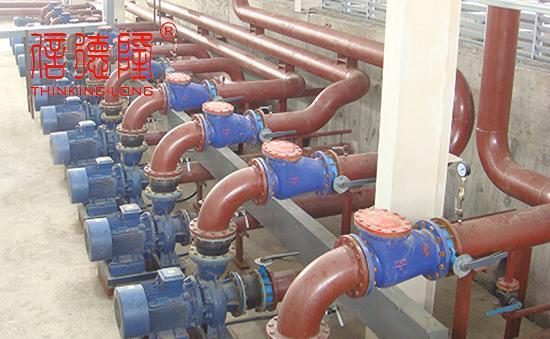
Many industrial facilities still run on control systems designed decades ago, when energy was cheap and environmental targets barely registered on the balance sheet. These legacy platforms prioritize uptime and throughput above all else, often locking in wasteful habits: pumps that never throttle down, fans that run full tilt regardless of load, and boilers that cycle inefficiently because nobody reprogrammed the setpoints after the last retrofit. Upgrading them isn't just about swapping out hardware—it's about unwinding an entire layer of assumptions baked into the original logic. Until that happens, even the most ambitious efficiency drives hit a wall, because the underlying automation quietly fights every optimization effort.
A more insidious problem is data invisibility. Older supervisory control and data acquisition (SCADA) setups weren't built to feed real-time consumption metrics into modern analytics platforms. Operators end up flying blind, forced to make fuel or power decisions based on shift logs and monthly utility bills rather than granular, second-by-second demand signals. This gap creates a perverse incentive: when you can't see where energy is being squandered, you're much less likely to challenge the status quo. The result is a facility that meets yesterday's production targets while quietly missing today's carbon and cost-reduction goals by a wide margin.
Then there's the skills mismatch. Engineers who understand the quirks of relay logic and proprietary protocol converters are retiring, and the younger workforce is trained on digital twins, edge computing, and open-source control stacks. When a legacy system hiccups, the response is often to patch it with yet another workaround rather than rethink the control architecture. Each patch adds complexity and erodes the system's ability to respond dynamically to variable renewable supply or time-of-use pricing. The longer this cycle continues, the wider the gap between what the energy transition demands and what the old automation can deliver.
Selecting Manufacturers That Support Open Protocols and Future Retrofits
When evaluating potential manufacturers, the real test isn't the feature list on day one, but how the product will behave five years down the line. Brands that commit to open protocols—like MQTT, Modbus, BACnet, or Zigbee—give you leverage. Instead of being locked into a single app or cloud service, you can mix hardware from different vendors, swap out a failing sensor for a newer model, or even migrate your entire automation logic to a different platform without ripping out wiring or replacing every wall switch.
Look beyond glossy marketing and ask pointed questions: Does the gateway expose a local API? Are firmware updates signed and delivered without forcing a subscription? Can you export your device configurations as plain text or JSON? These details reveal whether a manufacturer sees you as a partner or a captive revenue stream. A company that publishes protocol documentation, maintains a public issue tracker, and supports third-party integrations is signaling that your investment won't become e-waste when their business model shifts.
Retrofitting is where open protocols truly pay off. A building wired with proprietary sensors a decade ago might need a complete overhaul to meet new energy codes, but a system built on open standards can often absorb upgrades incrementally—adding a few new sensors, replacing an aging controller, or layering on a local energy manager without disturbing the existing backbone. That flexibility isn't just convenient; it's the difference between a five-year refresh cycle and a fifteen-year lifespan.
Cutting Energy Waste Through Smarter Sequencing and Setpoint Strategies
Most facilities already have the equipment they need to cut a meaningful slice of their energy bill—what they lack is a logic that tells that equipment when to back off. A chiller plant running two machines at 60 percent load is often less efficient than one machine at 85 percent, yet the control sequence rarely makes that call. By staging compressors, pumps, and fans according to measured load instead of a fixed rotation, you avoid the persistent low-load operation that quietly wastes thousands of kilowatt-hours. The trick is to let actual demand, not time of day, drive the next start or stop.
Setpoints are equally guilty. Many buildings still hold the same chilled water or supply air temperature year-round, ignoring the fact that a mild spring day does not need the same output as a peak summer afternoon. Resetting the supply temperature upward when outdoor conditions allow, or widening the deadband on zone sensors by a degree or two, reduces mechanical cooling and reheat energy without anyone noticing a comfort shift. A two-degree adjustment on a large air handling unit can trim fan and coil energy by double digits in shoulder seasons.
What separates a good sequence from a great one is how well it adapts after the initial commissioning. Operators who track the gap between expected and actual energy use can spot a stuck damper or a drifting sensor before it becomes a monthly penalty. Small, deliberate changes—staggering morning start times, letting spaces coast through unoccupied hours, or tying condenser water setpoints to wet-bulb rather than dry-bulb temperature—build into savings that persist, rather than fading after the control contractor leaves.
Using Operational Data to Predict Failures Before They Escalate
Equipment rarely breaks without warning. Vibration patterns shift, temperatures climb a few degrees, and electrical signatures drift long before a component fails. Operational data from sensors, control systems, and maintenance logs captures these subtle changes, but only if teams look for them. By treating normal operating baselines as a reference, small deviations become early indicators of trouble rather than background noise.
Predictive models trained on historical failures can distinguish harmless variation from dangerous trends. When real-time readings cross a threshold that has proven meaningful in the past, the system flags the asset for inspection. Maintenance crews then address worn bearings, clogged filters, or misaligned parts during scheduled windows instead of reacting to an unplanned shutdown. This shifts the workflow from calendar-based servicing to condition-based action, saving both labor hours and replacement parts.
The value of this approach depends on data quality and context. A temperature spike in one machine may be normal during a warm-up cycle, while the same spike in another signals imminent failure. Effective programs combine automated detection with operator knowledge, allowing frontline staff to confirm or dismiss alerts. Over time, feedback loops refine the models, reducing false alarms and building trust across the organization.
Building a Maintenance Routine That Actually Reduces Downtime
Most maintenance plans fail because they treat every machine the same. A press brake in a metal shop doesn't need the same attention as a conveyor motor in a food plant. Start by splitting your equipment into three buckets: critical, supporting, and non-essential. Critical assets get weekly checks with vibration and thermal readings. Supporting gear gets monthly inspections. Non-essential items run until they show real wear. This triage alone cuts downtime more than any generic checklist ever will.
The next step is to stop scheduling maintenance by the calendar. A pump running 80 hours a week needs grease far more often than one running 20. Use hour meters or energy logs to trigger tasks, not a fixed Monday morning routine. Pair that with a simple floor-level log: operators jot down odd noises, small leaks, or temperature spikes the moment they notice them. That log becomes your early warning system. If three shifts report the same bearing getting hot, you swap it before it seizes.
Finally, make downtime data part of the routine itself. After any unplanned stop, spend ten minutes asking why. Not a formal root-cause analysis, just a quick huddle with the operator and a technician. Was it a skipped lube job? A worn belt nobody flagged? Write the answer on a whiteboard near the machine. Over a month, patterns emerge. You'll find one or two repeat offenders causing most of your lost hours. Fix those, and your downtime number drops without buying a single new tool.
FAQ
Focus on proven uptime records, modular designs that simplify future expansion, and whether the manufacturer offers direct engineering support rather than relying solely on third-party integrators.
Automation ties cooling output to real-time thermal load data, so chillers and air handlers ramp down during low-occupancy periods instead of running at fixed speeds, cutting waste without sacrificing comfort.
Smart sensors detect temperature drift, humidity shifts, and airflow imbalances early, feeding that data into the automation layer so it can adjust setpoints or flag a coil issue before it becomes a tenant complaint.
A single manufacturer removes the finger-pointing between separate vendors when performance drops, because the control logic, sensor calibration, and equipment curves are already tuned to work together.
By tracking vibration, compressor run hours, and refrigerant pressures continuously, predictive maintenance spots wear patterns that lead to failure, letting teams replace a bearing or valve during planned windows rather than after an outage.
Check whether current electrical panels have spare capacity, whether legacy equipment supports common protocols like Modbus or BACnet, and phase the retrofit by zone so ongoing operations are not disrupted.
It gives facility managers a practical sequencing of design, commissioning, and tuning steps, often with real-world examples that highlight which missteps to avoid when linking cooling performance to automation goals.
Conclusion
Facility managers often discover that oversized cooling plants and proprietary automation lock them into wasteful operation even before a single setpoint is adjusted. A more practical approach starts with sizing equipment against measured peak loads rather than nameplate assumptions, which keeps capital spending in check while leaving room for staged expansion. At the same time, older control systems built around closed protocols quietly work against any modern energy target, forcing operators into manual overrides and fragmenting data that should flow freely. Choosing a manufacturer that genuinely supports open standards such as BACnet or Modbus, and that documents retrofit paths for existing chillers and air handlers, is not a luxury but a baseline requirement for facilities that expect to evolve.
Beyond hardware selection, daily operational discipline matters just as much. Smarter sequencing of chillers, pumps, and cooling towers—along with floating setpoints tied to actual outdoor conditions—can trim energy waste without sacrificing comfort. The same sensors that enable these strategies also produce a stream of operating data; when that data is trended and reviewed, early signs of refrigerant leakage, fouled coils, or failing actuators become visible long before they trigger alarms. This turns routine maintenance into a planned, low-cost activity instead of an emergency response. Over time, facilities that pair open-protocol equipment with a consistent data-driven service routine experience fewer unexpected outages and a much clearer link between manufacturer choices and long-term operating cost.
Contact Us
Contact Person: Qian Xijun
Email: [email protected]
Tel/WhatsApp: 8613961736750
Website: https://www.thinkinglong.com/