

Face Lifting Device Supplier Guide to Selecting Trusted Aesthetic Equipment
2026-11-16
Every clinic wants equipment that performs well beyond the demo, but too many suppliers still treat aesthetic devices like interchangeable commodities. When you are sourcing a face lifting device, the real question is not just which machine looks impressive on a spec sheet—it is whether the supplier understands skin physiology, safety limits, and after-sales support well enough to protect your reputation. This guide cuts through that noise. We will look at what separates dependable lifting technology from short-lived hype, and why brands like Omeina have become a reference point for practitioners who need consistent, client-ready results rather than marketing promises.
Where Face Lifting Device Suppliers Cut Corners — and How to Notice Early
A quote that sits 30% or more below the nearest competitor is rarely a negotiation win; it usually means something physical has been removed. In face lifting devices, the first things to disappear are the protective circuits, the quality of the electrode plating, and the thickness of the wiring inside the handpiece. One early check is to ask for board-level photos and a bill of materials before sampling. If the supplier calls every component custom or sends only retouched marketing shots of the shell, treat that as a signal to walk.
Certification documents can also be recycled or purchased for a single submission batch while production silently shifts to cheaper parts. A useful habit is to compare the factory name on the test report with the address on the invoice and the name on the carton. Small mismatches, expired dates, or reports that cover a different model number than the one in your order are all signs the paper trail is stronger than the product. Asking for a third-party audit or a random pull from the middle of a production run usually reveals how confident the supplier really is.
Batch control is another quiet failure point. When suppliers cut corners, serial numbers repeat, firmware versions do not match the user manual, and the stated output energy drifts from unit to unit. Before committing to a large order, request a sealed sample from the current production line and open it with a local technician, not just with the supplier on a video call. If the internals differ from the pre-production sample, the supplier has already told you what the bulk order will look like.
Reading the Fine Print on Safety Certifications Before You Commit
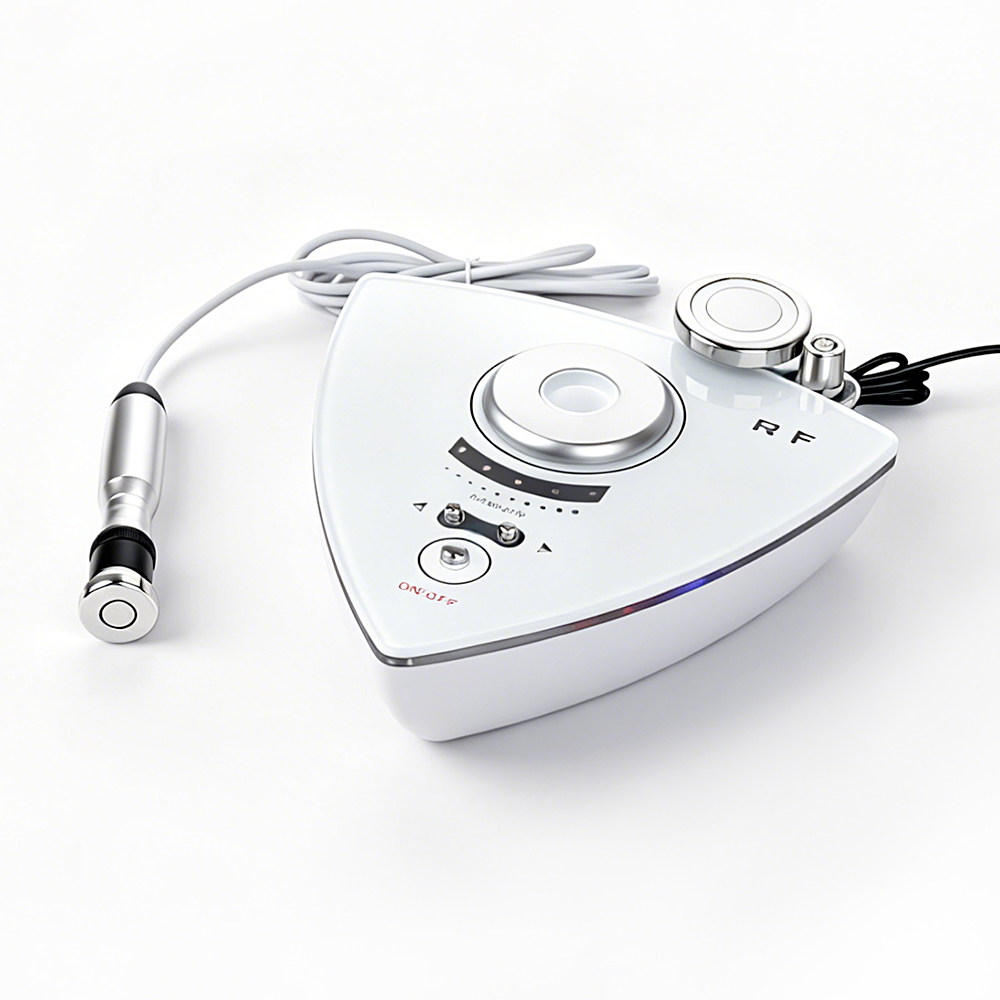
Most safety certificates look reassuring at first glance, but the cover page rarely tells you the whole story. Before you accept a supplier's documentation, check the certificate number, the issuing body, and the expiration date directly against the official registry. Plenty of documents circulating in procurement are outdated, suspended, or issued for a different product family than the one you are actually buying.
The fine print also reveals the conditions under which a product was tested. A fire resistance rating or electrical safety mark may only apply within a narrow temperature range, voltage band, or mounting orientation. If your application falls outside those limits, the certificate offers little practical protection. Ask for the full test report and the exact standard version referenced, not just a summary page with a logo.
Another common gap is the mismatch between the certified entity and the party you are dealing with. A factory may hold an ISO certificate while a trading company presents it as their own, or the certification may belong to a parent firm rather than the subcontractor actually producing the goods. Compare the company name and address on the certificate with the entity on your contract and the physical production site, and verify any claims of equivalent or pending certification before you rely on them.
The Demo Room Illusion: Tests That Predict Real Clinical Performance
Walk into any training lab and you will see students performing well-rehearsed sequences on plastic arms or standardized patients. These settings feel productive, but they often miss the quiet chaos of a real clinic: the patient who moves unexpectedly, the missing instrument, the colleague asking a question mid-procedure. The demo room illusion refers to this gap between polished practice and actual clinical performance. A student can place a perfect suture on a silicone pad yet freeze when the same task happens on a restless patient under time pressure.
The problem is not that simulation is useless, but that we mistake predictability for competence. Real clinical work is filled with interruptions, incomplete information, and small judgment calls that rarely appear in a scripted scenario. Tests that claim to predict real performance need to be built around these friction points. Instead of asking whether a learner can repeat a step, they should ask whether the learner can protect the core of the task when the context shifts. A useful evaluation might change the tray layout mid-task, introduce a distractor question, or require the learner to re-prioritize after a surprise finding.
Bridging this gap means designing assessments that capture how someone recovers from error, not just how they avoid it. One practical shift is to grade the first unscripted action after a disruption, rather than the entire procedure. Another is to record hesitation, re-checking, and verbal reasoning, which often reveal more about future clinical safety than a clean final product. When training tools begin to mirror the noisy reality of patient care, the demo room stops being a stage and starts becoming a preparation ground.
When a Supplier's Support Team Becomes More Important Than the Device
Procurement teams can spend weeks comparing throughput, uptime claims, and interface specs, yet the first real test usually comes after installation. A device with modest specifications often outperforms a higher-rated alternative when the supplier's engineers already understand the buyer's workflow, respond without requiring a ticket to bounce through three tiers, and can make small configuration changes on the spot. The hardware quickly fades into the background; the support team becomes the daily point of contact that determines whether the equipment feels like an asset or a liability.
That influence becomes even clearer during maintenance and upgrades. A capable support group does not just follow a generic service calendar. It tracks how the device is actually used, remembers past failures, and warns the customer before a minor issue turns into downtime. This kind of attention is rarely listed on a quote, but it changes the total cost of ownership far more than a few percentage points of rated performance.
Eventually, contract renewals reveal the real priority. Organizations often keep hardware they consider average because replacing the support relationship would mean losing engineers, field technicians, and account managers who already know the site's quirks. That accumulated knowledge is expensive to rebuild, and it explains why a supplier's support team can quietly become more valuable than the device it services.
Designing Your Treatment Menu Around Devices That Can Evolve
A treatment menu that stays relevant for years usually starts with one quiet decision: choose equipment that can grow in capability rather than something locked into a single function. When a platform allows new applicators, software protocols, or energy settings to be added later, the menu stops being a fixed list and starts behaving like a living document. That flexibility changes how you introduce services, because you are no longer forced to retire a device or discount it heavily once the initial trend cools. Instead, the same core unit can support a shifted focus, whether that means moving from skin tightening to body contouring or adding a maintenance protocol that was not available at launch.
Build the menu around treatment families rather than individual machines. A device with modular handpieces can anchor several entries that feel distinct to clients but share the same operational footprint. One month the menu might highlight a collagen-stimulating facial, and a few months later the same platform can support a scalp or neck protocol without crowding the treatment room. This approach also protects training time: staff learn the underlying controls and safety logic once, then adapt to new attachments or updated settings as they arrive. It keeps the menu easier to update because you are editing protocols and pricing, not rebuilding the entire service structure from scratch.
Leave deliberate room for evolution in the menu layout itself. Rather than naming a service after a temporary trend, use broader categories that can absorb future upgrades. A client who returns after six months should be able to see something genuinely new on the list without feeling the clinic has abandoned the treatment they originally booked. When suppliers release updated software or a new module, the change can appear as an added tier or a revised aftercare step instead of a completely unfamiliar offer. That kind of continuity builds trust, and it also makes the purchase decision easier because clients understand the clinic is investing in equipment that will not quietly disappear from the menu a year later.
Building a Shortlist Around Clinical Evidence, Not Marketing Language
A shortlist built on evidence starts by ignoring the adjectives and asking what the study actually measured. Terms like 'clinically proven' or 'breakthrough' often trace back to small pilot trials, surrogate endpoints, or post hoc analyses that were never designed to answer the question you face in practice. When comparing options, pull the original papers and sort them by study design first. A randomized, controlled trial with a prespecified primary endpoint and an intention-to-treat analysis should carry far more weight than a conference abstract or a case series dressed up in polished language.
The next filter is whether the evidence reflects your patients rather than a convenient subgroup. Look past the headline relative risk reduction and check the inclusion criteria, comparator, follow-up length, and how missing data were handled. An intervention can sound impressive in a narrowly selected population yet offer little confidence for the older, multimorbid patients you see on a Tuesday. Placing these details side by side tends to expose products whose story is held together mostly by repetition and branding.
FAQ
Watch for vague answers about regulatory status, pressure to pay before you can inspect the unit, or a lack of verifiable clinic references. If the supplier cannot provide serial numbers, service logs, or a clear chain of ownership for the equipment, walk away before you wire funds.
Check for the electrical safety and medical device approvals required in your region, such as CE marking, FDA listing or clearance, and any local health authority registration. Ask for certificate numbers and verify them through official databases rather than accepting a logo on a quotation.
Request studies that measure changes in skin firmness, collagen density, or patient satisfaction over several months. The supplier should be able to explain the energy type, treatment depth, and recommended intervals without resorting to jargon or exaggerated guarantees.
They can be, but only when the refurbishment was performed by the original manufacturer or an authorized partner. Ask for a full replacement parts list, updated calibration certificates, and a short warranty. A low price without documentation usually means you are inheriting someone else's maintenance burden.
It should state who covers shipping insurance, installation, staff training, software licenses, and any regional taxes or import duties. Include a clear defect policy, the replacement part lead times, and whether loaner equipment is provided during extended repairs.
The supplier should offer remote troubleshooting, a named technical contact, and realistic on-site service windows for your area. Training should not be a one-time video; there should be follow-up sessions once your staff has used the device on real clients and discovered practical questions.
Focus on the client experience and the biological mechanism rather than the brand language. Ask how long a typical session takes, what the discomfort level is, how many sessions are needed, and how soon results appear. Then match those answers to the clientele you actually serve rather than chasing the highest power rating.
Request a live demonstration on a model or a supervised session in a working clinic. Pay attention to how the supplier handles questions about adverse events, downtime, and treatment failures. A supplier that is honest about limitations is far more useful than one that promises flawless outcomes for every skin type.
Conclusion
A supplier's polished brochure rarely tells you where corners were cut. Look for early signals: inconsistent answers about component sourcing, vague warranty terms, or devices that look identical to cheaper private-label units. When reviewing safety certifications, ignore the logo on page one and read the actual scope of the certificate—some cover only the charger, not the treatment handpiece. The demo room can be just as misleading. A short session with a perfect model under ideal conditions says little about daily clinic performance. Ask for longer trials, check how the device behaves on different skin types, and request references from clinics that have used it for at least a year.
After the sale, the support team often matters more than the device itself. A supplier who cannot explain firmware updates, repair timelines, or clinical troubleshooting will cost you more than the initial discount. Choose equipment that can evolve through software upgrades or interchangeable applicators, so your treatment menu does not become obsolete within two years. Finally, narrow your shortlist by looking past marketing phrases like “revolutionary” or “FDA-cleared” and asking for peer-reviewed studies, before-and-after data collected under real conditions, and clear protocols for which patients are suitable. Trusted aesthetic equipment is rarely the loudest option in the room; it is the one with evidence, honest limitations, and a supplier that answers hard questions without hesitation.
Contact Us
Contact Person: Tina Liu
Email: [email protected]
Tel/WhatsApp: 8618681405932
Website: https://www.omeinabeauty.com/