

Folding Electric Wheelchair Production: Streamlining Manufacturing for Enhanced Mobility
2026-08-07
Imagine a world where mobility aids are no longer clunky afterthoughts, but sleek companions crafted with precision. At the heart of this transformation is Freedomchair, rethinking folding electric wheelchair production from the ground up. It’s not just about assembly lines—it’s about engineering freedom into every fold, every weld, every whisper-quiet motor. In this post, we pull back the curtain on how streamlined manufacturing is turning complex machinery into effortless independence, and why Freedomchair is leading the charge.
Rethinking Factory Flows for Compact Mobility Devices
Traditional assembly lines were never designed for the unique demands of compact mobility devices. Electric wheelchairs, scooters, and personal transporters require a delicate blend of precision electronics, lightweight materials, and customized ergonomics. Pushing these products through a one-size-fits-all production flow creates bottlenecks, quality compromises, and unnecessary rework. It's time to challenge the assumption that a linear, conveyor-driven system is the best path forward.
A more adaptive approach segments the factory into specialized cells, each optimized for a distinct set of tasks. One cell might focus solely on battery integration and testing, while another handles final tuning of drive controls and seating adjustments. These cells operate in parallel rather than strict sequence, allowing workers to master their stations and spot defects earlier. The result is a rhythm that better matches the intricate, lower-volume nature of mobility devices—where each unit can be slightly different based on user needs.
Rethinking flows also means integrating digital thread technology from the very first station. Every frame, motor, and controller is assigned a digital record that travels with the unit, capturing torque settings, firmware versions, and inspection notes. This removes the reliance on paper checklists and empowers teams to instantly trace issues back to their source. By combining flexible physical cells with transparent data flow, manufacturers can reduce lead times and deliver devices that truly fit the individual, not just a generic market category.
Precision Assembly Techniques That Cut Waste and Boost Consistency
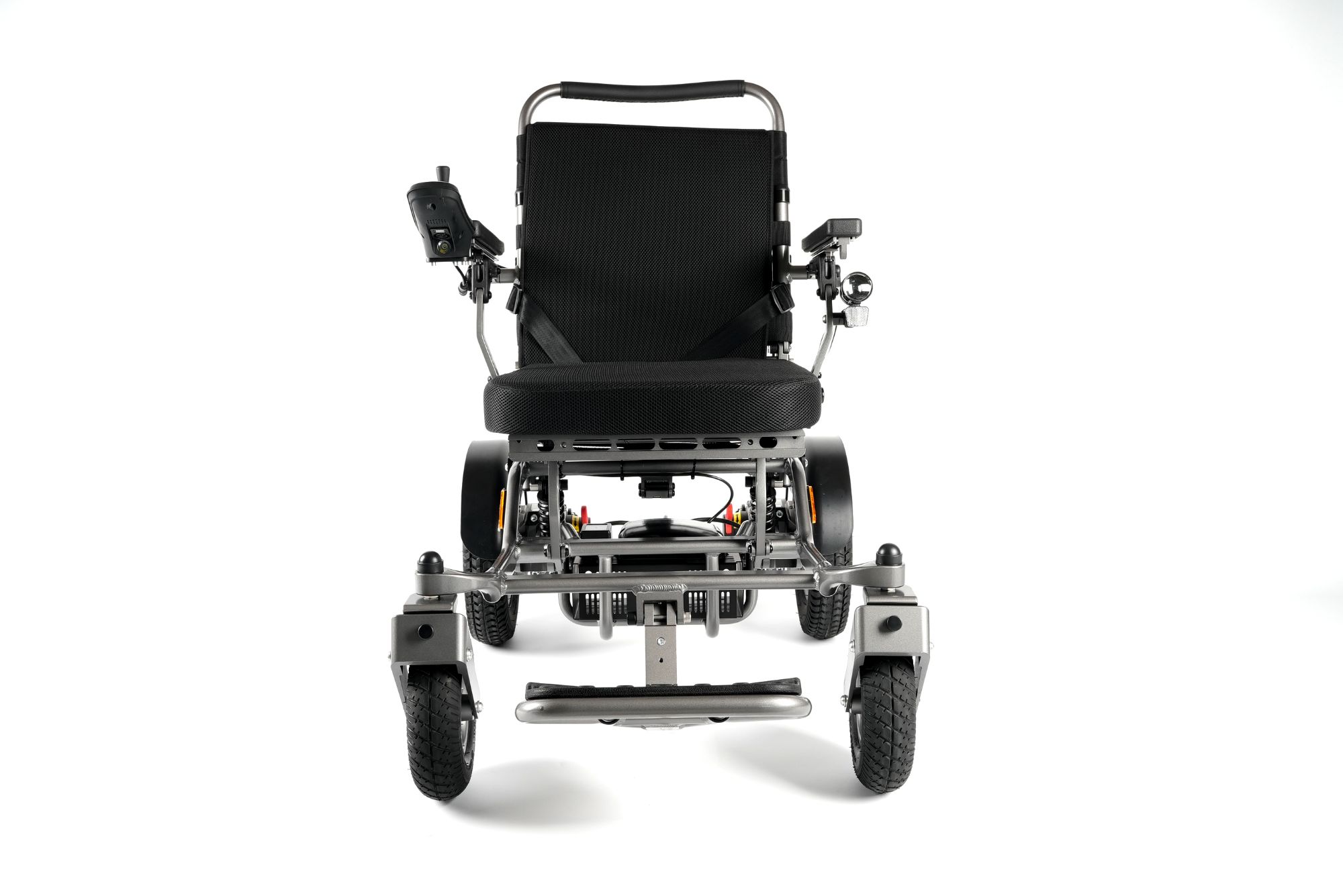
Stripping away the fluff, precision assembly starts with jigs and fixtures designed to hold parts within tolerances tighter than a human hand ever could. Instead of eyeballing alignment or relying on operator feel, purpose-built guides slot components exactly where they need to go, first time and every time. This approach doesn’t just speed up the line—it drastically reduces the scrap pile from misaligned holes or cracked casings.
Beyond hardware, measurement becomes an embedded part of the process rather than a final gate. In-line sensors and laser profilers feed real-time data back to the assembler, flagging drift before it becomes a defect. Operators aren’t just put on autopilot; they’re given instant feedback that lets them tweak torque values or seating depth on the fly. The result is a consistency that batch inspections can only dream of, with waste dropping because you’re preventing errors instead of sorting them out after the fact.
Poka-yoke, or mistake-proofing, takes this even further by physically preventing incorrect assembly. Asymmetrical fasteners, color-coded connectors, or sequential tooling that won’t advance unless the previous step is done right—these are low-cost add-ons that save thousands in rework. When assemblers can’t put a part in backwards because the design makes it impossible, you’ve eliminated an entire category of waste. Pair that with smart workbenches that guide users step-by-step with visual cues, and consistency becomes a built-in feature, not a constant battle.
Material Selection Strategies for Lightweight Durability
Choosing materials that combine low density with high resilience is not as straightforward as simply picking the lightest option. The real challenge lies in understanding how a material’s microstructure and surface treatments influence its long-term performance under cyclic loads, temperature swings, or corrosive environments. For instance, advanced aluminum–lithium alloys and carbon-fiber-reinforced thermoplastics can rival traditional steels in fatigue life while cutting weight by 30% or more. The key is to evaluate specific stiffness and specific strength rather than absolute values, and to pay close attention to failure modes like delamination in composites or stress-corrosion cracking in alloys.
A robust selection process also integrates manufacturing constraints from the start. Processes like additive manufacturing enable lattice structures that remove mass without sacrificing structural integrity, but only if the material’s build orientation and post-processing are fine-tuned to avoid micro-voids or residual stresses. Similarly, hybrid material systems—such as metal–polymer sandwich panels—can localize durability where it’s needed most, using high-strength facesheets over a lightweight core. Testing prototypes under accelerated aging and real-world duty cycles remains essential, because a material that excels in a lab coupon test may behave differently once formed into a complex part and joined with dissimilar materials.
Smart Automation Meets Artisan Quality Control
We’ve woven advanced robotics into our workflow, but not to displace the human touch—rather to amplify it. Our automated systems handle repetitive precision tasks with flawless consistency, freeing our skilled artisans to focus on the subtle details that no machine can replicate. The result is a harmonious blend where technology accelerates production, yet every piece still bears the hallmarks of careful hand-finishing.
Beneath the surface, custom algorithms monitor each step in real-time, flagging even the faintest deviation from our exacting standards. But the final verdict always rests with a seasoned craftsperson who inspects under natural light, assessing texture and nuance that software can't yet comprehend. This partnership between smart systems and human judgment yields products that consistently exceed expectations—neither purely machine-made nor solely handmade, but a refined synthesis of both.
Our approach turns conventional quality control on its head. Instead of treating human oversight as a bottleneck, we treat it as the centerpiece. The automation handles the predictable, so our artisans can immerse themselves in the unpredictable—the unique grain of a material, the interplay of color and finish that shifts with each batch. It’s this balance that lets us deliver not just uniformity, but a distinct character in every item, proving that intelligent technology and artisanal care aren’t opposites—they’re natural allies.
Supply Chain Synchronization for Seamless Part Integration
Achieving true synchronization across the supply chain goes beyond simple data exchange—it demands real-time visibility into inventory levels, production schedules, and logistics movements. When every link in the chain operates from a shared, accurate picture of demand and capacity, part integration becomes a fluid, continuous process rather than a series of reactive adjustments. This eliminates the friction that causes delays and ensures components arrive exactly when and where they are needed.
We embed synchronization into every stage by leveraging predictive analytics and adaptive planning frameworks. Instead of relying on fixed lead times or buffer stocks that mask underlying inefficiencies, our approach dynamically aligns supplier output with assembly-line requirements. This means fewer stockouts, reduced excess inventory, and the ability to absorb disruptions without breaking the flow of parts. The result is a manufacturing rhythm that naturally accommodates design changes and demand fluctuations.
Seamless part integration isn’t just about delivery—it’s about quality and compatibility from the outset. By synchronizing quality assurance protocols and engineering specifications directly with suppliers, components arrive ready for installation with minimal inspection or rework. This collaborative alignment turns supply chain partners into an extension of the production floor, accelerating time-to-market and strengthening the overall resilience of the operation.
Customization at Scale Without Slowing Production
Making every product feel personal doesn’t have to mean line stoppages or handcrafted bottlenecks. The trick lies in designing a system where variation lives in the later stages—think modular components or configurable software layers that snap into a stable base platform. By keeping the bulk of production uniform and pushing customization points as close to the customer as possible, you get that tailored feel without throwing a wrench into your takt time.
This approach thrives on digital thread visibility: real-time data shuttling between order systems, assembly stations, and even suppliers ensures that a change in trim color or packaging doesn’t snowball into a scheduling nightmare. Instead of batching custom units, mixed-model lines let you interweave standard and personalized items seamlessly, guided by smart work instructions that adapt on the fly. The result? The line never stops learning—or moving.
Equally important is empowering the people on the floor. When operators have intuitive interfaces that flag special requirements instead of memorizing thousand-page spec sheets, they can pivot quickly without errors. Combine that with pre-kitted, sequenced part delivery and you’ve turned flexibility from a luxury into an everyday rhythm—one where mass production and made-to-order stop being opposites.
FAQ
It starts with design and prototyping, where engineers balance portability and strength. Then comes frame fabrication, often using aluminum alloy for lightness. Next, the folding mechanism is integrated and tested repeatedly. Motors, batteries, and control systems are installed, followed by upholstery and finishing. Each chair then goes through a series of checks—weight capacity, folding cycles, electrical safety—before packaging.
When manufacturing is streamlined, we see tighter tolerances and fewer defects. That means the wheelchair feels sturdier, folds smoothly every time, and has a longer service life. It also allows for quicker assembly, which can reduce lead times. For the user, it translates to a more reliable mobility aid that requires less maintenance and performs consistently day after day.
Aircraft-grade aluminum is very common because it’s strong, resists corrosion, and keeps the chair light enough to lift into a car trunk. Some premium models use titanium for even better strength-to-weight ratio, though it raises cost. The material choice directly influences how easily the chair can be folded and transported without sacrificing durability under regular use.
The hinge and locking system must be intuitive yet fail-proof. If it’s too stiff, the user struggles; if it’s loose, there’s a safety risk. In production, aligning these mechanisms precisely is everything. A well-made folding joint feels secure and clicks into place with little effort. It’s often the part that gets the most testing—thousands of fold-unfold cycles before approval.
Lithium-ion batteries are standard, but they require careful handling. Cells are sourced from reputable suppliers and tested for stability. The battery pack is encased in a fire-resistant housing and integrated into a compartment that protects it from impacts. Each unit undergoes overcharge and short-circuit tests. In production, automation ensures consistent welding and insulation, reducing human error.
Robotic welding and CNC machining are used for critical joints and brackets. That gives repeatable accuracy that hand welding can't match. Automated guided vehicles move parts through assembly stations, reducing handling damage. With sensors and cameras, quality checks happen inline, catching misalignments immediately. It keeps every chair close to the design spec without relying solely on manual inspection.
By reducing waste and labor hours, manufacturers can offer better features at a lower price point. For instance, optimized cutting of frame tubing reduces scrap metal, and modular assembly lines let workers specialize. When production scales up without compromising quality, the cost per unit drops. That makes these life-changing devices accessible to more people who need them.
Every chair must pass a static load test—sometimes up to 300 pounds—and a dynamic test on a rolling road. The electronics are verified for electromagnetic compatibility to avoid interference with other devices. The folding mechanism is checked for play and smoothness. Finally, a fit-and-finish review ensures no sharp edges or stitching flaws. Only after passing all these does it get a serial number and ship.
Conclusion
In the evolving landscape of folding electric wheelchair production, manufacturers are radically rethinking factory layouts to accommodate the unique demands of compact mobility devices. By redesigning workflows for seamless movement of smaller, intricate components, production lines now prioritize flexibility and efficiency. Advanced material selection plays a pivotal role here; engineers are turning to aerospace-grade aluminum alloys and carbon-fiber composites that deliver lightweight durability without sacrificing strength. These materials are not only easier to handle but also enhance the end product's portability and longevity. Concurrently, precision assembly techniques—such as robotic adhesive dispensing and laser-guided alignment—have drastically reduced waste and improved consistency, ensuring each unit meets rigorous standards from the first build.
The integration of smart automation with artisan-level quality control marks a significant leap forward. Automated guided vehicles transport parts through assembly stations, while machine vision systems inspect welds and surface finishes with superhuman accuracy, yet human experts perform final sensory checks, blending technology with craftsmanship. Behind the scenes, supply chain synchronization ensures that custom motors, battery packs, and folding mechanisms arrive just-in-time, minimizing inventory while enabling rapid response to demand fluctuations. Perhaps most impressively, modular design principles and flexible fixturing allow for customization at scale—whether adjusting seat widths, control placements, or color accents—without slowing production. This holistic approach transforms manufacturing from a series of discrete steps into a harmonious, responsive system, ultimately putting enhanced mobility within reach for more people.
Contact Us
Contact Person: Calvin Fan
Email: [email protected]
Tel/WhatsApp: 8618913265607
Website: www.freedom-chair.com