

Handheld Laser Device: Why Good Quality Matters for Precision and Safety
2026-08-13
A handheld laser might look straightforward, but the gap between 'works fine' and 'works safely every time' comes down to quality. When accuracy slips, the consequences go beyond a bad cut—that's where real hazards start. In this article, we look at why precision and safety hinge on build quality, and why teams serious about both keep turning to GUANG TAI.
Why Does a Cheap Laser Lose Its Precision After a Few Weeks?
Most budget laser levels rely on internal components that drift under everyday knocks and temperature swings. The diode mount is often glued rather than mechanically locked, so slight expansion of the housing shifts the beam angle. Within a few weeks of regular site use, that tiny movement accumulates until your line is visibly off at distance.
Cheaper units also skip the pendulum damping and calibration locks found in pricier models. Once the locking mechanism wears or the pendulum pivot develops play, the self-leveling action becomes inconsistent. You might notice the line flickers or settles in a different spot after the same bump. That’s rarely a battery issue; it’s physical wear inside the compensator.
Finally, low-cost lasers often use plastic lenses and weaker laser diodes that degrade faster with heat. A diode pushed near its current limit will dim and shift wavelength, making the beam less sharp. Combine that with lens fogging from humidity, and the line starts to blur or bend. The result isn’t a sudden failure, but a slow loss of repeatability that makes fine layout work frustrating.
What Safety Features Are Non-Negotiable in a Handheld Laser?
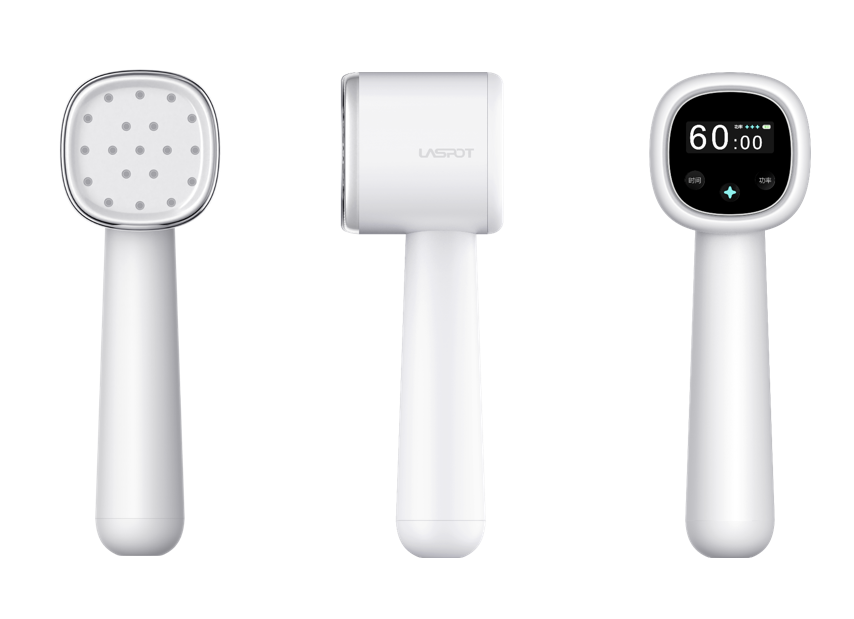
A handheld laser without a key lock or interlock connector is a hard pass. These two features prevent accidental activation when the device isn’t in use or when a protective housing is opened. Many budget models skip them, but that’s exactly where injuries start. If you can’t physically disable the beam without removing batteries or fumbling through menus, the tool isn’t safe enough for everyday handling.
Emission delay and an automatic shutoff are often overlooked, yet they make a real difference. A short delay after pressing the button gives your hand time to steady, while a built-in timer prevents the laser from running indefinitely if you set it down mid-task. Pair that with a visible warning indicator—not just a tiny LED hidden near the tail cap—and you get a device that respects your attention span. If the indicator isn’t bright enough to notice in daylight, move on.
Beam attenuation options also matter more than raw power. A laser that only operates at full strength is risky for close-up alignment or marking. Look for adjustable power settings, a mechanical shutter, or at least a low-power training mode. And never ignore the aperture design: a recessed lens and a removable safety cap reduce the chance of direct eye exposure from stray reflections. If a seller can’t clearly answer how the device fails safe, assume it doesn’t.
Beam Quality Is the Spec That Actually Determines Your Cut
Most laser cutting specs get boiled down to raw wattage, but that number only tells you how much energy the source can pump out. Beam quality—typically expressed as M² or BPP—dictates how tightly that energy can be focused and how well it stays collimated over distance. A lower M² means the beam diverges less, so the focused spot stays smaller at the work surface. That directly translates into higher power density, cleaner kerfs, and less heat bleeding into surrounding material. In practice, two machines with identical wattage can cut completely differently because one has an M² of 1.1 and the other sits at 1.5.
The effect shows up most in thin sheet work and fine feature cutting. With a high-quality beam, you can run faster feed rates while keeping the same edge roughness, or hold tighter corner radii without burning out details. On thicker plate, a better beam lets you use a longer focal length lens to expand the depth of field, which reduces taper and improves cut straightness. That's why fabricators chasing repeatable, dross-free edges often end up paying more for a resonator with a lower BPP even when the wattage rating looks identical on paper.
What Happens When a Handheld Laser Overheats During Use?
Most handheld lasers are built for brief pulses, not continuous duty. When you push past the recommended runtime, the internal diode starts cooking. The first sign is usually a visible drop in output—the beam dims or flickers as the gain medium loses efficiency. The casing gets uncomfortably warm, sometimes hot enough to leave marks on skin or melt thin plastics. In severe cases, the driver board can throttle power automatically, or the diode fails outright, leaving you with an expensive paperweight.
Heat also warps alignment. The laser's optical cavity relies on precise spacing; expansion pushes mirrors or lens elements out of position. That leads to a distorted beam profile, scattered light, or a sudden shift in wavelength. You might notice the dot elongating into a smear or the color shifting slightly. If the laser has no thermal protection, the solder joints can soften and crack, causing intermittent connection faults that are hard to diagnose.
Battery chemistry adds another layer. Lithium-ion cells dislike high temperatures—they can vent, swell, or in extreme cases catch fire. A hot laser pressed against a pocket or bag liner becomes a real hazard. Always respect the manufacturer's duty cycle, let the unit cool between sessions, and never leave it running unattended. If the housing feels more than lukewarm, it's already past its comfort zone.
The Upfront Cost of a Quality Laser Is Cheaper Than You Think
Many people picture laser engravers as five-figure industrial machines locked behind a workshop door. That image is about a decade out of date. A solid desktop unit with enough precision for wood, acrylic, and coated metals can now be had for less than the price of a mid-range smartphone. You won't need to beg a finance department or clear out a spare room—just a sturdy table and a nearby outlet.
The real cost trap isn't the machine itself; it's skimping on the first purchase. A cheap no-name tube or wobbly frame will burn through your patience in a month, forcing you to recalibrate after every job or replace parts that were never meant to last. Spending slightly more upfront for a reliable diode or CO2 source with a rigid gantry means fewer ruined materials and less time fiddling with focus. That's money saved before you even sell a single finished piece.
And if you're worried about hidden fees, breathe easy. Most quality units ship with the software you need to get started, and the only recurring cost is electricity—a few cents per hour. Compare that to outsourcing custom engraving at $15–$40 per item, and the payback happens faster than you'd guess. A few personalized cutting boards or a single batch of wedding coasters can cover the whole investment.
Fake Safety Ratings: A Growing Problem in Budget Lasers
A quick glance at the label on a cheap laser pointer might reassure you with a class 1 or class 2 safety rating, but those markings are increasingly meaningless. Many budget lasers flooding online marketplaces carry ratings that have never been verified by any accredited lab. Sellers simply print whatever classification looks least likely to scare off a buyer, often copying numbers from legitimate products without running a single test on output power or beam divergence.
The gap between claimed and actual output can be staggering. Independent tests have found lasers sold as class 2 emitting beams strong enough to cause permanent retinal damage in under a second. Worse, some units labeled as eye-safe are actually built with higher-power diodes that were either mislabeled at the factory or deliberately swapped to cut costs. Without proper verification, consumers have no way to know if the laser in their hand matches the sticker on its side.
This disconnect isn't just a nuisance—it's a genuine hazard. Pet owners using these lasers to play with cats have ended up at the vet with burned corneas. Hobbyists aligning optical setups have suffered flash blindness from beams that should have been harmless. Until independent certification becomes mandatory for budget lasers, the only safe assumption is that any rating you haven't personally verified is fiction.
FAQ
A stable housing, rigid optical alignment, and well-machined lens mounts keep the beam path consistent. When components shift or flex under normal handling, the focal point drifts, turning fine lines into blurred or uneven marks.
Cheaper units often lack proper beam shielding, reliable interlocks, or eye protection filters. They may also overheat quickly, emit scattered infrared light, or fail to shut off when the trigger is released, increasing the chance of accidental exposure.
Look for solid metal construction, minimal play in moving parts, a clearly marked safety class, and documentation of wavelength and power output. Reputable makers also include protective features like key locks, delay starts, and emission indicators rather than skipping them to cut cost.
High-grade lenses and coated mirrors produce a tight, uniform spot with fewer side lobes. With poor optics, even a powerful laser wastes energy in scatter, so you get charred edges, uneven depth, and a wider kerf than expected.
Heat buildup changes the laser diode's wavelength and can warp the housing, shifting the beam. Active cooling or large heat sinks keep output steady during long sessions. Without that, the device may become too hot to hold safely or trigger thermal runaway in the diode.
Yes. For example, an FDA accession number in the US, CE marking in Europe, or compliance with IEC 60825 laser safety standards shows the device passed basic evaluation. Independent lab reports for eye hazard distance and emission limits add further confidence.
If the driver circuit cannot hold current steady, the laser's intensity flickers with battery charge or temperature. That produces lines with varying depth and width. A regulated driver with feedback keeps output nearly flat, so the first pass and the last pass look identical.
Keep the lens clean with proper swabs and avoid touching optical surfaces. Check the heatsink for dust blockage and confirm safety interlocks still engage firmly. Store the device with the battery removed or in a locked case, and periodically verify the beam is still collimated using a low-power test mode.
Conclusion
Cheap handheld lasers often lose their cutting precision within a few weeks because low-grade diodes and flimsy optics shift under normal thermal cycling. Beam quality—the actual M² value or spot profile—dictates how cleanly a cut goes through material, and budget units rarely publish honest numbers. When a device overheats, the crystal degrades and the focal point wanders, turning a straight edge into a wavy mess. That's why a non-negotiable safety shell includes an interlock, key switch, and a delayed start that prevents accidental firing. A quality laser might cost more on day one, but a cheap one that drifts or burns out after a month means buying twice.
Fake safety ratings flood budget listings—stickers claiming Class 4 compliance mean nothing if the housing lacks proper shielding or an emergency stop. Real protection comes from a manufacturer that tests every unit, not just a sample batch. Overheating isn't just a performance issue; it can melt internal insulation and expose live wires. Spending a bit more upfront on a reputable brand avoids replacing damaged material, wasted time, and potential eye hazards. The hidden cost of a bargain unit shows up later in ruined cuts and unsafe operation. In the end, a precision handheld laser with honest beam specs and genuine safety certification is cheaper than a bargain device that quietly undercuts your work.
Contact Us
Contact Person: Leon Yi
Email: [email protected]
Tel/WhatsApp: +86 17363316873
Website: https://zzgt.en.alibaba.com/