

High Temperature Magnet Factory: Crafting Durable Magnets for Extreme Environments
2026-08-02
When ordinary magnets falter under blistering heat or corrosive atmospheres, critical systems demand more. The art of high-temperature magnet manufacturing pushes magnetic technology beyond conventional limits, forging components that thrive where others fail. At DAWA, we don’t just build magnets—we engineer resilience. In this post, we peel back the layers of our factory’s approach to crafting durable magnets that withstand extreme environments, from deep-well drilling to aerospace. Discover what sets truly tough magnets apart and why precision in every grain boundary matters.
Pushing Magnetic Limits in Extreme Heat
Magnets are often thought to be resilient, but when temperatures climb past a certain point, their orderly magnetic domains descend into chaos. In environments like fusion reactors or deep-earth drilling equipment, materials must retain their magnetic properties even as ambient temperatures exceed hundreds of degrees Celsius. Traditional neodymium magnets start losing strength well before such extremes, which has pushed researchers to explore unconventional alloys and rare-earth-free alternatives.
Recent breakthroughs involve stabilizing magnetic phases through nanostructuring and doping with elements like cobalt or dysprosium. These adjustments raise the Curie temperature—the point at which magnetism vanishes—significantly. What’s more, some experimental composites show a counterintuitive increase in magnetic coercivity with rising heat, opening possibilities for motors and generators that thrive in blazing-hot conditions without cooling.
Engineers now test these advanced magnets in cyclic thermal shocks, emulating the harsh reality of space propulsion systems or geothermal wells. The race is on to find materials that not only survive but perform better at the fringe of thermal tolerance, redefining what we consider a stable magnetic material.
From Raw Alloys to Unshakable Strength
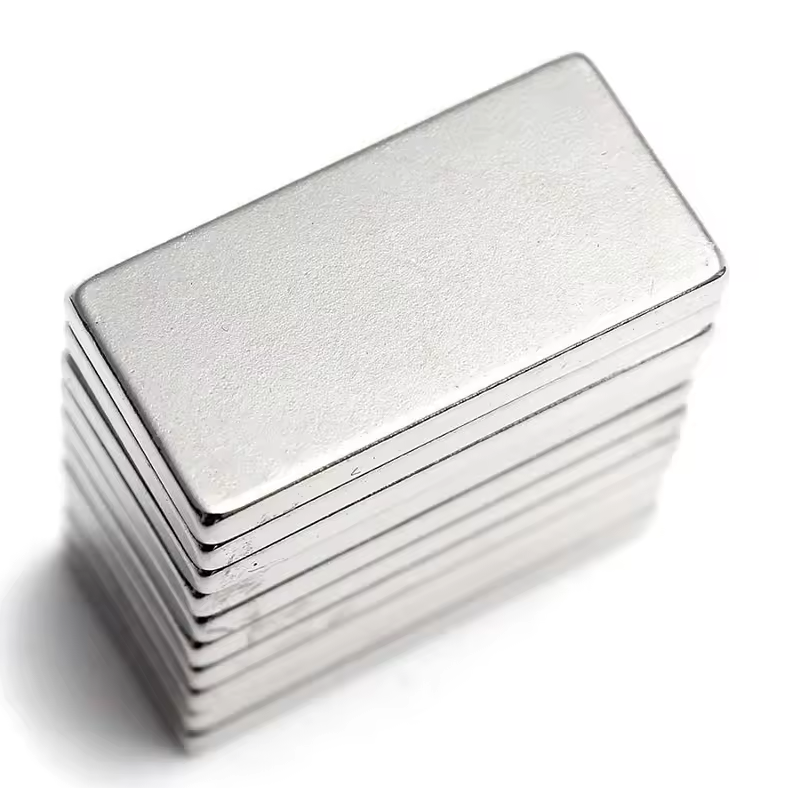
It begins with molten metal, carefully blended to achieve the perfect balance of hardness and flexibility. The initial casting is crude and full of microscopic imperfections. But through a series of tightly controlled thermal cycles and forging, these flaws are slowly erased. The alignment of internal crystals shifts under immense pressure, transforming the alloy’s very nature. You can almost feel the material fighting back until, finally, it yields to a purer, more resilient state.
The quenching stage is where true character is born. Sudden immersion in carefully tempered liquids seizes the structure at its most vulnerable moment, locking in tension and readiness. This is not a gentle process—it strains boundaries, risking cracks that would ruin days of work. Yet when done right, the result is a piece that carries an innate, latent strength. It emerges with a surface that whispers of its ordeal, ready to take on loads that would crumple lesser metals.
But the journey doesn’t end at heat and hammer. Final machining scrapes away the outermost skin to reveal the flawless core beneath. Every cut is precise, removing only what must go, leaving behind a shape that channels force without waste. The result is a component that seems almost alive in its ability to shrug off wear and fatigue. That’s the essence we deliver: raw potential refined until it becomes something you can stake your reputation on.
Precision Engineering for Harsh Realities
In environments where failure is not an option, precision engineering transforms theoretical designs into reliable solutions. Every component must withstand extreme temperatures, persistent vibration, and corrosive atmospheres while maintaining exacting tolerances. This discipline goes beyond standard manufacturing—it's a meticulous process of material selection, stress analysis, and rigorous testing that ensures performance when conditions turn brutal.
From deep-sea drilling equipment to aerospace turbine blades, the marriage of advanced metallurgy and micro-scale accuracy makes survival possible. Engineers employ computational simulations and real-world prototyping to anticipate failure modes long before deployment. The result is machinery that doesn't just operate but thrives in places where ordinary devices would crumble within moments.
But precision isn't merely about surviving stress—it's about delivering consistency in the unpredictable. Whether it's a satellite component facing vacuum and radiation or a mining sensor buried in abrasive slurry, the marriage of clever design and unforgiving quality control creates tools that redefine what's achievable at the edges of human endeavor.
Where Science Meets Industrial Grit
In the quiet hum of a laboratory, where beakers and spectrometers trace the contours of discovery, there’s often a missing element: the rough, unyielding pulse of industry. Science maps the possible, but it’s the factory floor—with its clanging machinery, sweat-streaked blueprints, and relentless pressure to deliver—that forces theory into shape. Here, a chemist’s elegant reaction meets the unpredictable variables of a thousand-gallon reactor; a physicist’s neat equation collides with the stubborn realities of material fatigue. This is not the sterile intersection of two disciplines but a messy, exhilarating collision where breakthroughs are forged not in isolation, but in the thick of real-world muscle.
The people who thrive in this space are part scientist, part pragmatist. They speak the language of both peer review and shift-change handovers, equally at home debugging code and wrestling a jammed conveyor. Their experiments don’t end with a published paper; they end with a product that survives a drop test, a process that scales without losing its soul. Every failed batch teaches something a textbook never could—that oxidation rates shift with humidity, that a supplier’s slight tweak can unravel months of work. In this gritty laboratory, success smells less like ozone and more like machine oil, and the real discovery is that true innovation doesn’t happen until you get your hands dirty.
Built to Outlast the Unforgiving
Designed with a relentless focus on endurance, this gear shrugs off the extreme—be it blistering desert heat or bone-chilling mountain storms. Every seam, material, and structural element is engineered to resist wear long after others have failed, ensuring you stay protected when the environment throws its worst at you.
We didn't just test it in a lab; we took it into the backcountry where grit and grind are the norm. The result is a companion that laughs at scuffs, defies corrosion, and keeps its integrity through relentless cycles of abuse. It's not about surviving one adventure—it's about being ready for a hundred more.
From reinforced stress points to weather-sealed closures, every detail is obsessed over to create something that feels inevitable: a product that simply refuses to quit. Whether you're navigating salt-sprayed coastlines or abrasive canyon walls, this is built to become a trusted, battle-hardened ally in the wild.
Custom Solutions for the Toughest Jobs
Every demanding project brings its own set of challenges—unpredictable environments, unforgiving deadlines, and equipment pushed to its limits. Off-the-shelf answers often fall short. That’s why we focus on deeply understanding your operational realities, from the grit underfoot to the precise tolerances you require. We craft solutions that aren’t just adapted but purpose-built, offering reliability that keeps you moving when conditions turn against you.
Our approach cuts through the noise. Instead of generic catalogs, we start with your toughest problem and work backward, combining materials, engineering, and real-world testing into a seamless whole. It means fewer compromises, less downtime, and tools that feel like natural extensions of your crew’s expertise. Whether it’s extreme heat, corrosive substances, or around-the-clock operation, the result is equipment that simply performs, shift after shift.
We stand behind what we build with a support network that’s as resilient as the products themselves. Rapid diagnostics, on-site adjustments, and a team that never says “that’s not our problem”—this is what ensures your operations never miss a beat. Because when the job is at its worst, your tools should be at their best. That’s the standard we hold ourselves to, every single time.
FAQ
Our magnets use specialized alloys like samarium cobalt and alnico that maintain magnetic properties at temperatures exceeding 500°C, far beyond what standard neodymium magnets can handle.
Every batch undergoes rigorous testing in thermal cycling chambers, precision magnetic measurement, and microstructural analysis to confirm performance under stress before shipping.
Absolutely. We work from CAD files to manufacture complex geometries using CNC machining and custom sintering processes, catering to aerospace, oil drilling, and industrial motor sectors.
With proper care and within specified temperature ranges, our magnets can retain over 95% of their magnetization after 20 years, even in corrosive or vibrating environments.
Yes. We provide nickel, epoxy, parylene, and gold coatings to prevent oxidation and chemical attack, extending service life in petrochemical and marine applications.
Lead times vary by complexity, but our streamlined production line and in-house tooling typically allow delivery within 4-6 weeks for bulk orders, with expediting options available.
We are ISO 9001 and AS9100 certified, with full material traceability and PPAP documentation available for automotive and defense clients.
While many suppliers claim high-temperature capability, our magnets are independently verified to operate beyond 500°C without significant demagnetization, a threshold where most competitors' products fail.
Conclusion
At the heart of our high-temperature magnet factory, we fuse raw alloys into magnets that refuse to quit when the heat is on. It's not about simply blending materials; it's a deliberate orchestration of metallurgy and physics to push magnetic limits far beyond conventional thresholds. From the moment rare-earth elements and transition metals enter our foundry, we apply a proprietary process that refines grain structures, locks in coercivity, and forges unshakable strength. This is precision engineering at its most demanding—every magnet is designed for harsh realities, whether it's a turbine blazing in a jet engine or a sensor deep in a geothermal borehole. We've learned that science alone isn't enough; it takes industrial grit to turn theoretical potential into components that hold their field when temperatures soar past 500°C. Our team marries cutting-edge research with decades of hands-on problem-solving, ensuring each batch delivers performance where others melt down.
But durability isn't a one-size-fits-all promise. The toughest jobs demand custom solutions, so we collaborate closely with engineers facing unforgiving environments. We tweak compositions, adjust sintering cycles, and even redesign magnetic circuits to outlast the extreme. Our magnets don't just survive—they maintain flux stability through thermal cycling, vibration, and corrosive atmospheres. Whether it's for oil drilling, space propulsion, or nuclear instrumentation, we produce magnets that become the silent, enduring backbone of mission-critical systems. In a world where failure isn't an option, we've built a factory culture that treats every order as a challenge to exceed the limits. That's how we craft durable magnets for extreme environments—not by following a manual, but by constantly rewriting the rules of what's possible under fire.
Contact Us
Contact Person: Kelvin Lo
Email: [email protected]
Tel/WhatsApp: 0769-88561131
Website: https://dawamagnetic.com/