

Leading OEM Suppliers for Carport PV Systems
2026-09-28
As solar energy reshapes the global energy mix, carport PV systems have quietly become one of the smartest ways to turn idle parking space into a power plant. Yet the real difference between a good project and a great one often comes down to the OEM partners behind the modules and mounting structures. In this article, we cut through the noise to highlight the leading OEM suppliers driving innovation, reliability, and cost efficiency in carport PV systems. And if you're looking for a partner with proven engineering depth and flexible manufacturing, keep an eye on Topfencesolar — a name that keeps surfacing in high-performance solar carport projects.
What Separates a True OEM from a Simple Component Assembler?
A true OEM invests heavily in the product's design and engineering phases, often working hand-in-hand with the client to refine specifications before a single component is sourced. A simple assembler, by contrast, receives a finished blueprint and merely bolts together off-the-shelf parts, adding little intellectual value.
Beyond the drawing board, genuine OEMs maintain rigorous in-house testing protocols and quality management systems that span the entire production cycle. They can trace every material batch, adjust tolerances on the fly, and assume liability for the final unit's performance. Assemblers typically perform only basic functional checks and pass the risk back to the buyer.
Finally, a true OEM offers lifecycle support and continuous improvement. They iterate on tolerances, suggest alternative materials for cost or durability, and often help navigate regulatory certifications. A component assembler's role ends at the shipping dock; an OEM's partnership continues through field feedback and future revisions.
Why Do Some Suppliers Keep Structural Engineering In-House?
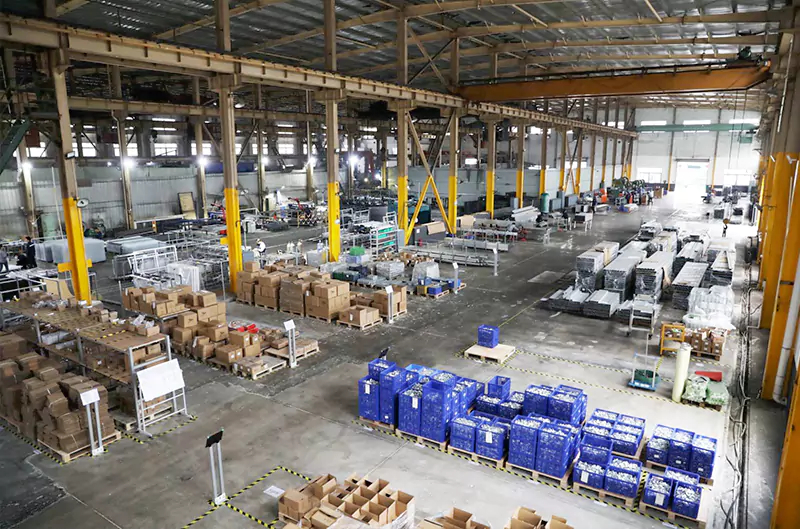
For many suppliers, keeping structural engineering inside the company isn't just about saving money—it's about keeping the thread between design intent and fabrication intact. When the same team that sizes a beam also knows how it will be welded, lifted, and shipped, the usual back-and-forth with outside consultants shrinks dramatically. That tight loop matters most on projects where tolerances are unforgiving and a late change can idle a whole production line.
There's also a quieter reason: accountability. An outside engineer may deliver a set of calculations that meets code but doesn't fully reflect the supplier's actual shop practices or material stock. In-house engineers carry the weight of both the math and the downstream consequences, so they tend to design with an eye toward what the floor can actually build. This reduces finger-pointing when something doesn't fit.
Some suppliers have learned that their proprietary connection details or pre-engineered components give them an edge, and sending those out for review can leak hard-won know-how. By keeping structural work at home, they protect that edge while staying nimble enough to revise layouts before a bid goes out. The result is often a faster quote and a smoother handoff from sales to production.
How Do Leading OEMs Approach Custom Finishes Without Delaying Delivery?
Instead of treating custom finishes as exceptions, the best OEMs bake them into the standard workflow. They maintain a short, curated library of pre-approved coatings that covers the vast majority of buyer requests—matte blacks, satin silvers, muted earth tones, and a handful of signature hues. Color matching happens digitally, with spectral data sent straight to the mixing station, so a custom shade can be ready to spray in under an hour rather than waiting for physical samples to travel back and forth.
A second lever is parallel processing. Rather than pulling a unit off the main line for special painting, these manufacturers run small-batch finishing booths alongside the standard paint shop. An unfinished chassis or cabinet can be diverted to the custom booth, coated, cured, and returned to the same point in the assembly sequence with no net delay. Some also keep a rotating buffer of uncoated units near the finishing area, which lets them absorb last-minute custom orders without stalling downstream stations.
Underneath it all is a quiet focus on material logistics. Leading OEMs analyze which custom finishes are requested most often and pre-position those pigments, resins, and curing agents at the factory. That way, even an unusual color doesn't trigger a separate procurement cycle. The finish becomes a stocked option rather than a special project, keeping lead times steady while still giving buyers a genuine sense of choice.
When Does On-Site Pre-Assembly Make More Sense Than Fully Prefabricated Units?
Logistics can kill a fully prefabricated plan before the first crane arrives. Units wider than standard trucking limits, bridges with low clearance, or a site squeezed between existing structures often make road delivery impractical. On-site pre-assembly sidesteps that headache by shipping flat-packed components or smaller modules, then completing the build in a covered staging area. You lose some factory efficiency, but you gain control over what actually shows up intact.
The real advantage shows up when coordination matters more than repetition. Renovation projects, irregular floor plates, or designs that must marry old foundations with new framing rarely reward cookie-cutter modules. Pre-assembling on site lets crews adjust for as-built conditions, route mechanical runs through unexpected chases, and avoid tearing apart finished walls later. It is slower per square foot, but rework drops sharply.
Cost is not just about the factory line item. Fully prefabricated units demand expensive lifting gear, precise scheduling, and often a laydown yard big enough to stage dozens of modules. If a project only needs eight or ten units, that overhead gets spread thin. On-site pre-assembly uses standard framing tools, local labor, and no special transport permits. For mid-size jobs in dense neighborhoods, the math frequently tips away from the factory.
What Factory Testing Procedures Prevent Hidden Defects in Carport PV Systems?
Factory testing for carport PV systems focuses heavily on catching flaws that won’t show up until months after installation. Every module goes through electroluminescence (EL) imaging, which makes microcracks and cell fractures visible before lamination can hide them. A flash test on a solar simulator then measures the I-V curve under standard test conditions, flagging any cell mismatch or underperformance that might indicate process drift. Insulation resistance and wet leakage current tests are run at higher voltages than the system will ever see in normal use, so weak points in backsheets, junction boxes, or edge seals tend to fail on the factory floor rather than in the field.
For carport-specific components, testing extends beyond the modules. Pre-assembled frames and mounting rails get checked for weld penetration and galvanization thickness, since hidden rust often starts at thin or porous coatings. Torque audits on all bolted connections catch joints that are either too loose to hold or too tight and already stressed. If inverters or DC optimizers are installed at the factory, they’re powered up and run through a simulated startup and shutdown sequence to verify that MPPT channels and communication links aren’t intermittent.
Just before packing, a randomized teardown of fully assembled carport sections pulls a few units per batch apart. Technicians inspect cable routing, strain relief, and connector seating, looking for pinched wires that pass electrical tests but would chafe through after a few months of wind vibration. Serial numbers stay linked to the EL images, flash data, and insulation test values, so if a hidden defect does surface later, the factory can trace it back to a specific lot or shift.
Which Long-Term Maintenance Commitments Should You Expect from an OEM?
A dependable OEM goes beyond a basic warranty and spells out how it will support your equipment years after the sale. Look for commitments that cover scheduled software updates, access to diagnostic tools, and a realistic spare parts supply for the machine's expected service life. The most useful agreements also clarify whether remote troubleshooting is included, how quickly security patches are released, and if replacement hardware falls under the contract or arrives as a separate invoice.
Pay attention to response times for serious failures. A manufacturer with a mature support program will publish a maximum response window, offer on-site help in your region, and state plainly when a product moves into limited support or end-of-life status. Without that visibility, you risk being stuck with equipment that still works but can no longer be repaired or updated.
Maintenance also includes keeping your team trained and your documentation current. Strong OEMs provide refresher courses, revised manuals, and a clear escalation path instead of leaving you to figure things out after a breakdown. Those commitments tend to lower long-term operating costs and prevent small issues from turning into expensive downtime.
FAQ
Focus on structural engineering expertise, not just panel sourcing. The best suppliers can show wind and snow load calculations, corrosion resistance data for the steel or aluminum, and examples of custom waterproofing around the mounting points. Ask for three recent projects with similar dimensions, not just a product catalog.
They usually start with a site survey or detailed drawings, then adapt the frame geometry, column spacing, and foundation type. For irregular lots, expect them to propose cantilevered sections or split-level canopies. The real differentiator is whether they run finite element analysis on the revised structure before fabrication.
Yes, substantial ones. Residential suppliers often emphasize lighter galvanized steel and quicker bolt-together assembly. Commercial specialists work with heavier I-beams, longer spans, and integrated cable trays or EV charger conduits. A company that does both well is rarer than it seems.
Look for structural certifications like EN 1090 or AISC, plus salt spray test reports for coastal areas. Wind tunnel test data is a strong sign. Some suppliers also provide UL 2703 compliance for the racking-to-module grounding path. Don't accept a generic ISO 9001 as proof of structural competence.
Most custom carport structures run 4 to 8 weeks from approved drawings to ex-works. Shipping is tricky because the steel or aluminum members are long and bulky; container stuffing often takes clever nesting or flat-pack design. Some suppliers offer regional warehouses to cut freight, but that's more common for standard models.
Many leading OEMs will bundle modules and inverters as a convenience, often at a small markup. However, the structural supplier may not be the best electronics negotiator. A hybrid approach works well: let the OEM handle the frame and mounting, but buy the modules and inverters from distributors you already trust.
Expect at least a 10-year warranty on the steel structure against structural failure and corrosion, plus a detailed installation manual. The best suppliers will send a supervisor for the first project or offer video call support. Beware of those who disappear after the container leaves the port.
Extremely important, especially for wind and snow zones. A supplier who has done projects in your region will know the right load combinations and may already have stamped drawings from local engineers. That can save months of back-and-forth and prevent costly redesigns.
Conclusion
A true OEM for carport PV systems does more than bolt panels to a steel frame. It owns the structural design, keeps engineering calculations in-house, and validates how wind, snow, and seismic loads move through every connection. That control is what lets the best suppliers adjust column spacing or beam depth for a site without waiting on an outside consultant. The same depth shows up in finishes: leading OEMs pre-qualify powder-coat and galvanizing lines, hold buffer stock of custom colors, and run small-batch coating trials early, so a project-specific finish never becomes the reason for a slipped delivery date.
On the logistics side, experienced suppliers treat fully prefabricated units and on-site pre-assembly as two tools rather than a fixed approach. Tight urban sites or narrow access roads often favor pre-assembled modules that can be lifted into place, while open lots with repeatable layouts justify full factory fabrication. What should not change is factory testing. Leading OEMs load-test welds, torque-check every bolted joint, and run continuity and insulation tests on integrated wiring before shipping, which catches hidden defects that would otherwise surface months later. Long-term commitments matter just as much: expect a clear inspection schedule, guaranteed availability of replacement components, and structural warranties that extend well beyond the typical inverter or module coverage. That combination of in-house engineering, flexible delivery strategy, rigorous testing, and sustained support is what separates genuine carport PV OEMs from simple component assemblers.
Contact Us
Contact Person: Nancy
Email: [email protected]
Tel/WhatsApp: +86-13365923720
Website: https://www.topfencesolar.com/