

Molded Silicone Heat Transfer Labels Vendor Selection Guide for Long-Lasting Brand Marks
2026-10-27
Every brand mark tells a story—but only if it survives the wash, the wear, and the years. Molded silicone heat transfer labels have become the go-to solution for durable, high-relief branding on apparel and gear, yet choosing the right vendor can make or break that longevity. From silicone grade to bonding technology, the wrong supplier leaves you with cracked logos and fading promises. That’s why we’ve put together this vendor selection guide. Whether you’re exploring Victorygen heat transfer label options or comparing other manufacturers, here’s how to spot a partner who delivers marks that outlast the product itself.
What Actually Changes When a Label Survives 50 Wash Cycles
After fifty trips through the machine, the label's surface tells a different story. The print doesn't just fade evenly—it loses contrast in a patchy, dot-by-dot pattern, leaving ghosted characters that look fine from arm's length but crumble under close inspection. Dryer heat and detergent enzymes slowly eat away the thin polymer coating, creating microscopic scratches that scatter light and turn black ink into a murky grey. Labels washed with fabric softener often develop a waxy haze that dulls the print even further, especially on satin or nylon bases.
The physical attachment changes too, even when the stitching holds. Woven labels lose individual fiber ends, making the edges fuzzy and prone to snagging. Printed labels stiffen and curl at the corners, which isn't just cosmetic—that curl rubs against the garment, transferring dye or catching lint from other clothes. On iron-on labels, the adhesive breaks down unevenly, forming air pockets that trap moisture and detergent residue. The label may still be there, but it's no longer lying flat or staying clean.
The most deceptive change is in readability. Words like 'dry clean only' or 'do not bleach' can survive the fifty washes, but the fine print around them becomes a blur. A triangle symbol that once meant 'any bleach' now looks nearly identical to 'non-chlorine bleach only.' Consumers assume a surviving label is a reliable label, but after fifty cycles the information has quietly turned into a guess. That ambiguity is worse than a missing label, because it gives false confidence at the exact moment the garment's care needs have already shifted with wear.
The Molded Edge Detail Most Buyers Overlook Until It Peels
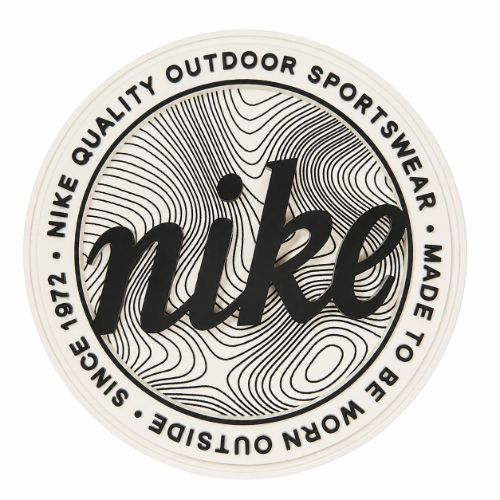
The edge sits there quietly, running along a bag flap or the curve of a strap. At first glance, it reads as nothing more than a finished border, maybe a color-matched line that makes the piece look tidy. Most buyers give it a quick rub with a thumb and move on. The trouble starts later, often after the return window has closed. A tiny split appears near a high-flex point. Within weeks, that split becomes a lifted ridge, and eventually the whole edge starts to peel back in thin, brittle strips. It feels sudden, but the failure was there from the start.
The difference comes down to how the edge was built. A proper molded edge is layered: a base coat to seal, a filler to build, a color coat to finish. Each layer needs to flex with the material, not against it. When manufacturers switch to a cheaper filler or skip the base coat to save time, the edge loses that give. The surface looks fine in the showroom because it hasn't been stressed yet. But the first time the bag is packed too full or the strap gets twisted in a car door, the rigid edge can't follow the material's movement. It cracks, and moisture finds the gap.
What makes this detail so easy to miss is that it doesn't show up as a defect on day one. The edge looks too much like part of the design to invite inspection. A good habit is to bend the leather or strap gently before buying. If the painted edge wrinkles or shows a hairline crack, put it back. If it feels slightly tacky or looks chalky under direct light, that's another sign of a short-lived finish. A well-made molded edge should feel hard and smooth, almost like a polished shell. If it doesn't survive a simple flex test in the store, it won't survive the first season of real use.
Questions to Ask Before a Vendor Sends You That Sample Kit
Before you agree to receive a sample kit, pin down exactly which materials the vendor plans to send. Many suppliers mix generic stock with a few tailored swatches, and you might not notice until it's too late. Ask for a detailed list of items, their specifications, and the exact quantity of each. If they hesitate to provide this breakdown, that's a signal the kit may be more about marketing than solving your actual problem.
Next, figure out what kind of testing or evaluation support comes with the kit. Some vendors just ship a box and disappear, leaving you to guess how to interpret the samples. A better partner will include application notes, performance data, or even a short call to walk you through the nuances. Ask whether they offer technical guidance before, during, or after you test the samples — and whether that support is free or tied to a future purchase.
Finally, clarify what happens after you review the kit. Will there be a pushy sales follow-up, or can you take your time and share feedback without pressure? You want a vendor who treats the sample as a conversation starter, not a fishing hook. Ask about their timeline expectations, whether they'll adjust the samples based on your input, and what a typical evaluation period looks like for customers with similar needs.
Why Your Fabric Blend Should Drive the Silicone Formula
Fabric blends are never neutral surfaces. A cotton-poly mix wicks moisture unevenly, a nylon-spandex knit stretches in unpredictable directions, and a wool-acrylic weave holds heat near the face of the cloth. Each fiber brings its own surface energy, pore structure, and thermal behavior to the table, which means a one-size-fits-all silicone coating will fail somewhere—either peeling off the synthetics, stiffening the naturals, or breaking down under repeated wear. That is why the blend has to lead the design process: you read the fiber ratio first, then choose your silicone backbone, crosslinker density, and cure speed to match what the cloth actually does in use.
Take a high-cotton blend versus a high-polyester blend. Cotton swells with moisture and needs a silicone that stays flexible even when damp, so a softer, lower-durometer formulation with good water-vapor transmission makes sense. Polyester, on the other hand, resists water but can yellow or stiffen under heat, so the silicone has to be more heat-stable and less prone to catalytic residue. If you reverse the logic—start with a favorite off-the-shelf silicone and force the fabric to accommodate it—you get coatings that crack at the elbows, turn tacky in humid weather, or lose their grip after a few washes. The blend tells you where the failure points will be; the silicone formula is your response to those points.
This is not about adding more additives or chasing a universal formula. It is about treating the fiber composition as the primary specification: measure the blend's elongation, absorbency, and surface roughness first, then adjust the silicone's viscosity, adhesion promoter, and cure profile to compensate. A denim-heavy blend needs abrasion resistance and a dull finish; a rayon-heavy blend needs drape and low heat buildup. When the fabric blend drives the silicone formula, the result feels intentional—no peeling, no plastic sheen, no stiff patches. The two materials work as a pair, and that is what separates a reliable treated textile from a gimmick that fails after a season.
Reading Between the Lines of Abrasion Test Reports
Abrasion test reports rarely give you the full picture in a single wear rate number. The details around that number—the shape of the wear scar, the way debris accumulates, any change in surface finish—often reveal more about what is actually happening. A low volume loss can look impressive until you notice the scar is uneven or the counterface picked up transferred material, which usually points to adhesive wear rather than clean cutting.
Test conditions are another layer that gets overlooked. A report may claim excellent wear resistance, but if the load was lower, the speed slower, or the counterpart softer than what you use, the comparison falls apart. Even small differences in humidity or lubrication can flip the wear mechanism from abrasion to fatigue. Lining up these variables is the only way to make sense of cross-report comparisons.
What is missing from a report can be just as telling. If there is no mention of test duration, number of repeated runs, or standard deviation, you cannot tell whether early run-in wear inflated the result or whether performance collapses after the first hour. Request the full wear-depth curve over time, not just the endpoint average, and you will spot run-in surges or late-stage acceleration that a single number hides.
Signs a Vendor Has Real Reorder Discipline, Not Just a Fancy Catalog
Real reorder discipline shows up in how a vendor handles a product after the first shipment lands. Look for vendors who proactively share inventory forecasts, not just glossy brochures. They ask about your sell-through rate before pitching the next order. They flag slow movers early and suggest swaps instead of pushing more units. That kind of behavior comes from a supply chain built on actual data, not a marketing team.
Another tell is their willingness to walk away from a larger order if it doesn't fit your sales cycle. A vendor with genuine discipline will cap quantities on unproven items, even when you ask for more. They track reorder lead times against real warehouse stock, not just the factory promise date. You'll notice they never run out of your best sellers, but they also don't guilt you into taking the full allocation. Their reorder recommendations feel less like a sales pitch and more like a joint inventory plan.
Finally, check how they respond when you want to reduce or delay a reorder. A disciplined vendor adjusts without penalty or passive-aggressive emails. They have clear tiered pricing based on committed volume, not on one-time buy-ins. Their reps talk about weeks of cover, safety stock, and replenishment triggers as casually as they talk about trends. If the conversation consistently circles back to your actual sales velocity instead of their catalog pages, you're likely dealing with a supplier who treats reordering as an operational rhythm, not an afterthought.
FAQ
Look past the sales pitch and ask for physical samples made with your actual logo or artwork. Surface texture, edge definition, and color accuracy on the sample often reveal more than a catalog photo.
Request wash-test data from the vendor's own lab, but also do your own testing on the intended fabric. Pay attention to whether the label keeps its shape and stays bonded after at least 20 industrial wash cycles rather than relying on vendor claims.
Yes, hardness and elongation matter. A durometer around 50-60 Shore A tends to balance flexibility and resilience, while low-bleed pigments help fine text remain legible over time.
Ask whether the mold is made from steel or aluminum, how many impressions it can handle, and who owns the tooling if you switch suppliers later. Also confirm the vendor can adjust mold depth without charging for a completely new tool.
Request a color-matching report that includes Delta E values against your brand standards for each production batch. A consistent vendor will offer tight tolerances, usually under 1.5 Delta E, and will document them without being asked.
Tooling changes, sample approval loops, and curing time can add weeks. Ask for a clear timeline from artwork approval to dispatch, and check whether the vendor includes sample iteration time in their promised lead time.
Molded labels usually have raised, three-dimensional details that stand up to abrasion better than flat printed layers. For high-contact areas like cuffs or collars, molded construction tends to keep the brand mark visible longer.
At minimum, they should inspect every batch for edge flash, trapped air bubbles, and dimensional accuracy using a calibrated optical comparator. Ask for AQL sampling plans and what happens to lots that fail inspection.
Conclusion
Any vendor can claim their labels survive 50 wash cycles, but what you really pay for is how little changes after those cycles. A label that merely holds on isn't the same as one that keeps its crisp edges and color density. The molded edge is the first place to look: low-profile, seamless borders don't catch on fabric or crack under stretch, while bulky or uneven edges fail slowly and then all at once. Fabric blend should dictate the silicone formula, not the other way around. High-stretch synthetics need a more flexible, lower-durometer compound, whereas dense cotton twills can handle a firmer surface without sacrificing adhesion. If a vendor doesn't ask about your exact fabric composition before quoting, treat that as a red flag.
Before a sample kit lands on your desk, ask how the vendor tests abrasion and what those reports actually measure. Taber or Martindale numbers mean little without the right abradant and pressure settings for your end-use conditions. Look for vendors who volunteer the test method, not just a pass/fail sticker. Also check their reorder behavior: a serious supplier keeps batch records of pigment ratios, cure times, and mold pressure so your third order matches your first. If they can't tell you how they'll handle color drift or edge tooling wear over time, you're gambling with your brand mark. Real discipline shows up in their documentation and their willingness to revisit parameters when your fabric blend changes, not in a glossy catalog.
Contact Us
Contact Person: Wang Song Lin
Email: [email protected]
Tel/WhatsApp: +8613751282193
Website: https://www.heat-transferprinting.com/