

ODM Multi Chamber Laundry Pods for Custom Brand Solutions
2026-10-24
Have you ever wondered what it takes to launch a standout laundry pod line in today’s crowded market? Multi-chamber pods have moved from novelty to necessity, yet most brands still offer the same off-the-shelf formulas. That’s where ODM multi chamber laundry pods for custom brand solutions come in — giving you the power to design pods that truly reflect your vision, from scent profiles to stain-fighting performance. At LANJIEYA, we’ve spent years perfecting ODM manufacturing so your brand doesn’t just blend in, but leads with precision and personality. In this post, we’ll unpack how custom multi-chamber pods can elevate your product line and why choosing the right ODM partner makes all the difference.
Why Multi-Chamber Pods Deliver a Better Clean Than Single-Dose Detergents
The real difference between multi-chamber pods and single-dose detergents starts with how the ingredients are stored. Single-dose formulas blend everything into one liquid or powder, which means active enzymes, oxygen-based brighteners, and surfactants have to co-exist in the same environment. Some of these components degrade when they sit together for weeks on a warehouse shelf, so the cleaning power you get on wash day may already be compromised. Multi-chamber pods solve this by isolating ingredients that don't play well together, keeping stain fighters and fabric care agents separate until the moment water hits them in the drum.
There's also a timing advantage that's easy to overlook. In a single-dose detergent, everything dissolves at once, often before the wash cycle reaches the heavy-soil phase. Multi-chamber pods are engineered with different film thicknesses and dissolution rates, so enzymes for protein stains release early while a separate chamber holds back its optical brighteners or color protectors until later in the cycle. The result is a more focused clean that hits different stain types at the point when each ingredient works best, rather than dumping them all into the water at the same time.
From a user perspective, the practical benefit shows up in everyday laundry. Grass stains, greasy collars, and dull-looking fabrics often come out looking more consistently fresh with a multi-chamber pod, not because the pod contains drastically different ingredients, but because those ingredients arrive at the right moment and in the right concentration. Single-dose detergents can still handle light loads, but when a load mixes old stains, odors, and delicate colors, the chambered design gives you a more reliable outcome without needing to add boosters or run extra cycles.
Custom Formulation: From Fragrance Profiles to Enzyme Choices
Custom formulation begins with a conversation about scent memory. Some clients chase the sharp green bite of crushed stems, others linger on the powdery dry-down of vintage talc, and a surprising number want the faint metallic tang of rain on hot pavement. Fragrance profiles are never just top, middle, and base notes—they are emotional coordinates. We translate those coordinates into a working accord, adjusting for skin chemistry, ambient humidity, and even the time of day the product will most likely be worn.
Once the fragrance profile locks into place, the enzyme choices quietly take over. Enzymes are not a marketing afterthought; they decide how a scent behaves on fabric, hair, or skin. A lipase-rich blend can turn a simple citrus cologne into a time-release freshener, while a cellulase variant might soften linen so thoroughly that the fragrance seems to float above the fibers. We test enzyme activity against pH shifts, surfactant loads, and storage temperatures—because a brilliant scent that dies in the bottle is just an expensive mistake.
The real craft lies in refusing to let either side dominate. A heavy-handed fragrance can mask the functional work of enzymes, while an over-optimized enzyme system can flatten a delicate rose absolute into something clinical. The best custom formulations feel inevitable—as if the scent and the chemistry grew up together, each one explaining the other. That balance never comes from a template; it comes from listening hard and adjusting in small, almost obsessive increments until the whole thing finally clicks.
ODM Manufacturing That Adapts to Your Brand's Growth Stage
Your first production run doesn't need the same setup as your tenth. We tune every ODM engagement around the phase your brand is actually in, whether that means lean prototyping batches for a market test or full-scale assembly lines once retail shelves are calling. Instead of forcing you into a one-size-fits-all workflow, our engineers map capacity, component sourcing, and quality gates to match your current demand without locking you into rigid minimums.
As your volume climbs, so does the manufacturing logic behind it. Early on, we often recommend modular tooling and shared component libraries to keep upfront costs low. Later, those same product designs can shift into dedicated production cells, automated inspection, and regional sub-assembly — all without re-engineering the core BOM. That way, scaling up feels less like starting over and more like turning a dial.
The real difference shows up in the handoffs. A brand that's still validating a concept gets rapid feedback loops on DFM risks and material substitutions. A brand that's already shipping tens of thousands of units gets weekly yield reports, line-balancing suggestions, and dual-sourcing options to protect against bottlenecks. You're never paying for infrastructure you don't need yet, and you're never caught without the capacity you do.
Creating a Signature Look: Pod Colors, Shapes, and Packaging
Color is the fastest way to signal identity, yet many brands settle for the same tired palette of black, white, and silver. A pod in deep oxblood or muted sage doesn't just stand out on a shelf—it becomes a tactile cue that customers learn to recognize before they even read a label. The trick is to pick one or two unconventional shades and commit to them across the entire line, letting that hue do the heavy lifting for brand recall.
Shape matters just as much, but it's often overlooked in favor of what's easy to manufacture. A pod with a slight taper, a softened hexagonal profile, or an asymmetrical grip ridge gives the hand something to remember. This isn't about gimmickry; it's about creating a physical habit. When a user's fingers expect a particular contour every time they reach for a replacement, that shape becomes inseparable from the ritual of use.
Packaging should be treated as the second product, not an afterthought. Consider uncoated paper stock with a single debossed icon, or a slim sleeve that slides open like a matchbox instead of a clamshell. Every detail—the tear strip, the interior print, even the way the pod rests inside—tells a quiet story. Ignore the urge to over-explain on the box. Let the materials and structure imply the experience, and the signature look will carry itself.
Solving Real Laundry Problems with Targeted Chamber Design
Washing machines rarely fail because the drum spins or the pump drains. They fail because the space around the water gets overlooked. A chamber shaped without intent creates dead zones where detergent clings, lint gathers, and mildew quietly takes hold. When we design the wash chamber as a working interior—not just a bucket—we start solving the real laundry problems people live with.
Targeted chamber design means looking at how water, fabric, and mechanical action intersect. A slightly tapered base encourages water to sheet toward the drain instead of pooling under the agitator. Strategic rib placement breaks up fabric clumps so every shirt sees the same amount of friction. Even the distance between the drum wall and the outer tub matters: too tight and you trap soap scum, too wide and you waste energy heating dead volume. These choices don't show up on a spec sheet, but they show up in towels that stop smelling sour after three months.
There's also a quieter benefit. When the chamber is shaped for real use, people stop running extra rinse cycles out of distrust. They use less detergent, less water, less time. The machine stops feeling like a compromise and starts feeling like a tool that works with the way laundry actually behaves. That shift doesn't come from a bigger motor or a shinier interface—it comes from treating the chamber as the core of the problem, and designing it deliberately.
Quality Assurance Steps That Build Consumer Trust in Your Pods
When a customer picks up a pod, they're not just buying a product—they're placing faith in the invisible work behind it. The first step is raw material verification: every batch of coffee, tea, or supplement powder should be tested for contaminants before it ever touches a machine. This isn't about ticking a box; it's about catching a problem before it becomes a recall. Sharing those test results, even in simplified form, gives consumers a reason to trust what they can't see.
Next, focus on seal integrity and portion consistency. A pod that leaks or under-fills doesn't just waste product—it tells the customer that no one was paying attention. Random sampling during production, with clear pass/fail criteria, prevents small defects from slipping through. When a brand openly discusses its rejection rate and what happens to failed pods, it signals that quality isn't a slogan but a daily habit.
Finally, traceability closes the loop. Each lot should be linked to specific machines, operators, and packaging dates. If a complaint arises, the team can pinpoint the source within hours, not weeks. This level of rigor may feel excessive for a small operation, but it's exactly what turns a first-time buyer into a repeat customer. Trust isn't built by a marketing promise—it's earned through the quiet, consistent decisions made long before the pod reaches the shelf.
FAQ
ODM means you don’t have to deal with manufacturing, formulation, or compliance from scratch. We already have multi-chamber pod systems in place, and you can put your brand on a product that’s been tested for stability, dissolving, and cleaning performance. You handle the brand story and distribution; we handle the production and customization.
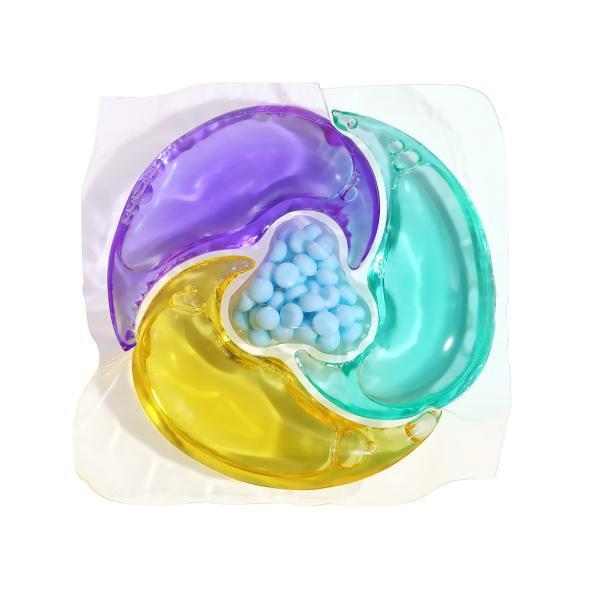
Most brands go with two or three chambers, but the exact count depends on the formula. A common split is detergent in one chamber, stain-fighting enzymes in another, and a fabric softener or color protector in the third. We keep incompatible ingredients separated so they stay potent until the wash.
Yes, colors and scent are flexible. You can choose from existing fragrance options or work with our chemists on a unique scent. Packaging is equally flexible — pouches, boxes, tubs, labels, and even the film pattern on the pods can be adjusted to fit your brand’s look.
It depends on the number of chambers and whether you need a new fragrance or just a label change. Typically you’re looking at a few tens of thousands of pods as a starting point. We can discuss a trial batch first, but the per-unit cost drops significantly once you move to full production.
Yes, the film is designed to dissolve quickly even at 15°C, and the formulas can be optimized for HE machines. We test every batch for cold-water solubility and residue, so you won’t get sticky clumps left in the dispenser or on clothes.
Chamber separation is one of the biggest engineering points. We use a multi-layer film with strong sealing at the chamber boundaries, and we run accelerated aging tests at different temperatures and humidity levels. This catches any weakening before it reaches your customers.
Usually 6 to 10 weeks, but it can stretch to 12 if you’re developing a new scent or need complex packaging tooling. Getting the formula and packaging approved early is the fastest way to shorten the timeline.
Conclusion
The multi-chamber format isn't just a packaging trick—it solves a real chemistry problem. Single-dose detergents often force incompatible ingredients to share space, which can degrade enzymes, bleach, or fragrance before they ever reach the wash. By separating these actives into distinct chambers, an ODM partner can preserve potency until the pod dissolves, delivering a noticeably deeper clean on tough stains like grease, wine, or grass. Custom formulation goes far beyond picking a scent: you can specify enzyme profiles for protein-heavy loads, choose low-sudsing surfactants for high-efficiency machines, or add fabric conditioners in a third chamber. That level of control means your brand can target niche markets—such as baby clothes, sportswear, or hard water regions—without compromising performance. Targeted chamber design also lets you solve specific laundry complaints, like residue on dark fabrics or fading colors, by adjusting gel viscosity, film thickness, and dissolution timing.
Working with an ODM manufacturer that adapts to your growth stage changes the economics of launching a detergent line. You might start with a small run of 5,000 units to test a pilot market, then scale to hundreds of thousands without switching suppliers or reformulating. The same partner can help you create a signature look: choose pod colors that signal your brand's personality, experiment with shapes beyond the standard square (think hearts, droplets, or stacked chambers), and design packaging that feels premium on shelf. Quality assurance isn't an afterthought either. Reliable ODMs run accelerated stability tests under heat and humidity, check seal integrity to prevent leaking pods, and verify dissolution in both cold and hot cycles. These steps build consumer trust because people can see and feel the difference—no sticky residue, no half-dissolved plastic, just a consistent clean every time. That reputation is what turns a private label pod into a brand customers reorder.
Contact Us
Contact Person: Zhao Yanlong
Email: [email protected]
Tel/WhatsApp: 8615832007309
Website: https://www.gzlanjieya.com