
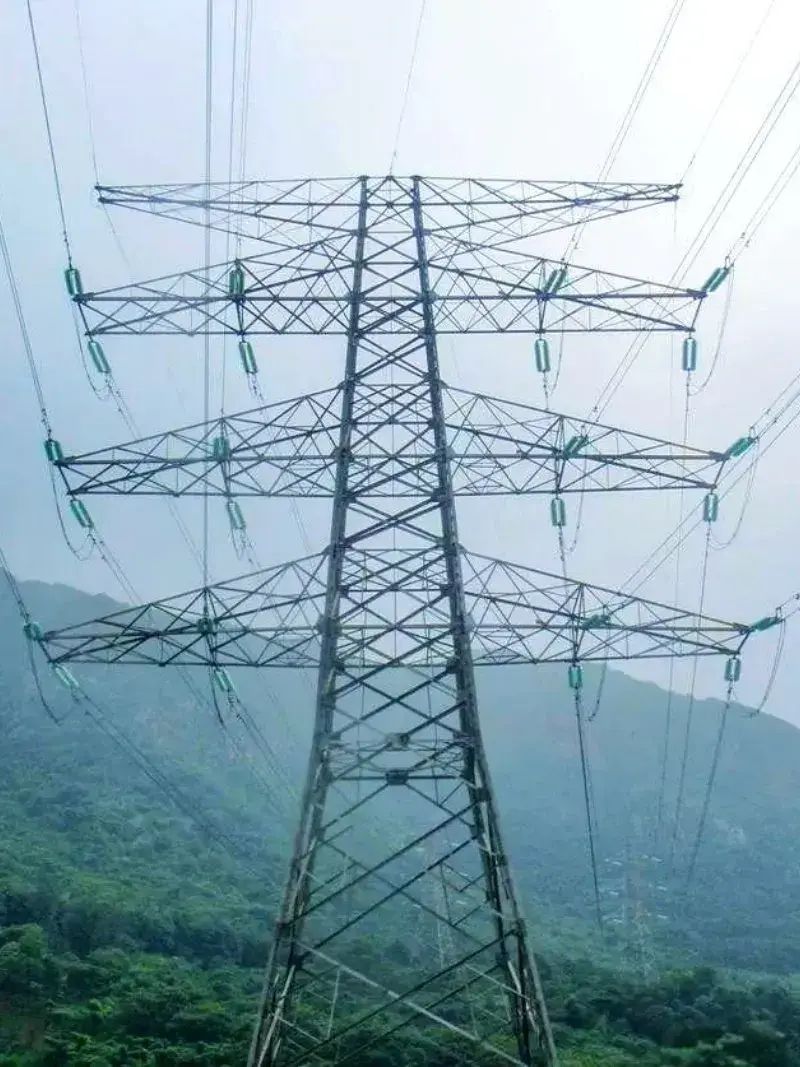
OEM Power Transmission Tension Tower Factory for Durable Power Grid Infrastructure
2026-10-24
Power grids don't fail quietly. When a transmission line goes down, the ripple effect can black out entire regions. That's why the tension towers holding those lines must be more than just steel structures—they have to be engineered for decades of stress, weather, and load. But finding a factory that can deliver OEM-grade tension towers with consistent quality and durability isn't easy. That's where Anbang comes in. As a specialized OEM power transmission tension tower manufacturer, Anbang focuses on building infrastructure that lasts, not just meeting specs. In this post, we'll explore what sets their approach apart and why durability in grid components matters more than ever.
What Happens on the Factory Floor Before a Tension Tower Ships
Months before a tension tower ever leaves the plant, the factory floor turns into a proving ground for every weld, hole, and galvanized surface. Raw steel angles and plates are cut, punched, and laid out in jigs that mirror the tower's final lattice geometry. Fitters and welders work from shop drawings that break the tower into subassemblies, so a leg section or a cross-arm can be built flat, flipped, and checked against hard templates before any full assembly. This is where small misfits get caught—an eight-millimeter drift in a bolt pattern or a warped flange—long before they become field problems.
Once the subassemblies are complete, the tower is trial-erected in the middle of the shop bay. Workers stand the sections up, pin them together, and measure the overall camber, twist, and bolt-hole alignment. Hydraulic jacks and chain falls coax stubborn joints into place, and any gap or mismatch is marked, disassembled, and repaired on the spot. Only after the full structure passes the erection check does it come down for hot-dip galvanizing, followed by a final pass where every connection point is reamed or chased to remove zinc buildup that could slow down line crews in the field.
The last hours before shipping are less about spectacle and more about paperwork and protection. Each bundled section gets its own packing list, with bolts and step bolts counted into tagged sacks. Wood blocking and steel banding keep the galvanized surfaces from rubbing bare during transit. Forklifts stage the bundles by sequence number so the first pieces off the truck are the ones the erection crew needs first. A final walk-down checks that every mark, heat number, and mill cert is traceable back to the heat of steel it came from—then the doors open and the tower starts its journey to the line.
OEM Customization That Doesn't Sacrifice Structural Margin
Most OEM programs treat customization as a cosmetic layer that sits on top of a fixed structural core. That approach works until the customer wants a different mounting pattern or a tighter envelope, and suddenly the safety factor starts to erode. We built our customization workflow around parametric load paths instead. Every change to the outer geometry triggers an automatic re-evaluation of the internal rib network, so the part never drifts below its original structural margin—no matter how the interface points move.
A recent example: a customer asked for a 14 percent narrower housing with relocated bolt holes. Rather than simply scaling the original design down, the system regenerated the corner gussets and moved material away from low-stress zones to keep the peak stress under the same threshold we validated in the first prototype. The result looked completely different from the outside, but the measured strain values were within two percent of the baseline.
That's the difference between customizing a part and re-engineering it from scratch. The customer gets their unique fit and branding without inheriting a hidden weakness. We also keep the full simulation report tied to each revision, so there's no guessing about what changed structurally.
The Link Between Steel Grade and Transmission Tower Service Life
The grade of steel used in a transmission tower quietly dictates how long the structure can stand against wind, ice, and corrosion. Higher-strength grades like ASTM A572 Gr. 65 or weathering steels such as Corten are often chosen not because they are cheaper upfront, but because their metallurgical composition resists micro-cracking and fatigue far longer than ordinary carbon steel. In coastal or industrial zones, where salt spray and sulfur compounds eat away at unprotected metal, the difference between a low-grade steel and a well-selected alloy can mean twenty extra years before a tower needs major reinforcement.
Fatigue is the slow killer that steel grade directly influences. Transmission towers endure millions of load cycles from gusting winds and conductor galloping. Lower-grade steels tend to have larger grain structures and more inclusions, which act as starting points for cracks under repeated stress. A tower built with a grade that has poor notch toughness might survive its first decade without visible issues, then suddenly show cracks at bolted connections or base plates. Upgrading to a fine-grained, high-toughness grade raises the fatigue threshold, so the tower spends less time accumulating invisible damage each season.
Corrosion resistance is where the link becomes most obvious to maintenance crews. Uncoated mild steel loses section thickness at a predictable but alarming rate in wet or polluted environments, directly shortening service life by reducing load-bearing capacity. Weathering steel grades form a dense patina that slows further oxidation, and hot-dip galvanized high-strength bolts keep joints intact longer. Choosing the right steel grade is less about initial tonnage price and more about deferring the day when a tower must be patched, reinforced, or replaced entirely.
Welding Practices That Hold Up Under Ice, Wind, and Line Tension
Welding out on a frozen right-of-way isn't just about running a bead; it's about managing heat input so the base metal doesn't crack when the thermometer dips below zero. Preheat becomes non-negotiable—not the casual pass with a rosebud, but a controlled soak that drives moisture out of the steel and keeps the heat-affected zone from turning brittle. Welders who work transmission lines in northern corridors often switch to low-hydrogen electrodes and keep them in a rod oven right up until the arc strikes, because a few degrees of dew point can mean the difference between a weld that survives a blizzard and one that fails the first time the wind loads the conductor.
Wind is the silent saboteur of field welding. A gust across the arc can scatter shielding gas, pull porosity into the puddle, and leave you with a weld that looks fine on the surface but hides wormholes underneath. Good crews set up windbreaks—plywood, canvas, even the service truck parked broadside—but the real skill is reading the weather and adjusting travel angle and speed on the fly. Some welders tack a short length of filler rod to the pipe as a telltale; when it bends past a certain point, they know the gust is too strong for clean work and they wait it out rather than burn through a whole stick trying to fight it.
Line tension is the third variable most procedure books don't cover. When you're welding a repair sleeve onto a live gas main or a dead-end crossarm under load, the steel is already stressed—sometimes close to yield. The weld sequence has to account for that stored energy. Skipping around the joint instead of running continuous passes keeps the heat from concentrating on one side and letting the tension pull the joint out of alignment. Experienced pipeline welders will tell you they can feel the line move under the arc, a slow creep that tells them when to back off and let things settle. It's not textbook welding; it's the kind of judgment you only get from standing on enough ice, in enough wind, with a stinger in your hand and the knowledge that the line won't wait for perfect conditions.
Turning Utility Drawings Into Field-Ready Towers Without Surprises
Utility drawings often read like a foreign language until you trace every line against the real terrain. That means checking tower leg elevations against site surveys, confirming conductor sag and tension allowances, and marking every anchor bolt pattern before steel ever leaves the yard. Small mismatches here become expensive field fixes later.
The difference between a clean handoff and a costly surprise usually lives in the details nobody thought to question. Weld access holes, climbing step orientation, ground wire peak angles, and even the direction a ladder faces can shift installation time by hours. Walking the drawing set with a rigging crew before fabrication lets those questions surface while changes cost nothing.
Finally, treat the drawing package as a living document tied to a specific site, not a generic template. Note every non-standard connection, every plate thickness change, and every bolt torque requirement in plain language directly on the relevant sheet. When the truck arrives, the crew should recognize the tower from the page without flipping back and forth guessing what the designer meant.
Field Reports From Projects That Put Durable Tension Towers to the Test
In remote transmission corridors, the real test isn't the spec sheet. Maintenance crews have started documenting how tension towers survive wind gusts, ice loading, and soil shifts over multiple seasons. One utility in the upper Midwest swapped a failing lattice section for a new tubular design and tracked strain gauge data for eighteen months. The result wasn't a dramatic failure, but a slow, measurable settling that told engineers more than any lab test.
Another report from a coastal project highlighted corrosion. After three years of salt spray, the galvanized coating on the anchor bolts showed uneven wear, but the tower structure itself remained within tolerance. The field team's fix was simple: replace washers, re-torque, and apply a cold zinc spray at the first sign of rust. That kind of detail rarely appears in promotional materials.
What stands out across most field reports is how much the installation crew's habits affect long-term performance. Proper backfill compaction around the base and keeping the conductor tension within the design envelope prevented most early issues. In one case, a tower that was slightly over-tensioned during stringing developed a visible lean within a year, requiring a costly mid-span correction. These notes, shared between project managers, are becoming the real durability manual.
FAQ
We mostly work with high-strength structural steel, usually hot-dip galvanized to resist corrosion. For coastal or industrial environments, we can also apply extra epoxy coatings or use weathering steel if the project calls for it.
Yes, our engineering team regularly adjusts leg slopes, base widths, and member sizes based on the site survey data. We've built towers for steep hills, sandy soil, and high-wind corridors, so unusual conditions are not a problem.
We focus on three things: full-penetration welds at critical joints, galvanizing thickness checked with a magnetic gauge on every batch, and traceability of raw steel certificates. Some clients also request a trial assembly before mass production to catch any fit-up issues early.
For standard lattice tension towers, expect around 30 to 45 days after drawing approval and advance payment. Custom or heavily modified designs can run 60 to 75 days. We share a production schedule and photos each week so you know exactly where things stand.
Primarily we manufacture and supply the towers, but we can recommend qualified erection subcontractors or provide a detailed step-by-step assembly manual. If requested, our engineers can visit the site for the first tower erection and train your local crew.
We can fabricate to ASTM, EN, or ISO depending on the client's location. Every shipment includes mill test certificates, welding procedure specs, and dimensional inspection reports. We're also used to meeting specific utility-specific requirements like extra bolt torque checks.
Yes, we keep our production lines flexible. A trial order of 5 to 10 towers is a good way to verify quality, and then we can ramp up to hundreds of towers per month without changing the welding or galvanizing process.
We design for long spans and heavy conductor loads, with strict control on bolt hole positioning and member straightness. Our towers are pre-assembled in sections to reduce field adjustments, and the steel grade is selected to handle high mechanical stress without excessive weight.
Conclusion
Before any tension tower leaves the factory, it passes through a pre-assembly bay where bolt holes are matched against the customer's erection drawings, not just a generic template. Every column and crossarm is measured for straightness, and the hot-dip galvanizing thickness is checked at multiple points. The OEM engineering team does not simply copy utility drawings; they re-run load cases for the specified conductor tensions, wind spans, and ice loads, then adjust plate thickness or gusset details only where the original design left too little structural margin. That approach is why steel grade matters: a switch from Q345 to Q420 might sound minor, but it alters weld preheat requirements and fatigue behavior, so material certificates are tracked to the heat number before fabrication begins.
Welding procedures are written for the worst service conditions—ice storms, sustained wind, and continuous line tension—using low-hydrogen consumables and controlled interpass temperatures. Critical full-penetration joints get ultrasonic testing, while fillet welds on secondary bracing are visually inspected under good lighting. When towers arrive on site, field reports from mountainous and coastal projects show fewer re-drilled holes and less cutting than with previous suppliers, because pre-assembly caught interface errors early. Over years of service, the galvanized coating and weld zones have held up without cracking or excessive corrosion, which reduces the utility's long-term maintenance burden. That practical record is what makes a tension tower factory genuinely durable, not just a checklist of certifications.
Contact Us
Contact Person: antor khan
Email: [email protected]
Tel/WhatsApp: 8613863903569
Website: https://www.qdabtower.com/