
OEM Stationary Office Chair Benefits That Make Desk Work Feel Effortless
2026-11-16
Most desk setups are judged by screens and keyboards, while the chair quietly decides whether the afternoon feels productive or punishing. An OEM stationary office chair often gets overlooked because it lacks flash, yet its stability, tailored build quality, and long-session support are exactly what make desk work feel less like a drain. At OFCJNS, that practical difference is the whole point—and this guide breaks down the benefits worth sitting for.
Support That Arrives Before Your Lower Back Starts Complaining
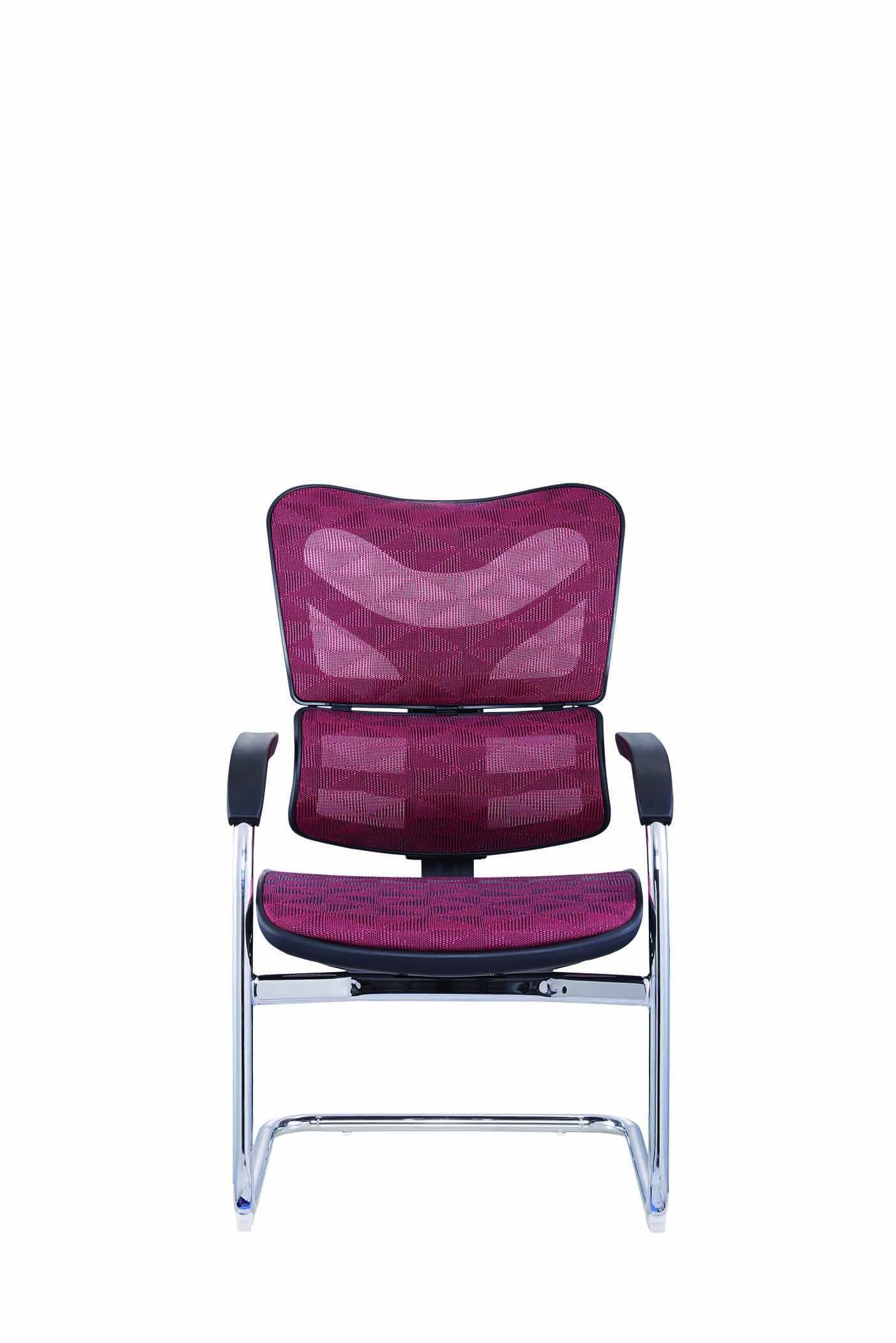
Most chairs wait until your spine has already thrown in the towel. This one notices the subtle shift in your sitting position before the ache turns into a full-blown argument. A low-profile lumbar panel moves with you through long calls, deep-focus coding sessions, and those afternoons when you forget to stand up for three hours. The support isn't loud or corrective—it just quietly keeps your pelvis from drifting into that slouch that always ends the same way.
Instead of a bulky cushion that pushes against one fixed spot, the backrest uses a split-shell design that responds to how you actually lean. Lean left to grab a notebook and the right side softens slightly; settle back into center and the curve returns to a neutral, weight-bearing shape. It's the difference between a brace that fights you and a seat that reads the room.
You might not think about any of this on day one. Then a month passes without the usual 4 p.m. stiffness, or you realize you've finished a cross-country drive without doing the driver's-seat wiggle every ten minutes. That's when it becomes obvious: the support wasn't waiting for a complaint. It was already there, doing the work before you needed it.
How a Stationary Base Removes the Biggest Hidden Distraction at Your Desk
Most desk setups look fine until you notice the small drift. A monitor resting on a flimsy stand or a laptop propped on a stack of books shifts just enough during typing that your eyes have to re-find the screen. That half-second correction feels trivial, but repeated all day it becomes a quiet tax on focus. A stationary base locks the position in place, so the screen stays exactly where your hands and posture expect it to be.
The less obvious benefit is that you stop bracing for movement. When a display wobbles, part of your attention stays on keeping it stable, even if you are not consciously aware of it. Removing that micro-instability lets you lean into longer stretches of work without the urge to adjust, straighten, or glance at a drifting screen. The desk stops feeling like a collection of loose parts and starts behaving like a single, predictable surface.
Cushioning That Keeps Afternoon Numbness Off Your Calendar
Most seat pads soften the first ten minutes, then quietly give up. The difference here shows up around 2 p.m., when pressure usually starts creeping into the backs of your thighs and your left leg goes fuzzy. The layered foam is tuned to spread your weight before it concentrates under the sit bones, so blood keeps moving instead of getting pinched off.
That late-day restlessness often comes from one spot doing all the work. By varying the density under the contact points, this cushion lets you shift naturally without losing support. The result is less squirming, fewer forced stretch breaks, and no need to plan your afternoon around a numb hip.
It is not about piling on more foam. It is about how the material responds after hours of sitting. The top layer gives just enough to ease pressure, while the base stays firm enough to hold posture. That balance keeps your afternoon free of the foggy, tingling feeling that usually sets in around hour three.
Armrests That Give Your Shoulders a Place to Let Go
Most armrests treat your shoulders like an afterthought, leaving them hovering just above a hard edge. These are different. The top surface dips and curves enough to catch the weight you didn't realize you were holding, letting the muscles around your shoulder blades finally unclench. It's not a dramatic recline or a massage function—just a subtle shift in angle that makes sitting still feel less like a negotiation with the chair.
What you notice first is the absence of that familiar pinching sensation near your neck. Instead of propping your arms up on a narrow rail, your elbows settle into a wider, slightly padded shelf that follows the line of your forearm. Your shoulders drop on their own, not because you told them to, but because the support is actually there. Over a long afternoon of reading or typing, that small change adds up to fewer readjustments and far less tension creeping up the sides of your neck.
The material matters too. A dense foam with just enough give keeps the surface from feeling squishy or unstable, while the outer fabric stays cool against bare skin. Even after hours of leaning to one side, there's no hard edge digging into your upper arm. If you've ever finished a movie or a long call with your left shoulder up by your ear, you'll understand why that matters.
The Reason Your Focus Stays Intact Through Back-to-Back Tasks
Most people assume that switching from one task to the next should drain attention, but the opposite can happen when the tasks feel like parts of the same movement. Your brain treats a string of related demands as a single unfolding problem rather than a series of starts and stops. The first task leaves loose ends, and those loose ends carry forward as a kind of low-level tension that keeps your working memory primed. Instead of resetting to zero, you begin the next task already mid-thought, which makes the transition feel almost invisible.
There is also a rhythm factor. Once your pacing, tools, and decision-making shortcuts are warmed up, they persist across the boundary between tasks. You are not rebuilding focus from scratch; you are borrowing the momentum from the previous minutes. This effect becomes stronger when the tasks share a similar format or goal, because the brain reuses the same attentional template instead of constructing a new one. What looks like discipline is often just well-timed continuity.
The real reason your focus stays intact may have less to do with effort and more to do with how you frame the sequence. If you treat back-to-back tasks as separate obligations, you invite a small mental goodbye at the end of each one. If you treat them as a single block with moving parts, attention flows across the seams. The brain dislikes unfinished business, and it will quietly hold the door open for the next task as long as it believes the current arc is not over.
Everyday Comfort That Blends Into the Background So Work Can Take Over
The best kind of comfort doesn't announce itself. It sits quietly under your wrists, behind your lower back, and beneath your feet, doing its job while your attention stays on the screen. When a chair or a desk setup gets the details right, you stop noticing it by lunchtime — and that's exactly the point. It becomes less like furniture and more like a good coworker: reliable, unobtrusive, and never demanding credit.
That kind of comfort shows up in small, unglamorous ways. The armrest height that doesn't force your shoulders up. The seat depth that lets you sit back without cutting off circulation. The fabric that stays cool through a long afternoon. None of these details feel dramatic on their own, but together they remove the tiny frictions that pull you out of a focused state and make you readjust, shift, or sigh.
When comfort fades into the background, work can finally take over. You aren't thinking about how you're sitting or whether your neck will hurt in an hour. You're thinking about the problem in front of you. That quiet disappearance is the whole design brief — not to be noticed, but to hold you steady until the work is done.
FAQ
The main difference is the base. A stationary chair sits on fixed legs or glides instead of casters, so it stays put while you work. That can feel more stable if you tend to shift around or if your floor makes rolling chairs slide too easily.
OEM lets you match the chair to your existing office setup rather than settling for whatever a catalog offers. You can choose the frame finish, fabric type, foam density, and even the height range, which often results in a chair that holds up better under daily use.
Yes, comfort has more to do with the seat cushion, lumbar support, and adjustability than with whether the chair rolls. A fixed base can actually help you keep your feet grounded and reduce small, restless movements that add up to fatigue over time.
Because the chair doesn't roll or swivel unexpectedly, it's easier to keep your hips and shoulders aligned. You're less likely to lean to one side or twist to reach things, so the lower back gets more consistent support.
They are, as long as the feet are matched to the surface. Soft pads work well on hardwood or tile to avoid scratches, while wider glides keep the chair from sinking into carpet. Some OEM programs let you pick the foot style for your specific floor type.
Customization usually means you can spec higher-density foam, reinforced metal framing, and tougher upholstery instead of accepting the lightest build at a given price point. That can make a big difference in offices where chairs are used for several shifts or long hours.
Look at the seat height range, seat depth, lumbar adjustment, armrest height, and the type of floor glides included. If the chair will be used by multiple people, prioritize easy adjustments over a one-size-fits-all shape.
Usually it's a little simpler because there are no casters to press in and no moving parts to lubricate. The main thing is making sure the leg glides are installed evenly so the chair doesn't wobble on uneven floors.
Conclusion
Most chairs only get noticed when something starts aching. A properly designed OEM stationary office chair works the other way around. The lumbar support is shaped to catch the lower back before fatigue turns into that familiar mid-afternoon ache, so you are not constantly shifting to find a better angle. The stationary base removes a distraction most people never name: no slight rocking, no drifting, no tiny movements that interrupt a thought. You sit down, the chair holds steady, and the screen becomes the only thing asking for attention. The cushioning also spreads pressure well enough that the dull, tingling numbness that usually arrives after long calls or a deep work block does not make it onto the calendar.
The armrests are set at a height that lets the shoulders release instead of creeping toward the ears, which matters more than it sounds during a run of back-to-back tasks. When the chair is not demanding regular adjustments, it fades into the background and the mind stays with the work. That is the real benefit: the comfort is not flashy, but it is consistent enough to make desk work feel less like endurance and more like a natural rhythm.
Contact Us
Contact Person: Diff Wang
Email: [email protected]
Tel/WhatsApp: +8613650281199
Website: https://www.ofcmeshchair.com/