
Outdoor Cladding Tiles OEM Guide to Custom Finishes and Lasting Durability
2026-11-22
Outdoor cladding rarely gets the attention it deserves—until a project demands custom finishes that hold up under sun, rain, and time. This guide walks through the OEM decisions that separate tiles that merely look good on day one from those that stay sharp for years. Along the way, Beata Ceramics shows how tailored surface details and durable material choices come together without guesswork.
The Case for Finishes That Do More Than Cover
A finish used to be the last quiet note in a room—the thing that made a surface look complete. But there is a growing argument for expecting more from it: a finish can steady indoor humidity, soften noise, or shed dust before it settles. Once you start treating the outermost layer as an active skin rather than a passive film, the whole idea of “done” changes.
In practice, that might mean a lime-based wall finish that keeps a kitchen smelling cleaner without much effort, or a floor seal that resists scuffs not by being harder but by flexing just enough to absorb daily wear. The appeal is not technical jargon; it is the quiet difference between a room that looks good on day one and one that still feels easy to live with years later.
Getting Texture Right Before Color Enters the Picture
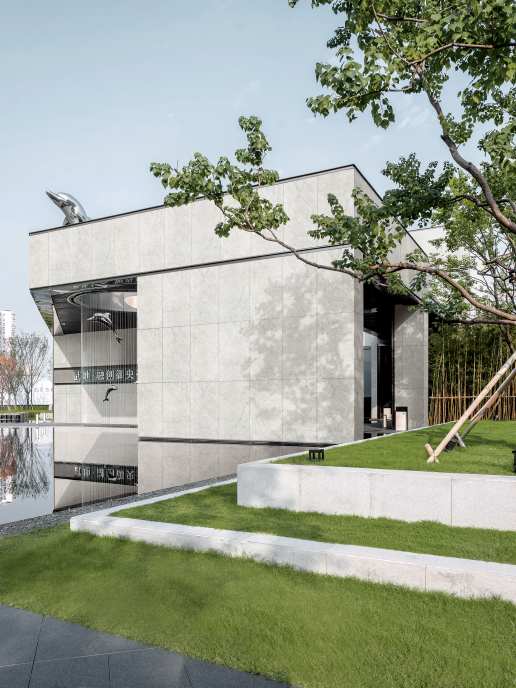
Texture sets the terms before color ever arrives. A ground with too much slip will make pigment sit like dust, while a surface with real tooth catches every pass and gives even thin washes a sense of friction. The light that skims across that surface is already doing half the work of describing form.
Working the texture first also changes how you handle value. When ridges and hollows are established, you can scrub, drag, or wipe color into them and let the physical surface do the blending. That keeps the result from looking like a flat digital fill over a bumpy photograph.
Once the surface feels right under the hand, color becomes a finish rather than a rescue operation. If the texture is wrong, no amount of glazing or overpainting really hides it.
Weathering as Part of the Design Conversation
Weathering rarely shows up on the agenda, yet it shapes nearly every material decision once a project leaves the drawing board. The way timber silvers, steel blooms with rust, or stone softens at its edges becomes part of a building's ongoing voice. Rather than treating these changes as failures to be prevented, designers can treat them as a shared authorship with time, moisture, and sun.
The conversation begins when a finish is chosen, but it deepens long after handover. A copper facade that starts bright and slowly turns dark brown, then green, tells a different story in year five than it did on day one. Clients who understand this are less likely to demand premature replacement, and more likely to notice how rain streaks, salt air, or seasonal freeze-thaw cycles add a layer of specificity no render can fake.
Bringing weathering into the design discussion means asking a simple question early: what do we want this surface to become, not just look like now? It shifts the focus from control to stewardship, where maintenance becomes an evolution rather than a correction. The best projects leave room for that uncertainty, allowing the environment to finish what the architect started.
How OEM Partnerships Reshape Lead Times and Limits
Lead times in traditional OEM sourcing often feel like fixed calendar entries: twelve weeks for castings, eight for circuit boards, and little room to move once the purchase order lands. Partnerships change that rhythm. When both sides share rolling production forecasts and allow access to material buffers, the OEM can sequence jobs around actual demand instead of waiting for a formal order to trigger procurement. A supplier that once held finished goods until a release arrived may now stage subassemblies and raw stock earlier, trimming days or even weeks from delivery without holding excess inventory.
Limits also become less rigid. Minimum order quantities tied to expensive tooling setups or batch chemical processes can be renegotiated when a partner understands how the parts flow into a broader product family. Joint engineering work identifies where standard housings, common connectors, or pre-approved alternative resins can replace bespoke components, so smaller runs stop carrying penalty costs. In several cases, capacity reservations replace fixed purchase volumes: the OEM pays for a defined share of a line, not a set number of units, which lets production shift between models as demand moves.
The real change shows up in problem solving. A transactional supplier might quote a longer lead time the moment a raw material runs short. An OEM partner, by contrast, tends to offer substitution lists already tested for fit and compliance, or reroutes work to a second qualified site without triggering a lengthy qualification cycle. Those options depend on shared data and some willingness to hold joint buffer stock, but the result is a supply chain where lead times and batch constraints respond to actual throughput rather than habit.
Choosing Substrates That Keep Their Character
Not every surface wants to be smoothed into silence. Some papers hold a tooth that grabs dry media and gives charcoal a granular voice; others let ink sit on the surface just long enough to leave a crisp edge before soaking in. The first thing worth noticing is how a substrate behaves before you impose a technique on it—its stiffness, its warmth, its willingness to bend or resist. Choosing one that keeps its character often means accepting small irregularities instead of fighting them.
A heavy cotton rag with visible fibers will never behave like a coated synthetic sheet, and that gap is exactly where the work can find its footing. Rather than looking for a perfectly neutral base, it helps to ask what the material already does well. Does it buckle under wet media in a way that adds movement? Does its tone shift the value range of the pigments? Those qualities are not flaws to correct; they are the substrate reminding you that it has a hand in the result.
Field Testing Custom Finishes Before Full Production
Custom finishes rarely behave in the field the way they do on a bench sample. Light angles shift throughout the day, humidity fluctuates, and surfaces get touched, scuffed, and cleaned in ways no showroom can replicate. A meaningful field test means installing finish panels in the actual environment for at least a couple of weeks—near windows, at hand height, next to door edges—so the finish has to prove itself under real use rather than under ideal display conditions.
It helps to treat the test as a comparison rather than a single yes-or-no check. Prepare several small panels with slight variations in substrate prep, coat thickness, or cure time, and label each one clearly with the date and mix details. Ask the people who will clean, maintain, or install the finished piece to handle the samples. Their feedback often catches practical issues like streaking after wiping or edge wear that designers won't notice from a distance.
At the end of the trial, look beyond color preference. Check for fading, scratches, adhesion at edges, and how easily the surface can be cleaned without leaving marks. Photograph the panels in the same lighting at the start and finish so any change is visible. If the finish holds up and still looks intentional, full production can move forward with fewer surprises. If not, the adjustment is far cheaper to make now than after an entire batch has been coated.
FAQ
Yes, most OEM lines allow custom pigment matching. We usually ask for a physical sample or a RAL/Pantone reference, then run a small batch to confirm the fired color before full production. Keep in mind that textured surfaces can shift the perceived tone under different light.
Matte and lightly textured finishes tend to hide micro-crazing and resist freeze-thaw stress better than high-gloss surfaces. The real safeguard is the body formulation, including low water absorption and enough flexural strength, rather than the coating alone.
We rely on UV-stable inorganic pigments fired into the body, not a surface paint or dye. That way the color is part of the tile itself, so sun exposure and cleaning won't strip it away. Periodic testing under accelerated weathering gives us a clearer picture of long-term performance.
Yes, and it is worth the wait. A small-run sample tile or a pre-production panel shows how the texture, edge profile, and color behave together. It also lets you check the look in natural daylight and against adjacent materials.
Typically we hold thickness, length, and width within a tight range, often around plus or minus 0.5 mm to 1 mm depending on the tile size and edge detail. But installation planning matters just as much, so we recommend agreeing on joint width and substrate flatness early.
Cladding tiles are usually designed for vertical surfaces, but some through-body options can work on low-speed exterior floors if they meet the right slip rating and breaking strength. Always specify the intended use so the factory can adjust the body and surface accordingly.
They can add a couple of weeks if a new glaze, texture, or pigment trial is involved. Once the recipe is locked and approved, repeat orders usually move much faster because the sampling phase is already done.
Gentle washing with water and a pH-neutral cleaner is enough for most surfaces. Avoid abrasive pads, acidic descalers, or pressure washing at close range, since those can dull the texture or open micro-pores over time.
Conclusion
A finish on outdoor cladding tiles rarely succeeds when it is treated as a simple surface coat. The most useful finishes work harder: they alter how water moves, how light catches the face, and how the tile reads from a distance. Before color even enters the discussion, texture sets the tone. A honed, ribbed, or split surface changes the way shadow falls across a facade and gives the finish something to hold onto. Once that is resolved, weathering stops being an afterthought. Instead of promising a perfectly static appearance, the guide treats gradual tone shifts and mineral bloom as part of the design conversation, which makes the product more honest and easier to specify for long-term exterior use.
OEM collaboration changes the usual constraints around lead times and custom possibilities. Rather than forcing a project into a catalog, the right partner can adjust aggregate blends, slip resistance, and edge profiles without restarting the entire process. Substrate choice matters just as much, since porcelain, fiber cement, and natural stone do not accept finishes in the same way; retaining their inherent character keeps the final result from looking generic. Finally, field testing custom finishes before full production catches failures that lab samples miss, such as freeze-thaw stress, cleaning routines, and UV drift. That step turns a speculative finish into one that can actually hold up outside.
Contact Us
Contact Person: Emma
Email: [email protected]
Tel/WhatsApp: 8618064423698
Website: https://www.beataceramics.com/