

Phenylacetonitrile Intermediate CRO: Optimizing Synthesis for Drug Development
2026-07-29
When it comes to accelerating drug development, the devil is in the intermediates. Phenylacetonitrile is a workhorse building block, yet its synthesis can make or break a timeline. At DSL Chemicals, we've turned a common headache into a competitive advantage—optimizing every step for purity, yield, and scalability. What if your next API could skip the synthetic roadblocks entirely?
Phenylacetonitrile’s Pivotal Role in Modern Drug Discovery
Phenylacetonitrile might not be a household name, but it quietly powers a surprising number of breakthroughs in pharmaceutical research. As a versatile nitrile with a benzyl group, it serves as a springboard for synthesizing complex molecules that would otherwise require multi-step detours. Medicinal chemists prize its reactivity—the nitrile can be hydrolyzed to carboxylic acids, reduced to amines, or participate in cyclization reactions, making it a building block for everything from anti-inflammatory agents to central nervous system drugs. What makes it particularly valuable is how well it balances stability and synthetic utility; it can be stored without fuss yet springs into action under mild conditions.
Beyond its role as a chemical Swiss Army knife, phenylacetonitrile has become indispensable in the construction of heterocyclic scaffolds—the core skeletons of many modern drugs. For instance, it’s frequently employed in the synthesis of pyrazoles and triazoles, which feature heavily in kinase inhibitors and antifungal therapies. In one notable application, researchers used it to craft a key intermediate for a novel class of oral anticoagulants, dramatically shortening the synthetic route. The demand for such intermediates keeps rising as medicinal programs push for faster hit-to-lead timelines, and phenylacetonitrile’s ability to insert aromatic character and a reactive handle in a single step makes it a go-to tool in the drug hunter’s arsenal. It’s the kind of unsung hero that rarely grabs headlines but routinely enables the medicines that do.
Overcoming Synthetic Hurdles Through Advanced Reaction Design
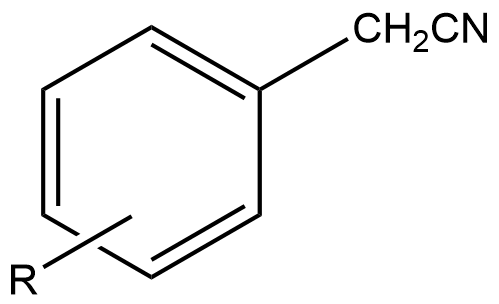
Synthetic chemists frequently encounter stubborn transformations that defy conventional approaches—low yields, poor selectivity, or incompatible functional groups are just a few of the common headaches. Advanced reaction design shifts the focus from trial and error to rational planning, employing mechanistic understanding to bypass these obstacles. For example, reimagining a stepwise sequence as a cascade process can dramatically streamline syntheses, avoiding isolation of unstable intermediates that tend to decompose or rearrange. This mindset turns synthetic dead ends into efficient pathways, often using catalysts or reagents in unconventional roles to unlock reactivity that standard protocols miss.
One particularly effective strategy involves the deliberate manipulation of reaction microenvironments. By tuning solvent cages, employing nanoconfined spaces, or precisely timing the addition rates of sensitive reactants, chemists can favor desired reaction manifolds over competing pathways. In cross-coupling chemistry, for instance, combining photoredox catalysis with traditional metal catalysts creates radical intermediates under mild conditions, sidestepping the need for harsh thermal activation that damages delicate substrates. This dual-catalytic approach opens doors to bond formations once considered impossible on complex natural products, turning substrate sensitivity from a liability into a manageable variable.
Equally transformative is the move toward continuous flow systems and in situ reaction monitoring. Instead of fighting against poor heat transfer or runaway exotherms in batch reactors, flow chemistry precisely controls residence time and temperature, enabling hazardous reactions to be run safely and scaled effortlessly. Coupled with real-time analytics like inline NMR or IR, it becomes possible to intercept reactive intermediates at their peak concentration, quenching or redirecting them before decomposition occurs. This proactive design—rather than simply attempting to force a reaction to work—reshapes synthetic logic, making previously daunting hurdles routine problems solved by elegant engineering of the reaction space.
Tailored CRO Collaborations That Elevate Yield and Purity
True partnership in drug development isn’t about handing off a project—it’s about co-engineering success. When a CRO truly understands the nuances of your molecule, every step from route scouting to scale-up becomes an opportunity to push both yield and purity beyond standard benchmarks. We embed chemists and analysts within your team’s rhythm, aligning on not just technical goals but the urgency and finesse your program demands. This deep integration turns process optimization from a checklist into a shared obsession, catching impurities early and squeezing out extra percentage points that cumulative impact final cost and timeline.
What sets certain collaborations apart is the refusal to accept “good enough.” Whether it’s a stubborn dimer that resists separation or a yield drop during crystallization, our approach combines high-resolution analytical insight with creative engineering—think kinetic modeling to pause a reaction just before byproduct formation spikes, or twin-column chromatography that recovers what others discard. The focus stays relentlessly on what matters: grams of pure API delivered, not hours billed. By owning the interplay between synthesis and purification as a single problem, we consistently hit purity thresholds that make regulatory reviewers raise an eyebrow—in a good way.
Flexibility is baked into the collaboration model. When your project pivots—and it will—the CRO should pivot with you without friction. Maybe your lead candidate demands a telescoped process to conserve costly intermediates, or a genotoxic impurity forces a late-stage redesign. The right partner doesn’t just accommodate; they anticipate, using real-time data from each run to refine parameters while you sleep. This kind of adaptive execution keeps timelines intact even when the chemistry gets uncooperative, proving that the highest yields and purities don’t come from rigid protocols but from teams that think and iterate together.
Integrating Green Chemistry into Process Optimization
Applying green chemistry principles to process optimization transforms how we approach efficiency and sustainability. It's not just about reducing waste—it's about rethinking every step to minimize environmental impact while maintaining or even improving yield. By selecting safer solvents, designing energy-efficient reactions, and favoring catalytic pathways, we can cut down on hazardous byproducts and lower overall energy demand. This shift requires a mindset that views waste as a design flaw rather than an inevitable outcome, pushing engineers to innovate from the molecular level up.
Real-world integration often starts with a critical look at solvent use, since they typically account for a large share of process mass and waste. Swapping a toxic organic solvent for a bio-based or water-based alternative can dramatically improve the process footprint without sacrificing performance—sometimes, it even enhances selectivity. Beyond solvents, reengineering reaction conditions to run at ambient temperature and pressure avoids costly, energy-intensive extremes. Such changes don't just please regulators; they often lead to simpler workflows, fewer purifications, and a more robust bottom line.
The true power emerges when these methods are embedded early in process development, not tacked on after the fact. Cross-disciplinary teams that include chemists, engineers, and environmental specialists can identify trade-offs and synergies that a siloed approach would miss. For instance, continuous flow processing, combined with real-time analytics, allows precise control that curbs waste generation while accelerating development cycles. In the end, merging green chemistry with optimization isn't a constraint—it's a creative engine that yields cleaner, smarter, and more competitive manufacturing.
Seamless Transition from Lab Scale to Commercial Production
Moving from bench-scale experiments to full commercial output isn't just a matter of bigger reactors. It demands a methodology that captures the subtle interplay of mixing dynamics, heat transfer nuances, and raw material variability—factors that behave unpredictably outside the tightly controlled lab environment. Our approach embeds these physical realities early, using dimensionless analysis and modular pilot campaigns to map the process landscape. This keeps the fundamental chemistry intact while systematically derisking scale-up steps that often trip up rigid, recipe-based transfers.
What truly closes the gap is our integrated team structure. Process chemists, engineers, and manufacturing specialists collaborate from the first lab trial, not in a staged handoff but in real-time, multidisciplinary huddles. This means equipment constraints are voiced before they become bottlenecks, and empirical tweaks—like adjusting feed points or impeller geometry—are tested in scaled-down simulators that mirror plant-floor idiosyncrasies. By the time a process reaches the factory, it has already weathered iterative refinement, leaving little room for the usual surprises that stall startups.
Real-World Case Studies: Accelerating Timelines from Concept to Clinic
In the competitive landscape of drug development, shaving months off the preclinical-to-clinical transition can mean the difference between leading a therapeutic category and falling behind. One striking example comes from a biotech firm targeting a rare metabolic disorder. Facing a compressed timeline, the team adopted a parallel processing approach—running toxicology studies alongside formulation optimization rather than sequentially. By leveraging adaptive trial design and real-time data monitoring, they cut the typical 18-month IND preparation window down to 11 months. The key wasn’t just speed, but the ability to maintain data integrity while regulatory teams worked in lockstep with scientists, ensuring no critical endpoints were overlooked.
Another case involved a cell therapy startup aiming to treat refractory solid tumors. Traditional development paths would have required years of iterative engineering and animal model validation. Instead, they utilized a decentralized manufacturing model, enabling rapid iteration of the CAR construct directly from patient samples. This patient-centric loop compressed the concept-to-clinic timeline by nearly 40%, as early clinical feedback informed real-time adjustments to the process. Crucially, the strategy hinged on a tight feedback loop between bedside observations and bench-side refinements, proving that acceleration doesn’t require cutting corners—just rethinking them.
A third instance highlights the role of digital integration in accelerating timelines. A mid-sized pharma company implemented a unified data platform that connected their preclinical, CMC, and clinical teams from day one. Previously, siloed departments would hand off data in batches, causing delays of weeks at each transition. With a shared, real-time dashboard, the team identified a formulation stability issue early in lead optimization and resolved it before it became a costly late-stage problem. This proactive resolution not only saved four months but also built a cross-functional rhythm that carried through Phase I, demonstrating that sometimes the fastest route to the clinic is through seamless internal communication.
FAQ
Phenylacetonitrile serves as a versatile building block for synthesizing various pharmaceutical compounds, including analgesics, antispasmodics, and antihistamines. Its nitrile group can be easily transformed into amines, carboxylic acids, or heterocycles, making it a key precursor in medicinal chemistry for creating complex drug molecules.
A contract research organization typically focuses on improving reaction efficiency, purity, and scalability. This involves screening catalysts and solvents, fine-tuning temperature and pressure, and developing continuous flow processes to reduce byproducts and enhance throughput, all while adhering to regulatory guidelines.
The classic approach is the reaction of benzyl chloride with sodium cyanide or other cyanide sources under controlled conditions. Alternative methods include the dehydration of phenylacetamide or the catalytic ammoxidation of ethylbenzene. Each route offers trade-offs in cost, safety, and yield that must be balanced for pharmaceutical-grade output.
Even trace impurities can compromise downstream synthesis, leading to off-target effects or failed batches. Rigorous testing ensures the absence of residual cyanide, heavy metals, and organic contaminants, while precise assays confirm structural identity and purity, safeguarding both patient safety and regulatory compliance.
Heat management and mixing uniformity become critical at larger volumes, as exothermic reactions can cause side reactions or safety hazards. Process chemists address this by optimizing reactor design, implementing in-line analytics for real-time monitoring, and refining purification steps like distillation or crystallization to maintain consistency.
Advances include the use of greener cyanide sources like acetone cyanohydrin, enzymatic catalysis under mild conditions, and membrane separation technologies for product isolation. These methods reduce waste, lower energy consumption, and achieve higher enantiomeric purity when chiral derivatives are needed.
Given its toxicity and potential to release hydrogen cyanide under acidic conditions, handling requires proper ventilation, personal protective equipment, and strict pH control. Facilities must also have cyanide antidote kits and thorough training on emergency procedures to prevent accidental exposure.
Starting from benzyl chloride is often economical but demands careful handling due to lachrymatory properties and the formation of byproducts. Alternatively, using phenylacetamide avoids direct cyanide usage but may require additional dehydration steps. The selection hinges on availability, regulatory constraints, and the desired purity profile.
Conclusion
Phenylacetonitrile has become a linchpin in modern drug discovery, serving as a versatile intermediate for constructing complex pharmacophores. Its reactivity enables streamlined access to critical scaffolds, yet synthetic challenges—such as controlling regioselectivity and minimizing byproducts—demand advanced reaction design. Through innovative catalytic systems and continuous flow methodologies, CROs are transforming these hurdles into opportunities, achieving higher atom economy and shorter synthetic routes. Tailored collaborations further amplify success by aligning process chemistry goals with a sponsor’s purity and yield targets, while integrating green chemistry principles like solvent recycling and renewable feedstocks ensures sustainability without compromising performance.
Beyond the bench, seamless scale-up from gram to kilogram quantities hinges on rigorous process optimization, with real-world case studies underscoring how phenylacetonitrile-based programs can leap from concept to clinic in compressed timelines. By merging deep mechanistic understanding with agile manufacturing strategies, CROs deliver robust supply chains and regulatory-ready documentation, ultimately accelerating the journey of life-changing therapeutics to patients.
Contact Us
Contact Person: Wei Zhang
Email: [email protected]
Tel/WhatsApp: 862163529955
Website: https://www.dslchem.com