

Preserved Flower Bouquet Manufacturer: Your Source for Elegant, Long-Lasting Blooms
2026-10-01
When a single bouquet is expected to stay flawless through boardroom meetings, housewarming parties, and quiet Sunday mornings, most fresh stems fall short. That’s where preserved flower bouquets come in—and few manufacturers understand the balance of elegance and durability better than PHLEEYA. Their blooms are not just long-lasting; they’re designed to hold their color, shape, and softness for months or even years. If you’ve been hunting for a supplier that pairs artful arrangement with genuine staying power, this post is your starting point.
The Secret Behind Petals That Keep Their Velvet Touch
Run a finger over a petunia or a black hollyhock and the softness feels almost manufactured, like brushed suede. That texture comes from microscopic cone-shaped cells packed across the petal's surface. They scatter incoming light at wide angles, preventing the glossy highlights that would otherwise make the flower look wet or plastic. At the same time, these cells hold a thin cushion of air just above the petal skin, which gives it that gentle, springy resistance when touched.
Color deepens the illusion. Dark reds, purples, and near-black blooms tend to feel more velvety because their pigments absorb a wider slice of the light spectrum, leaving fewer bright reflections. Combined with the uneven surface, the eye reads that lack of glare as softness. Some species add fine hairs or wax crystals to the mix, creating a slight drag that mimics the friction of actual velvet fabric. Far from being mere decoration, these traits likely protect delicate reproductive parts from UV stress and offer pollinators a reliable tactile cue.
But the velvet touch doesn't last. Within hours of opening, water loss and wind can flatten those surface cells, turning plush petals papery. Flowers gathered in cool morning air often feel richer than ones cut in afternoon heat, because the cells are still turgid and the air pockets intact. That fleeting quality is precisely why velvet-textured blooms hold such appeal: their softness is a living response, not a permanent finish.
Why These Blooms Don't Wilt When the Seasons Change
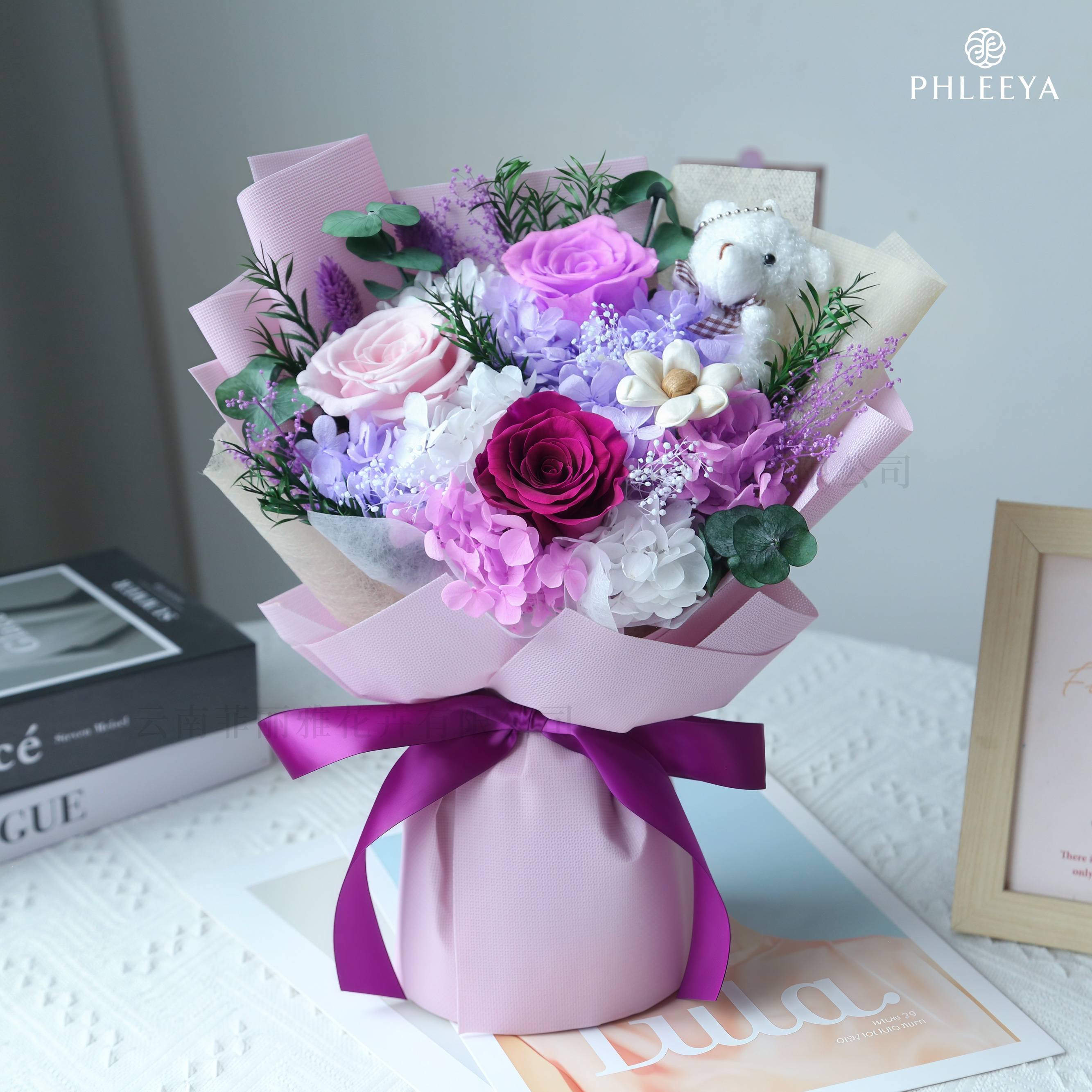
Most flowers bow out the moment temperatures dip or daylight shrinks, but these particular blooms carry an internal clock that ignores the usual cues. Their cells are packed with antifreeze proteins that stop ice crystals from forming inside delicate petals, while a clever hormonal switch keeps them from triggering the self-destruct sequence that sends ordinary blossoms into a quick fade. Instead of reading shorter days as a sign to shut down, they treat them like a gentle nudge to slow their metabolism, preserving moisture and keeping cell walls flexible even when frost settles on nearby grass.
The secret also lies in how they store energy. Unlike seasonal bloomers that burn through their reserves in a single explosive display, these varieties stockpile sugars in their stems and roots during warm spells. When cold winds arrive, those sugars act as a natural insulator, lowering the freezing point of the plant's fluids. At the same time, their stomata close tighter than a drum, locking in water that would otherwise evaporate and leave the petals brittle. It is a quiet, stubborn adaptation that lets them stand upright while everything else around them crumbles into brown husks.
Gardeners who have tried to grow them in milder climates often notice something odd: the blooms actually look stronger after a light frost. That is not a fluke. A short chill triggers a burst of protective compounds in the leaves and petals, thickening their outer cuticle and deepening their color. Take away the cold snap, and the plant grows lazy, producing softer tissue that droops in the afternoon heat. It is a reminder that for these flowers, the change of seasons is not a threat, but the very thing that keeps them standing tall.
From Cutting Garden to Finished Bouquet, a Quiet Craft
There is a particular kind of patience that settles over a cutting garden in the early hours of the morning. The stems are still cool from the night, and each flower seems to hold its own small breath before the day fully unfolds. Choosing what to cut is never simply about color or shape; it is about understanding how a stem will behave once it leaves the earth. Some blooms open fast and drop their petals within a day, while others tighten and refuse to unfurl no matter how warm the room. Over time, the hands learn to read these quiet signals, and the garden becomes less a source of raw material and more a collaborator in an ongoing conversation.
What happens next is rarely witnessed. Back at the worktable, the real craft begins in near silence. Stems are stripped of lower leaves, thorns are pressed away, and each cut is made at a fresh angle under water. The bouquet does not arrive all at once. It starts with one stem that feels right, then another that offers tension, then a third that softens the whole. There is no formula, only a series of small decisions made with the fingers and the eyes. A stem that seems perfect in the hand may suddenly look wrong when placed next to the others, and so it is set aside. The work is slow, almost meditative, and it leaves no trace except the faint green smell on the skin.
When the bouquet is finally handed over, it carries none of that effort. It looks inevitable, as if the flowers had simply grown into that shape together. Yet anyone who has worked this way knows that a finished bouquet is not an arrangement of flowers but a record of attention—of pauses, second thoughts, and small acts of care. The craft is quiet because it does not ask for recognition. It only asks that you keep your hands in the water, your eyes on the form, and your mind willing to learn what the plants already know.
Choosing Colors That Hold Their Depth for Years
A color that looks rich on a sample card can flatten out within a year if it lacks enough pigment to survive daily light. Depth isn't the same as darkness; it's the ability to hold character under shifting daylight. Muted, complex shades like clay, moss, slate, or sun-faded terracotta often age better than clear bright hues because their undertones reveal themselves slowly instead of hitting all at once.
Room orientation matters more than most people expect. North-facing walls get cooler, indirect light that can steal warmth from a color, so a greige with a hint of pink or ochre stays grounded while a flat gray goes dead. South-facing rooms get steady warm light, which means you can lean into cooler or dustier tones without them turning icy.
Before committing, paint a two-foot square in at least two spots and live with it through a few cloudy mornings and one sunny afternoon. Pay attention to the edges of the patch, where new color meets the old often shows how it will settle over time. If it still feels intentional at dusk and doesn't disappear against your trim, it's likely a shade that will keep its depth.
Custom Orders That Fit Weddings, Storefronts, and Shelf Displays
When a couple walks into their venue for the first time, the last thing they want is decor that looks borrowed from someone else's big day. We build custom orders around the exact dimensions of your tables, the height of your ceilings, and the shade of ivory on your invitations. From altar backdrops that frame the vows to escort card displays that guide guests without a single awkward pause, every piece is cut, painted, and assembled after you approve the sample in your hands.
For storefronts, the goal is different: stop foot traffic, not just greet it. We design custom shelf risers, tiered displays, and window ledges that match your existing fixtures while making new arrivals impossible to miss. You send us a photo of the corner that never sells, and we send back a mockup that turns that dead zone into the first thing customers touch. No stock sizes, no 'close enough' brackets—just a piece that slides into place like it grew there.
Shelf displays in retail and hospitality often fail because they ignore how people actually move through a space. Our custom builds account for aisle width, eye level, and the weight of your product. A bakery's bread shelf needs different spacing than a boutique's folded denim, and we treat those as separate briefs. You get a hand-finished unit that holds up to daily use, plus a finish that hides fingerprints and resists chipping—because the last thing you need is a beautiful display that looks tired by Friday.
A Manufacturer's Eye for Stems, Texture, and Tiny Imperfections
The first thing a seasoned manufacturer notices is the stem. Not just its length or thickness, but the way it bends under weight, the tiny hairs that catch the light, and the slight curve that tells you how the flower grew toward the sun. Those subtle variations matter more than any spec sheet. A stem that's too uniform feels sterile; a stem with a little kink or a faded leaf scar carries a story. It's those small, unpolished details that signal authenticity, the difference between something mass-produced and something made with patience.
Texture is where the eye lingers next. Run a thumb over a petal's surface and you'll find a world of difference: the velvet give of a rose, the waxy resistance of a tulip, the faint grain on a dried eucalyptus leaf. A good manufacturer doesn't try to smooth all that away. Instead, they look for how texture changes under different angles of light, how a stem's roughness contrasts with a bloom's softness. It's about preserving the tactile honesty of the material. When you force every leaf to lie flat and every surface to feel the same, you lose the very thing that makes the product feel alive.
And then there are the tiny imperfections, the ones most people overlook. A speck of darker green on a leaf edge, a slight asymmetry in how the petals unfurl, a stem that's a shade lighter where it was shaded by another. These aren't flaws to be corrected; they're fingerprints. A manufacturer with a trained eye doesn't see a defect and reach for the clippers. They see the accumulated evidence of weather, soil, and time. Keeping those small marks intact, rather than buffing them out, is what separates a product that whispers 'handmade' from one that shouts 'factory line.'
FAQ
We treat each stem with a plant-based solution that replaces natural moisture, so the petals keep their softness and color for a year or more without watering or sunlight.
Absolutely. You can pick from dozens of bloom types and shades, and our design team will build a bouquet around the season, event, or personal palette you have in mind.
Yes. The preservation process uses non-toxic, biodegradable ingredients, and the finished flowers contain no harmful residues. Still, we suggest keeping them out of reach since they are not edible.
Keep it out of direct sunlight and away from high humidity or strong air vents. A light dusting with a soft brush every few weeks is all it needs to stay fresh-looking.
You might notice a very slight softening of tone after several months, especially in deep reds or blues. Avoiding bright light and extreme dryness will keep the original hues as long as possible.
They work beautifully for that. Because the bouquets are made weeks or even months in advance, they arrive looking exactly like the approved sample, with no wilting or browning on the day.
We focus on varieties with sturdy petals and pleasing shapes — roses, hydrangeas, eucalyptus, lavender, and carnations are among the most popular, though the full list is much larger.
Yes. Every bouquet is packed in a rigid box with custom inserts that hold each stem in place. We also include climate-control padding for long-distance or warm-weather routes.
Conclusion
A preserved flower bouquet manufacturer works with more than just petals and stems; it curates a kind of quiet permanence. The secret to that velvet-soft touch lies in a careful treatment that replaces natural sap with a plant-based solution, letting each bloom keep its supple feel without the usual fragility. Because these stems are no longer living, they do not react to seasonal shifts—no wilting in summer heat or drooping when the air turns dry. The path from cutting garden to finished bouquet is deliberately unhurried: flowers are harvested at peak openness, conditioned, and then shaped by hand, with each stem set at an angle that feels natural rather than arranged. There is no assembly line rush here, just a small-batch rhythm that respects the material.
Color becomes a decision with staying power. Pigments are chosen to hold depth for years, so a burgundy rose won't fade to brown or a cream hydrangea to yellow. Custom orders fit the specific needs of weddings, storefront installations, and long-term shelf displays—each arrangement scaled and wired to withstand constant handling or static viewing. The manufacturer's eye catches what most miss: the subtle curve of a stem, the varied texture between a ranunculus and a fern, and even tiny imperfections that add character rather than flaw. By treating those small irregularities as marks of authenticity, the finished bouquet carries a handmade honesty that mass-produced decor rarely achieves.
Contact Us
Contact Person: Mr. Luo
Email: [email protected]
Tel/WhatsApp: 86 18100895505
Website: https://www.feiliyaflowers.com/en/