

Professional Wheat Flour Machinery for Efficient Milling Operations
2026-08-29
Most millers don't plan for inefficiency—they discover it in uneven flour texture, wasted energy, or a line that stalls mid-shift. The right equipment shouldn't just run; it should work with you. At PINGLE, we design professional wheat flour machinery around one idea: efficient milling is a baseline, not an upgrade. In this post, we'll break down what actually separates high-yield, low-waste operations from the rest—and why so many choose systems that feel built for their floor, not just a spec sheet.
From Intake to First Break: Keeping Wheat Moving Without Jams
The moment grain hits the intake pit, every second of hesitation multiplies downstream. A poorly matched receiving hopper or an undersized drag conveyor turns a steady stream into a pulsing bottleneck that no amount of downstream speed can fix. The trick is to treat intake not as a single station but as the first domino in a continuous chain—size the receiving grate for the truck’s discharge rate, slope the pit walls past the grain’s angle of repose, and let gravity do the work before mechanical conveying even starts.
Between intake and the first break roll, the real enemy is not the wheat itself but the transitions where flow changes direction or speed. A horizontal screw fed by a steep spout that dumps too fast will bury the flights and stall; a bucket elevator running slightly slow lets grain backslide and pack the boot. Matching discharge rates to intake capacity, using tapered chutes instead of abrupt drops, and monitoring motor load on the first conveyor gives operators the early warning they need. Small adjustments here—like a 5-degree change in spout angle or a variable frequency drive on the elevator—keep wheat moving as a loose, fluid mass rather than a compacted plug.
Before any wheat reaches the first break, it should flow through the system with enough consistency that the roll gap can do its job without surging. Operators who chase jams by speeding up conveyors usually make things worse: the wheat compacts harder, static pressure builds in the chute, and the next surge hits even harder. Instead, the reliable route is to design for steady state—keep the first break fed at 80-90% of its rated capacity, give the cleaning section enough screen area that fines don’t blind the deck, and let a simple sight glass or camera at the roll feeder tell you when the flow is right. When wheat moves without jams, the mill’s rhythm stays predictable, and the first break can finally do what it’s meant to do.
The Moisture Balance That Protects Both Grain and Rolls
Getting the moisture level right means paying attention to two very different textures in the same batch. Whole grains, especially when coarsely milled, drink up water slowly. If you rush mixing, the grain centers stay hard and the surrounding dough turns sticky. Rolls, on the other hand, lose moisture fast in a hot oven—what feels soft at shaping can turn dry and tight twenty minutes later. A useful fix is to soak the grain portion in a portion of the recipe's water for an hour before adding flour and yeast. That lets the bran hydrate without stealing liquid from the roll dough.
You can also adjust the final dough by touch rather than relying only on a timer. After the first few minutes of mixing, pinch a small piece of dough: if it springs back without tearing, it has enough structure; if it feels tacky but not gluey, the rolls will stay tender. For the grain, check a few cracked pieces between your fingers—they should bend, not snap. When both textures hit that point, the baked rolls stay soft inside for an extra day or two, and the grain keeps a slight chew without turning gritty.
Grinding Stages Built Around the Endosperm, Not Just Particle Size
Most mills chase a number on a sieve, but that approach misses what actually matters in the grain. The endosperm isn't uniform—it has a soft outer zone and a harder inner core. Each layer breaks differently under pressure. By arranging grinding stages around these natural boundaries, you get cleaner separation without overworking the middlings.
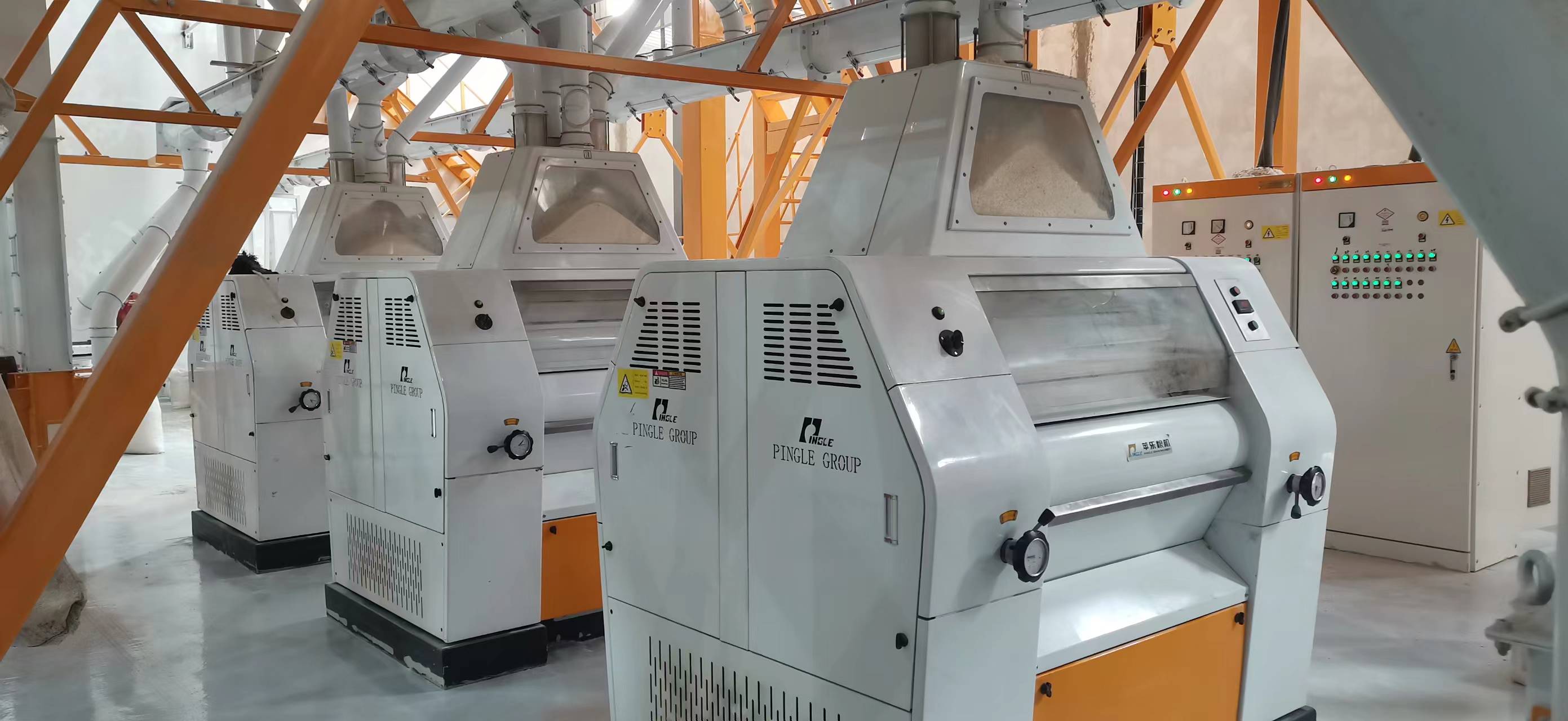
A typical flow might start with a gentle shear pass to peel away the outer endosperm, then a second pass with tighter roll gap to fracture the harder center. No single setting can handle both jobs well. When you respect the endosperm's structure, the bran stays in larger flakes and the flour releases with fewer passes.
The result isn't just finer powder—it's a more predictable bake. Starch damage stays low because you're not smashing the same particles over and over. Protein quality holds up too, since the harder core is milled at the right stage instead of being forced through an early aggressive break.
Plansifting That Separates Without Shaking the Whole Building
The core of this design rests on isolating the sifting motion directly at the screen frame, so the energy that moves material never transfers into the surrounding structure. Instead of a single shaking box bolted to the floor, the drive assembly floats on tuned dampers and the only contact points are static, heavy-duty mounts. That means you can run a full batch on an upper mezzanine and not feel a hum in the offices below.
The separation itself stays aggressive where it counts: a slightly elliptical throw keeps fine particles moving across the mesh while larger pieces tumble and release trapped fines. Because the horizontal movement is contained, you get sharper cuts without the usual trade-off of vibration padding under every foot. It also extends bearing life, since the forces are absorbed by the sifter's own internals rather than rattling through bolts and beams.
On retrofit jobs, that isolation changes the installation math. You can place a high-capacity unit next to existing ductwork, on wood-framed floors, or above cleanrooms without adding steel reinforcement or acoustic lagging. Maintenance crews notice the difference too: covers come off quickly, screens swap out from one side, and there is no need to retension everything after a week because the structure stayed put.
Airflow and Filtration Choices That Reduce Downtime and Dust
Pairing the right airflow design with a well-matched filtration system keeps equipment running longer between cleanings. For example, a high-velocity intake paired with a multi-stage filter can trap fine particulates before they settle into sensitive components. This reduces the frequency of manual dust removal and prevents the slow performance degradation that often goes unnoticed until a line stops.
Another practical move is to position return air vents strategically across the workspace, not just near the dust source. By balancing negative pressure zones, you stop dust from drifting into control panels and cooling fans. Over time, this cuts down on unplanned service calls caused by clogged heat sinks or shorted boards.
Filter selection matters as much as airflow volume. A pleated synthetic media with a progressive density profile can hold more dust without a sharp pressure drop. Changing filters on a calendar schedule instead of waiting for a visible blockage keeps the entire system in a steady state, avoiding the sudden airflow loss that often triggers downtime.
Why Modern Mills Rely on Sensors More Than Guesswork
Old-timers in the milling trade could tell a lot from a handful of wheat—how it cracked, how it felt, even how it smelled. But that kind of instinct had limits. A shift change, a tired operator, or a slightly different wheat lot could throw the whole process off. Modern mills swapped that guesswork for sensors that measure moisture, protein, and particle size in real time, giving operators a consistent readout no matter who is on duty.
The real advantage shows up in the fine details. Sensors can catch a 0.3% drift in moisture or a slight rise in bearing temperature long before a human would notice anything wrong. That early warning means a roller mill gets adjusted before it produces off-spec flour, and a motor gets serviced before it fails mid-run. It's not about replacing people—it's about giving them better information.
Over time, the data piles up and starts working for the mill. Trends from thousands of batches reveal which settings work best for different wheat varieties, so the next harvest doesn't start from scratch. Consistency improves, waste drops, and the mill can run leaner without cutting corners. Guesswork used to be the only option; now it's a choice nobody wants to make.
FAQ
A mid-sized plant usually gets the most value from a combination of roller mills, plansifters, and purifiers. Roller mills handle the gradual reduction, while plansifters separate flour by particle size. Adding a small bran finisher can also boost extraction without taking up much space.
Start with your expected daily flour demand, then add at least twenty percent headroom for peak periods and future growth. Look at the throughput ratings of each machine rather than just the line's nominal capacity, because actual output depends on wheat hardness and target flour grade.
Focus on the surfaces that touch grain and flour. Check roller gaps and fluting wear every week, clean sifter screens to prevent blinding, and lubricate bearings according to the manufacturer's schedule. Ignoring small alignments often leads to larger energy waste and uneven flour quality.
Yes, but you need to make adjustments between batches. Hard wheat requires more grinding pressure and slower feed, while soft wheat produces more fine flour with less energy. Plan for cleaning the system thoroughly between variety changes to avoid mixing characteristics that could affect dough performance.
Watch for rising motor temperatures, changes in extraction rate, or flour that feels coarser than usual. A sudden drop in sifter efficiency often points to worn screens or uneven feed distribution. If the bran is breaking into small pieces instead of staying as large flakes, the roller gap likely needs attention.
Wheat that is too dry tends to shatter and create excess fine bran, while overly wet wheat can clog rolls and reduce sifting. The ideal moisture window for most milling is between 14 and 16 percent, adjusted by conditioning. Small changes in moisture can shift extraction by several percentage points, so monitor it closely.
Run through a short visual inspection of all access points, confirm the aspirator and filter pressures are normal, and feel the roll surface for any buildup. Make sure the feed gates open smoothly and the first sample of flour matches the expected color and texture. These five minutes catch most problems before they affect the whole batch.
Conclusion
Efficient milling starts long before the first grinding pass. In a professional wheat flour system, the intake line is engineered to keep grain flowing steadily into the first break, using regulated feeders and strategically placed magnets and scalpers that stop jams without constant operator intervention. Moisture control then becomes the invisible safeguard: precise tempering protects both the wheat kernel and the roll surface, preventing brittle bran from shattering into the flour while keeping the endosperm soft enough to mill cleanly. Rather than chasing a fixed particle size, the grinding stages are built around the endosperm—each break and reduction roll is set to release the maximum amount of pure middlings with minimal bran fracture. Plansifting complements this by separating stocks with a balanced gyratory motion, isolating fine flour, coarse semolina, and bran without transmitting vibration through the entire building.
Airflow and filtration are not afterthoughts but core design choices. Well-placed pneumatic lifts and dust collection points pull fines away from rolls and sifters, reducing both explosion risk and unscheduled downtime for cleaning. What truly separates a modern mill from older operations is the integration of sensors: real-time feedback on stock moisture, roll gap, sifting load, and air velocity lets the system adjust on the fly instead of relying on periodic manual checks. This sensor-driven approach shifts milling from guesswork to a controlled, repeatable process, where each batch of wheat yields flour with the consistency that commercial bakeries demand. The result is not just efficient operation—it is a quiet, dependable line that turns raw wheat into specification-grade flour with less energy, less waste, and far fewer surprises.
Contact Us
Contact Person: Jiakuo Wu
Email: [email protected]
Tel/WhatsApp: +86-13011566087
Website: https://www.pinglemachine.com