

Running Caps Supplier: The Ultimate Checklist for Sourcing Quality Caps in Bulk
2026-11-16
Sourcing bulk running caps isn’t just about ticking boxes—one wrong batch and your brand’s reputation takes a hit. Whether you’re outfitting a marathon team or stocking retail shelves, the checklist matters. That’s where 4ugear comes in, but before you hit send on that order, let’s talk about what separates a smart buy from a costly mistake.
Sweat Test First: Why Fabric Choice Is Non-Negotiable
Before you buy another pair of shorts or a tank top, do the sweat test. Spend fifteen minutes moving the way you normally do—jog in place, lift, stretch—and notice where dampness collects first. Lower back, chest, behind the knees. Those spots determine what fabric should touch your skin. Cotton might feel soft on the hanger, but once it’s soaked it clings and cools you down too fast. A polyester blend with some give won’t turn into a wet blanket.
The non-negotiable part isn’t about brand names or price tags. It’s about how the material handles your body’s own output. If you run hot in the thighs, seamless panels beat flatlock stitching every time. If you sweat through your lower back within ten minutes, you need a knit that spreads moisture instead of pooling it. Ignore this and you’ll spend every workout tugging, adjusting, and fighting your clothes. Choose right and you’ll forget you’re wearing anything at all.
The Loose Thread Warning: Spotting Quality in the Seams
A loose thread is often shrugged off as a harmless stray, but it can reveal how carefully a garment was finished. Give that thread a gentle pull. If the seam puckers, gaps open, or the stitching starts to snake away, the tension was wrong or the stitch count was too low. On well-made clothing, loose ends are trimmed short and anchored with a backstitch, so a long dangling thread is already a quiet warning.
Turn the garment inside out and run your fingers along the seam allowances. Consistent, close stitching with no skipped loops or tunneling means the sewer took time. If you see wavy seams, uneven thread tension, or places where the fabric is puckered into tiny pleats, that points to rushed work or a poorly adjusted machine. Those flaws weaken the seam long before the first wash.
Stress points like underarm curves, pocket corners, and the crotch of trousers deserve the closest look. Quality pieces reinforce these areas with bar tacks or extra rows of stitching. A single line of stitching with a loose thread already escaping is a sign the garment will fail there first. That small loose end is not a nuisance to trim; it is the earliest clue the whole construction may come apart.
One Size Fits Nobody: Getting the Crown Height Right
The phrase 'one size fits nobody' hits particularly hard when you slide a standard cap onto your head and the crown height sits either too low, squashing your hair flat, or too high, making your face look strangely elongated. Crown height is not just a technical measurement printed on a size tag—it's the distance from the brim to the top of the hat, and it changes how your entire silhouette reads. A crown that's too shallow can make a round face look wider, while a towering crown might overshadow delicate features. Mass-produced hats aim for an average that rarely matches actual human variety.
Finding your correct crown height starts with looking at your own proportions rather than trusting a generic size label. Measure from the top of your ear to the crown of your head—that vertical distance gives a baseline, but you also need to factor in how much volume your hair adds and how long your face is from hairline to chin. As a rough guide, the crown should be roughly one-third the length of your face for a balanced side view. Try on hats with different crown heights and check your profile in a mirror: a crown that ends right at the widest part of your head usually looks most natural, while one that cuts across the forehead or towers above the skull throws off the visual weight.
If off-the-shelf hats never seem to sit right, consider tweaks that adjust crown height without needing a complete custom block. For fabric caps, a hidden drawstring or a folded sweatband can lower the crown slightly; for stiff felt hats, a hatter can reblock the crown to a different height by steaming and reshaping it over a form. Some people add a small foam insert at the top inside the crown to fill extra space and create the illusion of a lower profile. The goal isn't to match some universal standard—it's to make the hat look like it grew there, with the crown height working in harmony with your jawline, cheekbones, and the way you carry your head.
Velcro vs. Snapback: The Closure Detail Runners Actually Hate
Most runners don't think twice about the back of their cap until mile six, when the sweat starts rolling and the fit starts failing. Velcro straps look like the obvious choice at first—quick to adjust, no hard plastic digging in. But after a few months of training runs, that fuzzy strip turns into a trap. It grabs strands of hair when you take the cap off, and the hook-and-loop grip weakens with every wash.
The real problem with Velcro shows up mid-run. You're already dealing with heavy legs and a dry mouth, and then the cap starts to loosen on its own. The strap lets go just enough that the brim bounces with each stride. You reach back, pull it tight, and three minutes later it's sliding again. That constant fiddling breaks your rhythm and makes you wonder why you ever trusted a strip of nylon fuzz to hold your gear in place.
Snapback closures aren't perfect either—the plastic snap can press into the base of your skull and the size jumps are too wide for some heads. But once you find a setting that works, it stays put for the entire run. No creeping looseness, no mid-race adjustments. A lot of runners end up hating Velcro not because it fails all at once, but because it fails slowly and repeatedly, wearing you down one slipped cap at a time.
Custom Logos That Survive the Washer, Not Just the Pitch
You know the story—your team walks off the pitch looking sharp, but by the third wash the logo starts peeling at the edges or fading into a ghost of itself. That’s because most custom prints are built for a single matchday, not for the weekly grind of a washing machine. We took a different route. Our logos are bonded into the fabric itself, not just sitting on top of it like a sticker waiting to give up. After dozens of hot cycles, the colors stay locked in, the edges stay crisp, and there’s no cracking along the fold lines. It means your kit looks as fresh after a full season as it did on day one.
The secret isn’t one magic material—it’s how we layer everything. We start with a flexible, breathable base that moves with the jersey instead of fighting it, then apply pigment in thin, interlocking passes that grip the weave rather than coating it. A final heat-cure step forces the ink to cross-link with the fibers, so when the drum spins and the detergent hits, there’s nothing loose to lift off. And yes, we’ve tested it in real machines with real mud, sweat, and grass stains. Not just a lab setting where everything stays pristine. That’s the difference between a logo that survives one season and one that survives the whole kit’s lifespan.
What this really saves you is time and money that quietly leak away with cheaper alternatives. Instead of reordering replacements midway through the year or sending jerseys back for reprints, you just wash, dry, and wear. Players stop tugging at itchy, raised patches, and the team looks uniform in every photo—not just the pre-game ones. It’s a small detail until you realize how often a faded, cracked logo makes an otherwise solid kit look worn out. We think durability shouldn’t be a premium add-on; it should be the baseline. So you get a logo that earns its place on matchday and still looks worthy of the next one, straight out of the laundry basket.
Ask for Their Last Three Customers: A Quick Vet That Works
Most people only ask about credentials, years in business, or pricing. Those answers rarely reveal how a company actually performs under pressure. Instead, ask for the last three customers they served—not a curated list of glowing testimonials, but the most recent three, with names and contact details. If they hesitate, shuffle papers, or offer “privacy concerns” without a workaround, that tells you something important.
Call those customers. Ask one simple question: “What went wrong, and how did they fix it?” Every vendor has hiccups. The difference is whether they owned the mistake or made you chase them. You’ll learn more in five minutes of awkward silence than from a hundred five-star reviews.
FAQ
Ask for a sample run before committing. Feel the inner sweatband—if it's flimsy or roughly stitched, the bulk order won't be better. Compare the cap's weight against a known brand you trust, and check how the seams lie flat under the brim. A supplier who hesitates to send samples is usually hiding inconsistent finishing.
Pour a few drops of water on the inside panel. It should spread outward within seconds, not bead up. Then rub the wet area between your fingers; cheap polyester feels sticky when damp, while decent wicking blends stay slick. Ask for a lab report on wicking time and shrinkage, but trust your own wear test over a spec sheet.
Most mid-sized suppliers start around 300 to 500 pieces per color. If someone offers 50 pieces with full custom embroidery, be suspicious—either the caps are blank stock with a low-quality patch, or you'll pay a huge per-unit upcharge. For event giveaways, 250 pieces is often the sweet spot where pricing drops noticeably.
Request a size range rather than one-size-fits-all unless the supplier provides a stretch closure like Velcro or an elastic band. Measure the crown depth and circumference on samples against a size chart from a mainstream brand. Have two or three people with different head shapes wear the sample for a 20-minute jog—fit issues show up fast.
Embroidery density and logo placement. If the design has small text under 5mm, it'll blur into a blob on curved panels. Ask the supplier to sew a test logo on the actual cap, not a flat swatch. Also confirm the thread color under daylight—pantone references shift on mesh fabrics, and suppliers sometimes substitute cheaper thread without telling you.
Don't just ask for a production timeline—ask for a recent shipping bill of lading for a similar order. Real suppliers can redact client info but should show shipment dates. Add a penalty clause in the contract for late delivery, and split the order into two deliveries if the event date is critical. A supplier that pushes back on penalties often knows their schedule is wishful thinking.
Depends on your lead time and how picky you are about quality. Overseas suppliers are cheaper per unit but you'll need to budget for import duties, longer shipping, and the cost of fixing mistakes from a distance. Domestic suppliers cost more upfront but let you visit the factory and catch issues before they ship. For runs under 1,000 pieces with a tight deadline, staying local usually wins.
Never compare just the unit price. Break down the quote into fabric weight, sweatband material, closure type, printing vs embroidery cost, and shipping. Ask each supplier to line-item the same specs. One quote may look 30% cheaper but use a lighter mesh that pills after three washes. Get three samples, wash them twice, then decide.
Conclusion
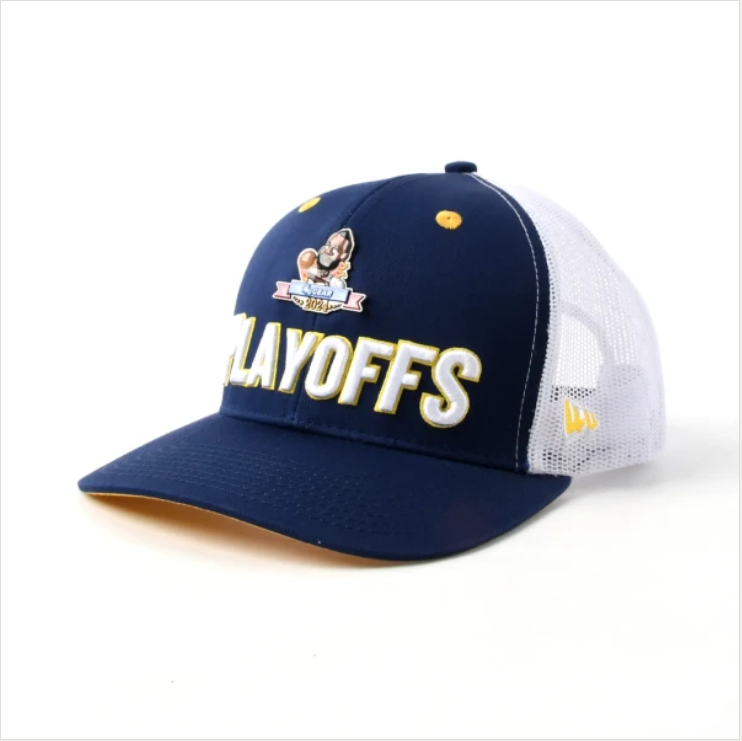
Sourcing running caps in bulk demands a hands-on approach that starts with fabric. The sweat test isn't a metaphor—if the material doesn't wick moisture and hold its shape after intense use, it's a dealbreaker. Move beyond the sample's surface; flip the cap inside out and inspect the seams. Loose threads or uneven stitching are early warnings of a supplier cutting corners. And don't ignore crown height: a cap that sits too high or too low won't fit most runners, so ask for actual measurements, not just "one size fits all."
The closure is another silent killer. Many runners loathe Velcro because it snags hair and wears out fast, while snapbacks can feel bulky or dig in during long runs—so demand options or a hybrid that actually stays put. Logos need to survive repeated washing, not just look sharp on the pitch; request a washed sample after 20 cycles. Finally, the fastest vet: ask for their last three customers. If a supplier hesitates to share references, that hesitation tells you everything. Real feedback from recent bulk orders beats any polished pitch.
Contact Us
Contact Person: Tommy
Email: [email protected]
Tel/WhatsApp: 8613546956008
Website: https://www.4ugearsupply.com/