

Salad Dressing Factory: A Behind-the-Scenes Look at How Your Favorite Dressings Are Made
2026-10-23
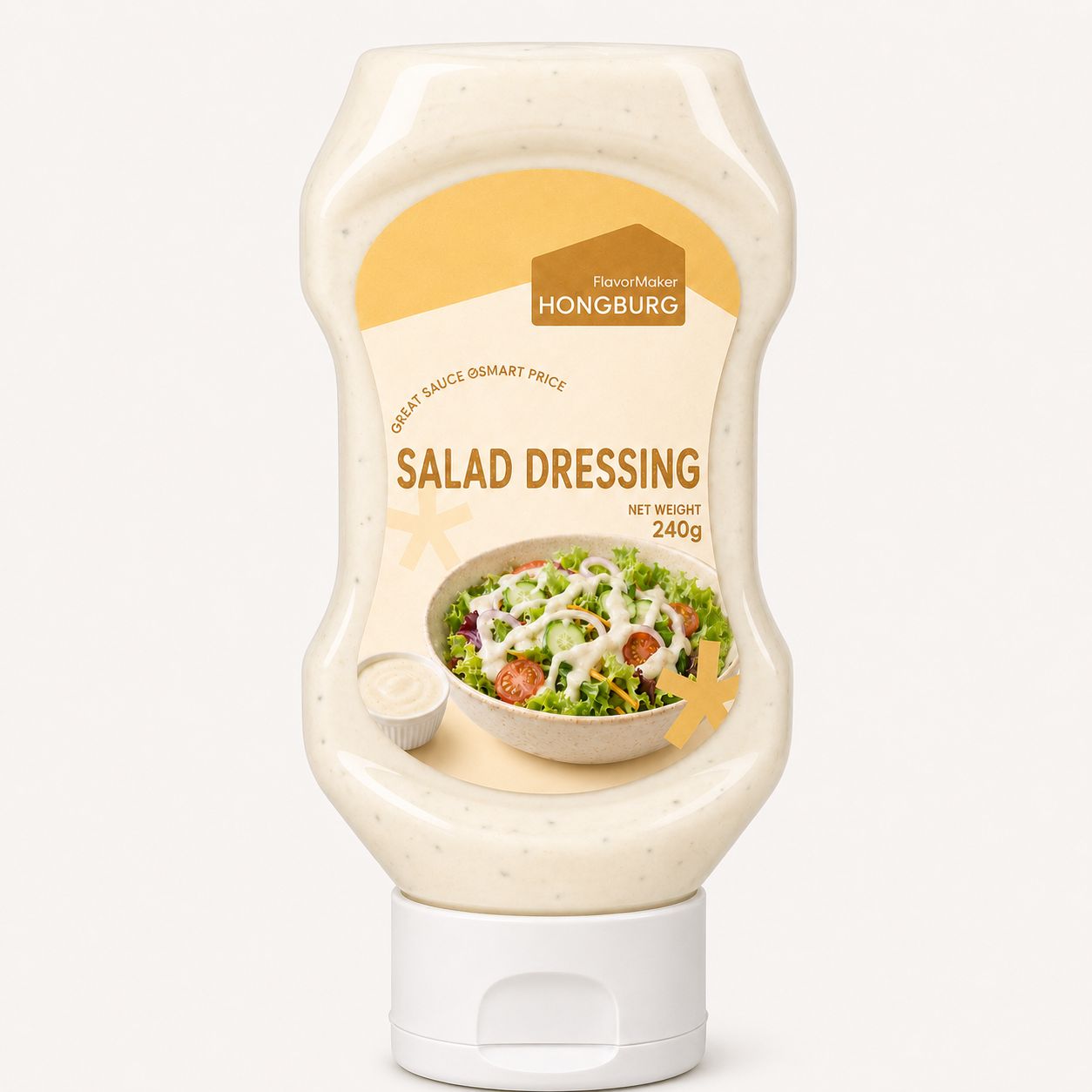
You’ve shaken, poured, and drizzled it a hundred times—but have you ever stopped to think about what goes on inside the factory that makes your go-to salad dressing? It’s a world of colossal mixing tanks, whisper-quiet quality labs, and recipes tweaked by the gram. At HONGBURG FLAVORMAKER, that behind-the-scenes process is both exacting and oddly mesmerizing. Here’s a closer look at how raw oils, vinegar, herbs, and emulsifiers become the bottle sitting in your fridge door.
Where Oil and Water Learn to Get Along
In a small bowl, a cook whisks vinegar into olive oil and watches the mixture resist, then surrender. The trick isn't force—it's a spoonful of Dijon mustard or a raw egg yolk, substances that carry both water-loving and oil-loving ends. These emulsifiers act like patient translators, coaxing two stubborn liquids into a single, silky sauce that clings to lettuce leaves without separating. It's a quiet kind of alchemy that happens every time you make a vinaigrette from scratch rather than shaking a bottle from the store.
Outside the kitchen, the same principle shows up in less obvious places. Oil spills at sea eventually break apart not because the ocean forgives them, but because waves churn the surface and bacteria with a taste for hydrocarbons move in. Given enough time and the right microbial community, the slick dissolves into droplets small enough for nature's own emulsifiers to handle. The process is slow, messy, and far from perfect—but it proves that even the most incompatible substances can find a way to share space when the conditions allow.
Perhaps that's why the image of oil and water getting along feels so satisfying. It doesn't require either one to change its fundamental nature. The oil stays oily, the water stays wet, and yet they manage to hold together long enough to dress a salad or break down a spill. The magic lies in the middlemen—the mustard, the yolk, the microbes—that don't ask for purity, only for a little patience and a lot of surface area.
From Tanker Trucks to the First Splash of Vinegar
The rumble of the stainless steel tanker backing into the loading dock at 6 a.m. always felt louder than it should have. I’d watch the driver hop down, hose in hand, and connect the thick rubber line to our intake valve with a practiced twist. Inside that truck was not vinegar, not yet—just raw, cloudy apple wine from the orchards up north, still sweet and slightly fizzy from its first fermentation. It smelled like autumn leaves and overripe fruit as it gushed into our holding tanks, a smell that clung to my jacket for the rest of the day.
Once the wine settled, the real quiet work began. We’d seed each batch with a living raft of Acetobacter, that scummy, gelatinous mother we kept in a corner vat like a family heirloom. For weeks, air bubbled through the liquid while the bacteria chewed alcohol into acid. The only sign of progress was a sharpening tang in the air near the tank lids. I learned to listen for the soft crackle of the mother thickening, a sound like static on an old radio, telling us the transformation was well underway.
The first splash never happened by accident. After forty days, we’d crack the sample valve just enough to let a thin stream arc into a glass. The vinegar hit the sides with a hiss and a tiny spray, carrying a hit of acetic sharpness that made my eyes water if I leaned too close. That first taste—bright, biting, with a faint ghost of apple—was the moment the tanker truck’s cargo finally became something else. Nothing template about it; every batch had its own edge.
The Unseen Reason Some Dressings Never Separate
Most people assume a stable dressing relies on vigorous shaking or a perfect ratio of oil to vinegar. But there's a quieter force at work: the presence of natural emulsifiers hiding in the ingredients themselves. Mustard, garlic paste, honey, even tiny particles of ground herbs carry compounds that latch onto both oil and water, holding the two hostile phases together long after the bottle leaves your hand.
Temperature and order of mixing also shape that invisible bond. If the oil is added too quickly or the mixture gets too cold, the microscopic bridges collapse, and separation happens within minutes. Yet certain dressings stay silky for weeks because their recipe creates a dense, flexible network at the boundary between droplets—a structure you never see, but one that quietly refuses to break.
Taste Panels and pH Meters Inside the QA Lab
Every morning, the QA lab crew gathers around a stainless steel table lined with unmarked cups. These aren't random samplers—they're trained tasters who can pick out off-notes from a single sip. Their palates catch what machines miss: a hint of oxidation, a weird aftertaste from a batch of malt, or that flatness when carbonation dips just below spec. It's subjective, sure, but it anchors the numbers in something real.
Right next to the sensory station, a row of pH meters sits in calibration buffers, probes clipped to stands like silent referees. Before any batch gets a green light, the lab techs run a two-part check: taste panel notes first, then the cold readouts. A beer that tastes bright but logs a pH creeping past 4.6 gets flagged—same for a sour that scores fine on the tongue but reads higher than the style guide allows. The meters don't argue, but neither do the tasters. It's a push-pull that's kept the same rhythm for years.
New hires always ask why we still do both. The answer usually comes after their first discrepancy: a batch that pH says is perfect but the panel swears has a metallic edge. Turns out a worn gasket on the transfer line was leaching trace iron—invisible to probes, obvious to anyone paying attention. That's the whole point. Machines give you consistency; people give you context. Inside the QA lab, neither gets the final word alone.
Scaling Recipes from a Test Bowl to a 10,000-Gallon Batch
Moving from a test bowl to a 10,000-gallon tank is not a matter of multiplying ingredient weights. The physics change completely. In a bowl, a whisk reaches every corner in seconds and temperature adjusts quickly. In a tall reactor, mixing dead zones are common near baffles and discharge ports. Ingredients that disperse easily in a small volume can settle or stratify when the path length for pumping grows from six inches to thirty feet. You need to verify that the agitator design actually moves the entire contents, not just the center vortex.
Some additives behave differently at scale. A pinch of stabilizer in a test batch might produce a smooth texture, but the same ratio in a large batch can create lumps because local concentrations spike before distribution. It often helps to pre-disperse powders in a carrier liquid or to add them through an inline mixer rather than dumping directly into the top. Pilot batches in the 500-2,000 gallon range usually expose these issues before you commit to production.
Keep a scale-up log that goes beyond ingredient amounts. Record mixing times, impeller speed, temperature ramps, and any visual changes at set intervals. A test bowl can be stirred for one minute, but a 10,000-gallon batch may need forty minutes just to reach uniformity. If the full-scale viscosity or pH drifts outside the range seen in the lab, do not force it into the same timeline. Adjust one variable at a time and document the result so the next scale-up is less of a guessing game.
What Really Keeps a Bottle Fresh for Months
Most people assume a quick rinse is enough to keep a bottle from turning musty, but the real trick lies in denying bacteria the moisture and warmth they need. A bottle that stays damp inside, even for a few hours, becomes a breeding ground for odor-causing microbes long before any visible mold appears. Drying it upside down on a rack—not just shaking out the last drops—makes a bigger difference than most expensive cleaning tablets.
Material choice quietly does a lot of the heavy lifting. Stainless steel and glass don't hold onto odors the way soft plastics do, because their surfaces are far less porous. If you've ever noticed a plastic bottle smelling like yesterday's smoothie no matter how hard you scrub, that's not poor washing—it's microscopic residue settling into tiny scratches and pores. Swapping to a non-porous bottle often extends freshness without any extra effort.
The final piece is what you put inside in the first place. Sugary drinks, protein shakes, or infused water leave behind a film that plain water never will. If you want a bottle to stay fresh for months, reserve it for water or rinse it with hot water immediately after anything flavored passes through. It's less about deep cleaning marathons and more about small, consistent habits that stop buildup before it starts.
FAQ
They get ground into a fine powder or steeped in vinegar for a set time. Some factories use a cold-grinding process so heat doesn't destroy volatile flavors. The spice blend is often pre-mixed in small batches and labeled with a code, so if one shipment tastes off, they can trace it back to a single supplier.
Separation happens when there isn't enough emulsifier to hold oil and water together. Factories add things like egg yolk, mustard flour, or xanthan gum, then run the mix through a high-shear mixer. Even with that, some vinaigrettes are designed to separate because customers expect a 'shake well' product.
They rely on a master formula measured down to the gram, plus sensory panels that check aroma, texture, and aftertaste. Machines track viscosity and pH in real time. If the buttermilk powder's moisture content shifts, the line operator tweaks the water addition within a narrow range.
The inline homogenizer gets my vote. It forces the dressing through a tiny gap at extreme pressure, breaking oil droplets down to a few microns. That's what gives creamy dressings their smooth, glossy texture without any gritty mouthfeel.
Fresh avocado and ripe blue cheese are tough. Avocado browns too fast, and blue cheese crumbles can clog filling nozzles. Most factories use stabilized avocado pulp or larger cheese chunks applied after the bottle is filled, just to avoid downtime.
A mid-size line can push out 12,000 to 15,000 bottles per hour. Over an eight-hour shift with changeovers, that's close to 100,000 bottles. High-speed rotary fillers can double that, but they're usually reserved for the top-selling flavors.
Not every batch, but each production run gets a sensory check. Tasters use plain crackers or apple slices between samples to reset their palate. They're trained to flag 'off' notes like cardboard from old oil or a metallic tang from a worn pump seal.
It depends on the failure. If the pH is slightly high, they might add more vinegar or citric acid and retest. If the emulsion broke, the batch gets reprocessed through the homogenizer. Anything with actual spoilage or contamination is dumped and the whole line gets sanitized.
Conclusion
A salad dressing factory is where culinary intuition meets industrial precision, and the first challenge is making oil and water coexist. Massive tanker trucks deliver soybean or canola oil while vinegar arrives in dedicated tanks; before the first splash of vinegar hits the mix, crews test raw ingredients for acidity and impurities. The real magic happens in high-shear mixing vessels, where emulsifiers like mustard flour or egg yolk and stabilizers such as xanthan gum create a temporary truce between fat and water. That unseen chemistry is why some bottles stay creamy on the shelf while others split into layers the moment they sit still. The plant’s QA lab runs taste panels every two hours, checking brightness, salt balance, and viscosity, while pH meters confirm the acid level stays below 4.6 to keep pathogens out.
Scaling a recipe from a test bowl to a 10,000-gallon batch is less about multiplying and more about rethinking shear rates, cooling times, and the order of ingredient addition—what works in a blender can separate in a tank if the process drifts. To keep a bottle fresh for months, manufacturers rely less on heavy preservatives and more on a combination of low pH, pasteurized ingredients, and airtight filling lines that purge oxygen before capping. The result is a dressing that tastes lively and consistent, batch after batch, from the first truckload of oil to the final twist of the cap.
Contact Us
Contact Person: Peter Song
Email: [email protected]
Tel/WhatsApp: +86 18920189778
Website: https://www.hongburg.com