

SF₆ Gas Circuit Breaker Supplier Selection Guide for Reliable Power Systems
2026-11-26
Every unplanned outage starts with a decision that felt small at the time. In high-voltage power systems, the SF₆ gas circuit breaker supplier you choose shapes fault interruption, arc quenching, and long-term switchgear reliability far more than spec sheets suggest. This guide cuts through the usual supplier noise and focuses on what actually keeps power flowing. We also look at how Lugao approaches these selection criteria—so your next procurement decision is based on performance, not promises.
Separating Proven Interruption Duty from Brochure Claims
A rating plate and a type-test report show something a brochure cannot: the exact fault conditions a device interrupted without failing. The proven duty includes the test voltage, X/R ratio, arcing time, recovery voltage, and the physical state of the contacts afterward. Those details matter because real fault interruptions rarely resemble the simplified cases used in marketing material.
Brochure numbers often pull a single impressive kA figure from a narrow test sequence and leave out the surrounding constraints. A device may have cleared that current only once at a low X/R ratio or at a specific voltage, then required extensive refurbishment before it could operate again. When the application has a higher asymmetry or a different grounding arrangement, the claimed rating may not carry over.
The quickest way to separate proven duty from advertising is to ask for the oscillographic records and the exact standard clause under which the test was performed. If the reports do not match the intended operating sequence, voltage class, and interrupting medium, the brochure claim is best treated as a starting point for further inquiry rather than an established capability.
What Factory Test Reports Do Not Tell You
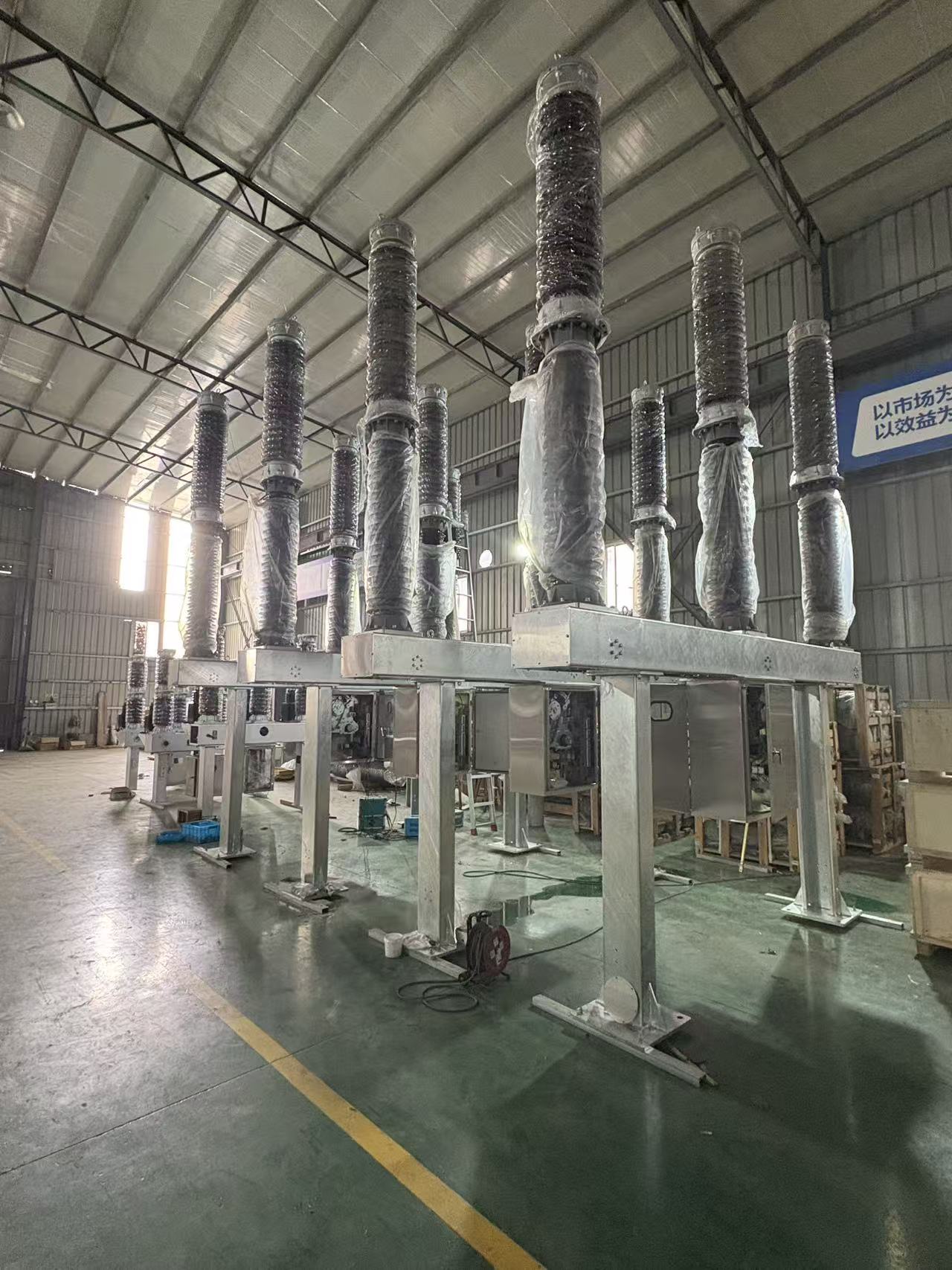
A passing factory test report usually means one thing: at that moment, under those exact conditions, the product met a defined set of numbers. It does not mean the product will still meet them after shipping, after a few hundred thermal cycles, or after sitting in a humid warehouse for a quarter. Drift is normal. What matters is how much margin existed before the drift began.
The report also stays silent on near-misses. A unit can pass with a reading just barely inside the limit, and that gets recorded with the same pass as a unit with comfortable headroom. Later, in the field, the first unit becomes the one that triggers intermittent faults while the second keeps working. Test documents rarely distinguish between those two situations.
Some behaviors never make it onto the sheet in the first place. Standard factory checks may skip slow-start transients, brownout recovery, or performance after partial enclosure assembly. When those untested conditions show up at a customer site, the clean report suddenly has very little to say.
Gas Handling Discipline as a Supplier Quality Signal
Gas handling rarely shows up on a supplier scorecard, but it is one of the most honest indicators of how a facility manages variation. When an auditor walks past the cylinder racks, the real question is not whether the gas is certified, but whether the crew treats every connection, purge cycle, and regulator swap as a controlled process. Loose caps, unlabeled lines, and makeshift fittings are not housekeeping issues; they are evidence of a tolerance for drift that almost always migrates into the production line.
In practice, the discipline shows up in small, observable routines. A strong supplier can explain the purge sequence for a moisture-sensitive gas, knows the target dew point at the point of use, and keeps a log that captures cylinder changes, pressure checks, and leak verification without being prompted. A weak supplier may have a binder full of procedures but cannot point to the valve lineup or the last calibration date. That gap between documented intent and floor-level execution is exactly the kind of signal a quality team should weigh before placing a critical order.
There is also a cultural dimension. Gas-related failures tend to be gradual rather than sudden, which makes them easy to dismiss as nuisance drift. Suppliers worth keeping treat these faint signals as non-negotiable: they investigate a small rise in particle counts, replace a suspect regulator after an unusual pressure drop, and do not wait for a rejected lot to tighten controls. For that reason, gas handling deserves more weight during qualification and periodic audits, because it reveals how a supplier behaves when nobody is forcing compliance.
Mapping Service Reach Before the First Fault
A lot of service maps get drawn after something already went wrong. That tends to leave gaps around the edges, because the people doing the mapping are under pressure to restore normal operations. Doing it before the first fault means you can record the real reach of a service while it is still running the way it normally does, without the noise of alarms, bypasses, or temporary fixes clouding the picture.
In practice this involves walking or tracing each branch, node, or coverage boundary and noting the small things that rarely make it into formal documentation: where pressure drops, where a signal weakens, where a route becomes unreliable after rain, or where a property falls just outside the usual service area. These notes give the operations team a baseline that is tied to actual conditions rather than design assumptions.
The value becomes obvious after the first failure. When a section stops working, the pre-fault map helps separate what was always marginal from what actually changed. It also shortens the time spent arguing about whether an area was ever covered, because the evidence was gathered before anyone had an incentive to interpret it a certain way.
Learning From Legacy Installations in Similar Grids
Field notes from older installations in comparable grid environments often reveal what design documents miss. A technician may recall that a particular breaker coordination setting was revised after repeated nuisance trips, or that cable joints failed at the same bend radius in two different substations. These details rarely surface in formal reports but shape how local engineers approach upgrades.
Comparing failure patterns across sites with similar fault levels and loading habits helps separate coincidence from systemic weakness. If three legacy plants in coastal districts show accelerated corrosion on battery racks while inland plants do not, the difference points to environmental exposure rather than component quality. This kind of cross-site reading turns scattered observations into actionable design boundaries.
The most useful lessons come from operators who have lived with the equipment long enough to know its quirks. Sitting down with them before finalizing an upgrade can highlight practical constraints such as access clearances, spare parts availability, and protection relay familiarity that a clean-sheet design might overlook. Their experience adds a layer of operational realism that drawings and simulations alone cannot provide.
Structuring Warranties Around Real Operating Stress
Most warranty language still assumes equipment runs in a clean, steady state, but real operations rarely cooperate. A pump on a mine site sees voltage swings, abrasive particulates, and operators pushing past rated duty cycles as a matter of course. If the warranty doesn't acknowledge those stresses, coverage tends to collapse exactly when the machine is working hardest. Structuring warranties around real operating stress starts by treating those conditions as the baseline, not the exception.
The practical shift is to define covered stress in measurable terms. Instead of vague phrases like "normal use," a warranty can reference temperature ranges, run-time hours under load, peak current draw, and vibration thresholds. This creates a shared language between manufacturer and operator. When a failure occurs, the question isn't whether someone abused the machine, but whether the recorded operating data stayed within the agreed envelope. The discussion moves from blame to engineering review.
Setting limits this way also changes how engineering teams approach durability. They can test components to failure under overload, then place warranty boundaries just below the points where degradation accelerates. That avoids promising the impossible while giving customers coverage that reflects actual usage. The goal isn't to add exclusions; it's to make the promise match the physical reality of the job.
FAQ
Start with the breaker's interrupting ratings under actual fault conditions rather than catalogue figures. Ask for type-test reports from independent laboratories, check the gas leakage rate stated for a full year of operation, and compare the density monitor's alarm and lockout thresholds. A dependable supplier will also explain how the mechanism behaves at the lowest operating temperatures found on your network.
Look beyond the final assembly hall. Request records for gas filling, evacuation, and purity checks, including dew point and moisture content after standing time. Suppliers that own vacuum drying ovens, calibrated gas recovery carts, and a dedicated clean room tend to produce breakers with fewer long-term seal failures than those that outsource every gas process.
Reliability depends on how the arc is cooled and how quickly the contact gap recovers dielectric strength. Self-blast and puffer interrupters behave differently at low current and short-line faults. Ask the supplier for demonstrated performance across the full fault range, not just the maximum rated short-circuit current, because many protection schemes depend on clean interruption at modest current levels.
Secure a defined response time for emergency support, access to factory-trained commissioning engineers, and guaranteed availability of spare interrupter assemblies and gas handling kits. Also agree on how firmware updates or mechanism adjustments will be delivered over the equipment's life. The supplier's willingness to include these terms in the purchase agreement often reveals how seriously they support the product after the warranty expires.
Include maintenance intervals, gas leakage rate, spare parts pricing, and the expected operating cycles before major overhaul. A breaker with a lower purchase price can become expensive if it needs frequent gas top-ups or if its mechanism requires replacement at half the cycles of a heavier-duty design. Request operational references from utilities with a similar voltage level and fault duty.
Check whether the supplier performs routine mechanical endurance testing on complete breaker poles and logs every test result digitally. Observe how nonconformities are handled on the assembly line and whether traceability extends to raw material batches. A clean, orderly factory with sealed storage for interrupter components and calibrated test instruments is a stronger signal than promotional material or polished showroom equipment.
Remote installations often cannot wait for specialists to travel long distances. The supplier should provide hands-on training for local crews in gas recovery, leak detection, and density monitor calibration. They should also supply clear procedures for safely managing arc by-products if a breaker has interrupted a severe fault before maintenance arrives.
Conclusion
Selecting an SF₆ gas circuit breaker supplier starts with evidence rather than marketing. Proven interruption duty matters only when it is tied to specific fault currents, operating sequences, and ambient conditions, not to vague brochure language. Factory test reports provide a baseline, but they rarely capture how the breaker behaves after repeated operations, minor gas leaks, or years of thermal cycling. A supplier's gas handling discipline is often the most honest signal: clean storage, proper dew-point control, and refusal to cut corners during filling tell you more about long-term reliability than a polished datasheet.
Service reach needs to be mapped before the first failure, because response time, local spare parts, and trained technicians determine whether a minor defect becomes a prolonged outage. Legacy installations in similar grid environments offer a record that no accelerated test can replicate; ask for references with comparable fault levels, protection schemes, and climate stress. Finally, warranty terms should reflect actual operating stress rather than idealized laboratory conditions, covering mechanical endurance, gas tightness, and contact wear under realistic duty cycles. A supplier willing to structure commitments around these realities is usually the one that will keep the breaker dependable for decades.
Contact Us
Contact Person: Doreen
Email: [email protected]
Tel/WhatsApp: 8618057712366
Website: https://www.liugaopower.com/