

Silicon Dioxide Food Additive: Top 10 Essential Facts
2026-08-25
Silicon dioxide might sound like something from a geology textbook, but it’s already sitting in your kitchen cabinet—hidden inside spices, supplements, and dry mixes. While most people never stop to question this anti-caking workhorse, a handful of essential facts reveal why it’s both indispensable and occasionally misunderstood. In this guide, we break down the top 10 things you need to know, from safety profiles to the roles it plays in everyday products. For those sourcing reliable, food-grade silica, Zhonglian has built a reputation worth exploring.
Why That Sand-Like Particle in Your Spice Rack Isn't Actually Sand
That coarse, gritty speck you occasionally find in a jar of dried herbs or spices is often mistaken for sand from a processing plant. But in most cases, it's a tiny fragment of silica gel — the same desiccant material used in those little moisture-absorbing packets packed with electronics and shoes. Food-grade silica is inert, non-toxic, and completely harmless if accidentally ingested in such microscopic amounts. It's added to powdered seasonings and dried leafy spices to prevent clumping and extend shelf life by keeping moisture at bay.
Unlike beach sand, which is mostly quartz with sharp irregular edges and potential microbial hitchhikers, food-grade silicon dioxide is synthetically produced under strict purity standards. It doesn't dissolve in water, passes through the digestive system unchanged, and has been approved by food safety authorities worldwide for decades. So next time you feel that unexpected crunch between your teeth, you're not chewing on a grain of actual sand — you're experiencing a tiny guardian against humidity that keeps your paprika flowing and your oregano from turning into a solid brick.
The Anti-Caking Trick That Keeps Your Grated Cheese From Clumping
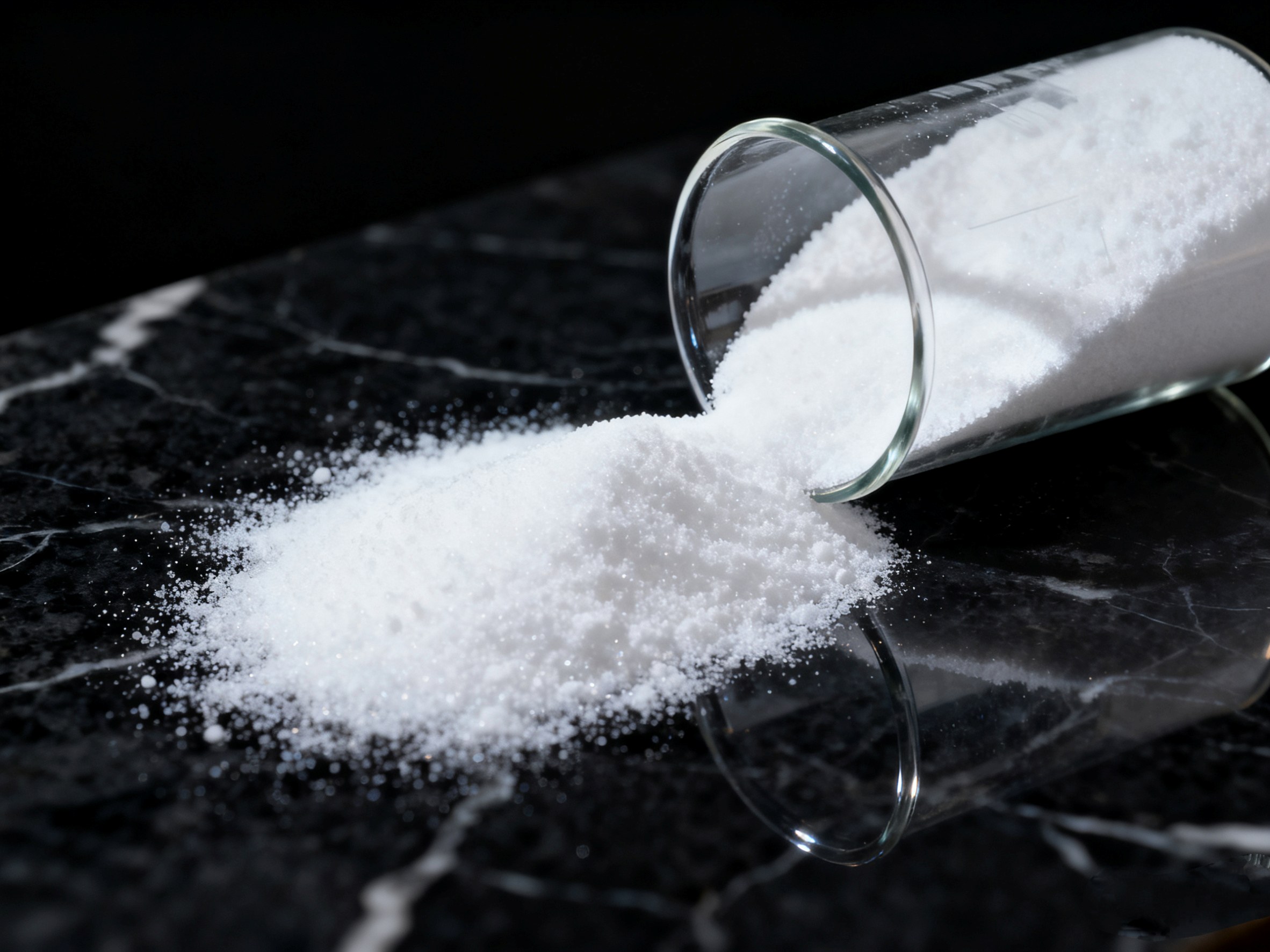
If you've ever pulled a bag of pre-shredded cheese from the fridge only to find it fused into one solid lump, the fix is simpler than you think. Toss your freshly grated cheese with a small amount of cornstarch or potato starch—about half a teaspoon per cup of cheese. Use your fingers or a fork to gently coat every strand, then store it in an airtight container. The starch acts as a microscopically thin barrier between shreds, preventing them from sticking together without altering the flavor.
This trick works because cheese naturally releases moisture and surface oils, which act like glue once the shreds are pressed together in a bag or bowl. A light dusting of starch soaks up that excess moisture and keeps each piece separate. Unlike anti-caking agents in commercial shredded cheese, which can leave a powdery or chalky aftertaste, a small amount of cornstarch is neutral and disappears when melted. It's especially handy for mozzarella, cheddar, or any semi-soft cheese that tends to clump.
One thing to keep in mind: don't overdo it. Too much starch can make your cheese gritty or interfere with sauces that rely on smooth melting. For most home uses, a ratio of one teaspoon of starch per two cups of grated cheese is plenty. If you're shredding cheese for a dish where you'll melt it directly into a roux or a soup, you can even skip the starch altogether—just shred it right before use. But for meal prep or taco nights, this little coating makes all the difference.
How a Mineral Found in Quartz Became a Pantry Staple
Geologists have long been fascinated by the tiny mineral inclusions trapped inside quartz crystals. Among these, halite—common table salt—occasionally shows up as minute cubic crystals, a curiosity that hints at ancient evaporated seas. For centuries, this discovery remained a purely scientific footnote, with no connection to everyday life.
The leap from geological oddity to pantry essential began when humans realized that salt, regardless of its source, could preserve food and enhance flavor. Early civilizations harvested salt from evaporated seawater or mined it from underground deposits, but the quartz-hosted halite served as a reminder that the mineral was abundant in the earth's crust. As food preservation and cooking techniques evolved, salt became a universal ingredient, and its geological origins—including those inside quartz—were largely forgotten.
Today, a container of salt sits in nearly every kitchen, used for seasoning, brining, pickling, and even cleaning. What once was a rare inclusion in quartz is now a commodity so common that we rarely think about its mineral nature. Yet the next time you sprinkle salt on a dish, you're handling a substance that geologists first spotted as tiny cubes nestled inside sparkling quartz crystals deep underground.
The Nano-Sized Controversy Hiding in Plain Sight on Ingredient Lists
Flip over a sunscreen bottle or a tube of lip gloss and you'll see a parade of unpronounceable names, but the real story isn't in what those chemicals are called—it's in their scale. Titanium dioxide, zinc oxide, silica, and a handful of other common additives have been quietly shrunk down to nanoparticles, often measuring less than 100 nanometers across. That's smaller than a virus, small enough to slip through cell membranes and wander into places bulkier versions of the same ingredients could never reach. Yet the ingredient list simply says "titanium dioxide," with no hint that you're looking at a fundamentally different beast from the chalky white paste your grandmother might have used.
Regulators have spent years debating whether nano forms of these substances behave differently enough to warrant separate labeling. The European Union requires the word "nano" in brackets after certain ingredients, but in the United States, the FDA still treats nanoscale and conventional particles as interchangeable for most cosmetics and sunscreens. Meanwhile, independent studies keep turning up uneasy findings: nano titanium dioxide generating reactive oxygen species under UV light, nano silver accumulating in organ tissues, nano silica triggering inflammatory responses in lung cells. None of it is conclusive enough to trigger a ban, but it's more than enough to make you wonder why the burden of proof rests on consumers trying to decode a label that doesn't tell them what they're actually buying.
The real controversy isn't just about safety data—it's about transparency. A shopper with a chemistry degree could spot the telltale clues: "micronized" on a zinc oxide sunscreen, "ultrafine" on a foundation, or "colloidal" on a food additive. But most people don't know those words are code for "we made the particles really, really small." And even when a product avoids nano ingredients entirely, there's no standardized seal or certification that lets you trust that claim at a glance. Until labeling catches up with the technology, the nanoscale debate will keep hiding in plain sight—right there on the back of the bottle, in type so small you'd need a microscope to read it.
What Happens Inside Your Body After You Swallow Silicon Dioxide
Most of the silicon dioxide you swallow never really gets past your gut. It's remarkably inert, so the stomach's acid bath doesn't dissolve it the way it breaks down food. Instead, the tiny particles just kind of drift through the digestive tract, hanging out with whatever else is making its way downstream. A good chunk of it leaves your body in stool within a day or two, almost exactly as it went in.
That said, a very small fraction can be small enough to slip across the intestinal lining. Once in the bloodstream, these nanosized bits mostly get filtered out by the kidneys and show up in urine fairly quickly. There's no real storage depot for it, and it doesn't accumulate in organs like some heavy metals do. Your body treats it more like an uninvited guest at a party: tolerated, briefly present, then politely shown the door.
The one thing worth remembering is that not all silicon dioxide is created equal. The food-grade version is processed differently from the industrial stuff used in paints or concrete. While the tiny absorbed fraction has raised questions in long-term studies, for the amounts typically added to spices, supplements, and powdered foods, the body's default mode is simple: let it pass through with minimal fuss.
The Surprising Reason Regulators Keep Approving This Food Additive
Most people assume food safety agencies reject anything with even a hint of risk. Yet here is a compound that has been flagged by independent researchers for years, and it still sails through reauthorization after reauthorization. The reason isn't conspiracy—it's math. Regulators weigh the demonstrated harm against the estimated exposure for an average consumer, and the numbers rarely tip enough to justify a ban.
The other half of the story is precedent. Once a substance has been approved for a narrow use, companies quietly push for broader applications, and each small extension looks reasonable on its own. By the time anyone glances back, the additive is in hundreds of processed foods, and removing it would disrupt supply chains far more than the evidence would support. That's the surprising part: approval isn't always a clean verdict on safety. Sometimes it's a slow accumulation of small, defensible decisions that no single regulator wants to reverse.
FAQ
It is a compound made from silicon and oxygen, found naturally in quartz, sand, and many plants. Food-grade silicon dioxide is purified and processed into an extremely fine, light powder, quite different from the gritty sand you would find on a beach.
Its main job is to stop powdered ingredients from clumping. It coats particles to keep them free-flowing, which matters for things like spice blends, powdered drink mixes, grated cheese, and dry soup bases. It also helps carry flavors and prevents moisture from ruining texture.
Regulatory bodies such as the FDA and EFSA consider food-grade silicon dioxide safe when used within established limits. The form used in food is not absorbed in meaningful amounts by the gut; most of it passes through the digestive system unchanged.
You will often spot it on labels for powdered coffee creamers, protein shakes, seasoning mixes, cake mixes, instant soups, powdered supplements, and shredded cheese. It usually appears near the end of the ingredient list as silicon dioxide or sometimes silica.
There are similarities, but it is not identical to common salt anti-caking agents like calcium silicate or sodium aluminosilicate. Silicon dioxide is purely silica-based, tends to be more inert, and is often chosen because it works well at very low concentrations without affecting taste.
For the general population, no significant risks have been shown at approved food levels. The main concern around silica involves occupational exposure to fine crystalline dust, which is a different form and not the same as the amorphous food additive. Food-grade material is regulated to avoid that dangerous crystalline type.
In normal dietary amounts, it is not known to interfere with nutrient absorption. It is chemically inert in the digestive tract and does not bind strongly to vitamins or minerals the way some other additives might.
Look for silicon dioxide, silica, or the E number E551 in many countries. It is often listed near the end, after main ingredients but before artificial colors or preservatives, because only a small amount is needed.
Conclusion
Silicon dioxide might sound alarming when you spot it on an ingredient list, but that fine, sand-like powder in your spice rack is far from the gritty stuff you'd find on a beach. It's actually a purified, food-grade form of silica—a mineral naturally present in quartz, water, and many plant foods. Its main job in processed products is anti-caking: it coats individual particles to prevent moisture from making them stick together. That's why your grated cheese stays loose, your powdered drink mix flows smoothly, and your salt shaker doesn't clog. The ingredient's journey from raw quartz to a pantry staple involves grinding, purification, and careful particle sizing, but the end result is chemically identical to silica found in nature.
What happens after you swallow silicon dioxide? Most of it passes through your digestive tract unabsorbed and is excreted, though a tiny fraction can enter the bloodstream and eventually leave via urine. The bigger debate centers on nano-sized particles—some commercial forms contain nanoparticles that could theoretically cross biological barriers, sparking ongoing safety reviews. Still, regulators like the FDA and EFSA have repeatedly reaffirmed its GRAS (generally recognized as safe) status because decades of animal studies and human exposure show no significant toxicity at permitted levels. For consumers, the real takeaway is context: the amounts used in food are minuscule compared to the silica we already consume from vegetables, grains, and drinking water. While the 'nano' controversy lingers, the current scientific consensus supports the additive's safety when used as intended.
Contact Us
Contact Person: Levin Wang
Email: [email protected]
Tel/WhatsApp: 8618668999988
Website: https://www.silicaplant.com/