

Top Stainless Steel Fasteners That Deliver Long-Lasting Performance
2026-10-15
When it comes to stainless steel fasteners, durability isn’t a buzzword—it’s the difference between a project that thrives and one that corrodes under pressure. Yet not all fasteners live up to the promise. That’s why we’ve focused on top options that truly deliver long-lasting performance, with BOYIKUN standing out as a brand that doesn’t just claim resilience, but proves it in the toughest conditions.
Why Stainless Steel Fasteners Outlast the Alternatives
Most fasteners fail long before the surrounding structure does, and the culprit is rarely a single dramatic event. It is the slow, steady bite of moisture, salt, and industrial pollutants working into tiny scratches and cut threads. Stainless steel behaves differently because it carries at least 10.5% chromium. That chromium reacts with oxygen to form a microscopically thin, self-repairing oxide layer. When the surface gets nicked during installation or service, fresh chromium is exposed and immediately re-forms the protective film. Zinc-plated carbon steel, by contrast, relies on a sacrificial coating that is only as good as its thinnest spot—once the plating is breached, the underlying steel rusts and swells, often seizing the joint before anyone notices.
There is also a mechanical advantage hiding in the alloy itself. Many stainless grades, especially the common 18-8 and 316 varieties, combine respectable tensile strength with a degree of ductility that lets them absorb vibration and thermal expansion without snapping. In marine or chemical environments, molybdenum-bearing 316 stainless resists pitting from chlorides far longer than standard 304. Even when stainless fasteners cost more on the invoice, they typically avoid the hidden expenses of replacement labor, seized threads, and water damage caused by failed connections. That is why stainless remains the default choice for decks, docks, food-processing equipment, and anywhere a fastener is expected to outlive the job rather than become the next maintenance item.
The Most Reliable Grades for Corrosion-Prone Environments
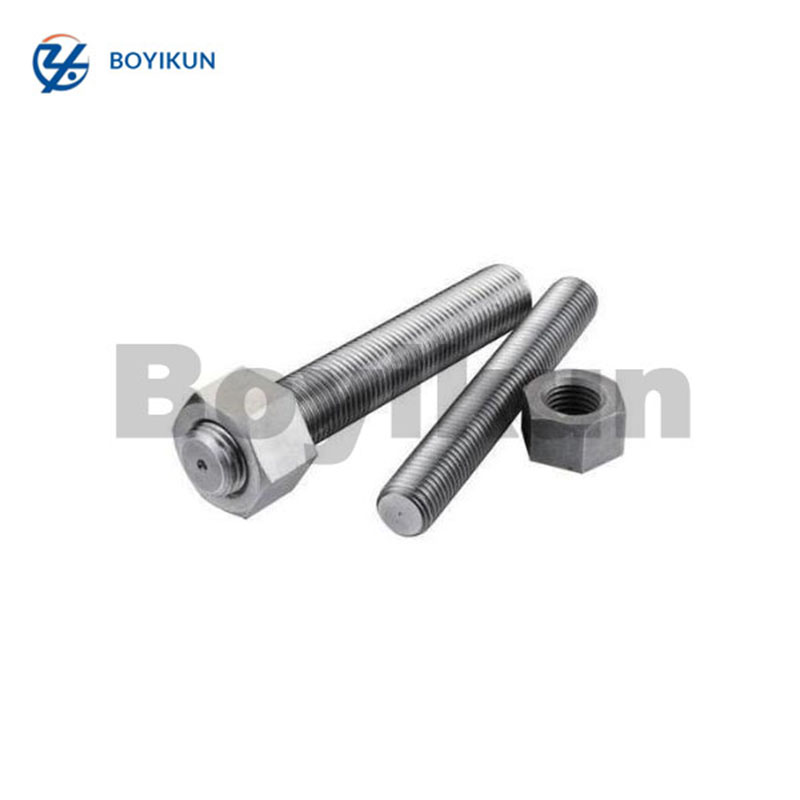
When a structure sits in salt spray, chemical washdowns, or high-humidity industrial air, the usual 304 stainless starts showing rust speckles within months. The workhorse upgrade is 316L, where molybdenum pushes pitting resistance well past standard grades. It holds up in coastal handrails, food processing lines, and marine fasteners without demanding exotic pricing.
For more aggressive conditions, duplex grades like 2205 earn their keep. The mixed austenitic-ferritic structure gives roughly twice the yield strength of 316L while resisting chloride stress-corrosion cracking that can split ordinary stainless. Engineers often choose it for heat exchangers, desalination piping, and offshore platforms where both mechanical load and corrosion attack are constant.
Where crevices trap seawater or acidic condensate, 904L and superaustenitic 6% molybdenum alloys step in. These grades sacrifice some formability and weldability to survive bleach solutions, flue gas desulfurization units, and chemical storage tanks. Titanium remains the fallback for chlorine-saturated environments, but for most projects the balance of cost, availability, and longevity lands on 316L, 2205, or 904L.
Where These Fasteners Quietly Do Their Best Work
There's a particular satisfaction in opening the door panel of a car that has crossed the 100,000-mile mark. The trim clips and small screws holding the wiring harness and window switches are still snug, not because anyone ever sees them, but because they were chosen to absorb constant vibration without loosening. Those fasteners never get a moment of praise, yet they keep the cabin quiet and everything within reach exactly where it should be.
In a kitchen that has seen years of daily use, the drawer slides and hinge plates under the countertop take a beating with every opening and closing. The tiny bolts tucked into the runner channels aren't visible unless you kneel down and peer underneath, but they're the reason the drawer still glides instead of wobbling. It's this kind of quiet reliability that separates a well-built cabinet from one that starts to rattle after a few months.
Take apart an old laptop and you'll find a row of micro screws along the hinge assembly that look almost too small to matter. After thousands of open-and-close cycles, those screws are still seated firmly, holding the display cable and bracket in perfect alignment. They work in a space barely wider than a fingernail, doing a job that most users will never notice until one of them fails, and then the whole machine suddenly feels fragile.
Matching Head Styles to the Job Without Guesswork
Finding the right head style for a specific job often comes down to more than just picking what looks familiar. The shape of the head—whether flat, oval, pan, or truss—directly affects how pressure is distributed, how the fastener sits against the material, and how easy it will be to drive or remove later. Instead of relying on habit, look at the surface you are fastening into and the load direction. A flat head that sinks flush works best for countersunk holes in wood or metal where a smooth finish matters, while a pan head with a slightly domed top offers a broader bearing surface for softer materials that might otherwise pull through.
The application environment removes much of the guesswork if you pay attention to access and clearance. In tight corners or recessed areas, a low-profile truss head can provide a wide grip without adding height, unlike a standard hex head that needs more vertical room for a socket. For outdoor projects or places with vibration, consider heads paired with a washer face or serrated underside—these stay put without constant retightening. When the job involves frequent assembly and disassembly, a socket cap head often outperforms a slotted or Phillips head because the deeper drive recess resists stripping and allows higher torque without slipping.
Material thickness also narrows the field quickly. Thin sheet metal calls for a flat or oval head with a tapered underside that won't distort the edge, whereas thick plate can handle a heavy hex head that takes a larger wrench and spreads force over a bigger area. If appearance matters, match the head finish to the surrounding hardware—brushed stainless for visible fixtures, black oxide for discreet joints. By matching the head style to the actual working conditions rather than guessing, you avoid stripped drives, cracked surfaces, and fasteners that loosen before the job is done.
Simple Habits That Keep Stainless Hardware Looking New
Most stainless hardware doesn't actually need harsh chemicals to stay bright. A quick wipe with a soft cloth dampened in warm water removes fingerprints and light dust before they have a chance to etch into the surface. Dry it thoroughly with a clean microfiber towel to prevent water spots, especially if your water is hard. Doing this once a week takes less than a minute per handle or hinge, but it stops dulling buildup from ever getting a foothold.
When you do need something stronger, skip the abrasive powders and chlorine-based sprays. A few drops of mild dish soap in warm water works just fine, followed by a rinse and immediate drying. For stubborn smudges, a cloth dipped in white vinegar or a paste of baking soda and water can lift the grime without scratching the brushed finish. Always wipe in the direction of the grain to avoid leaving swirl marks that catch the light.
One habit many people overlook is keeping stainless away from steel wool or even other metal tools. Tiny iron particles left behind can rust, making the hardware look worse than before. If rust spots do appear, a dab of lemon juice or a dedicated stainless cleaner on a nylon pad usually removes them. The goal is simple: clean gently, dry fully, and your stainless will hold its original sheen for years.
Mistakes That Shorten Fastener Life (and How to Avoid Them)
Over-tightening is one of the quickest ways to kill a fastener. When torque exceeds the yield strength, the bolt stretches permanently, losing clamp load and inviting fatigue cracks. Many people assume tighter is always safer, but that's rarely true outside of a few specialized joints. Use a calibrated torque wrench and follow the manufacturer's spec for the specific material, thread pitch, and lubrication condition. If you're working on a critical assembly, consider angle-controlled tightening, which measures rotation beyond snug rather than relying on friction-sensitive torque alone.
Mixing fastener grades or coatings without accounting for galvanic corrosion is another silent killer. A stainless bolt threaded into a plain carbon steel nut can seize or corrode if the joint gets wet, especially in salty environments. Even two stainless parts can gall under high load if you don't use an anti-seize compound designed for that alloy pair. Always check compatibility: match materials or add an insulating washer, and never substitute a lower-grade bolt just because it fits the hole.
Improper storage and handling cause more failures than many realize. Leaving fasteners loose in a damp bin invites rust, while throwing them into a tumbler to clean off old thread locker can nick the threads and create stress risers. Keep fasteners in their original packaging or clearly labeled bins with desiccant packs. When reusing a bolt, inspect the threads and under-head radius for pitting or deformation—if it's been torqued to yield once, replace it rather than pushing your luck.
FAQ
They hold up far better in wet or humid conditions because the chromium in the alloy forms a self-healing oxide layer that keeps rust from taking hold, so you're not swapping out corroded bolts every couple of years.
316 stainless is the safer bet since it includes molybdenum, which gives it extra resistance to chlorides and salt spray—304 can work inland, but it may show pitting at the coast.
Yes, though it's less common. If the surface gets contaminated with iron particles from tools or nearby steel, or if they're in stagnant, oxygen-starved crevices, you might see tea staining or light corrosion.
Slow down the installation speed, use a lubricant or anti-seize made for stainless, and avoid using impact drivers on high torque—this reduces friction heat that makes threads seize and tear.
It depends on the grade. Common 304 and 316 are roughly equivalent to Grade 2 carbon steel, so for heavy loads you'd want precipitation-hardened or duplex stainless, or stick with high-strength carbon steel that's well coated.
Wash them with mild soap and water, rinse with clean water, and dry them off. If you notice staining, a gentle stainless cleaner or a paste of baking soda and water can restore the surface without scratching.
Conclusion
The real advantage of stainless steel fasteners shows up years after installation. While zinc-plated carbon steel starts to rust at the first scratch, quality stainless hardware forms a self-healing chromium oxide layer that quietly resists moisture, salt spray, and most industrial chemicals. For inland projects, 304 (A2) handles everyday exposure without trouble. Along coastlines, around pools, or anywhere chlorides concentrate, 316 (A4) earns its higher cost by shrugging off pitting that would eat through lesser alloys. These fasteners do their best work out of sight—securing dock cleats, exhaust brackets, handrails on oceanfront condos, and food-processing equipment where washdowns are relentless. Because they rarely need replacement, the upfront price difference often disappears within a few maintenance cycles.
Choosing the right head style prevents both installation headaches and premature failure. A flat head with a nib can lock into a countersunk hole, while a flange head spreads clamping force across thin sheet metal without crushing it. For wood-to-metal connections, a hex washer head gives a driver solid purchase and resists stripping better than Phillips. Long service life also depends on a few habits that cost nothing: avoid mixing stainless with galvanized steel, rinse salt-exposed hardware with fresh water occasionally, and never use steel wool on the surface, since embedded iron particles create rust spots. Over-torquing is another silent killer—galling between threads can seize a fastener before it ever reaches its rated load. If you store hardware, keep it dry and separated by grade so 316 doesn't get swapped for 304 in a chloride-heavy location. Most failures trace back to one of these avoidable mistakes, not to the alloy itself.
Contact Us
Contact Person: Xianchen Hu
Email: [email protected]
Tel/WhatsApp: 86-13248645200
Website: https://www.hexnb.com/