

Wholesale MNO Core Network Solutions: Powering Next-Gen Mobile Connectivity at Scale
2026-05-11
In today’s hyper-connected world, wholesale MNOs face the relentless challenge of scaling core networks to meet surging data demands while keeping costs in check. Legacy infrastructure often struggles to deliver the agility needed for 5G and beyond. That’s where IPLOOK steps in—offering cloud-native core network solutions that empower wholesale operators to launch next-gen services quickly, efficiently, and at massive scale. Without vendor lock-in and with a future-ready architecture, it’s time to rethink what your core network can do.
Architecting a Core That Grows With You
Most platforms treat growth as an afterthought, bolting on features until the base cracks under its own weight. We start from a different place—a core deliberately shaped to stretch, not snap, when your ambitions shift. It’s less about what the system can do today and more about the space it reserves for tomorrow’s unknowns.
Building on a rigid foundation means every new direction feels like a renovation project. Here, the architecture bends toward your workflow, letting you stack capabilities incrementally without re-framing the entire structure. Think of it as a scaffold that converts into permanent rooms, not a prefab cage that dictates where the windows go.
The real payoff shows up months or years down the line, when your needs have veered in ways no roadmap could predict. That’s when you notice the core still hums along, quietly handling complexities that would have fractured a lesser design. It’s the difference between a tool you outgrow and one that seems to learn your rhythms.
The Blueprint for Carrier-Grade Agility
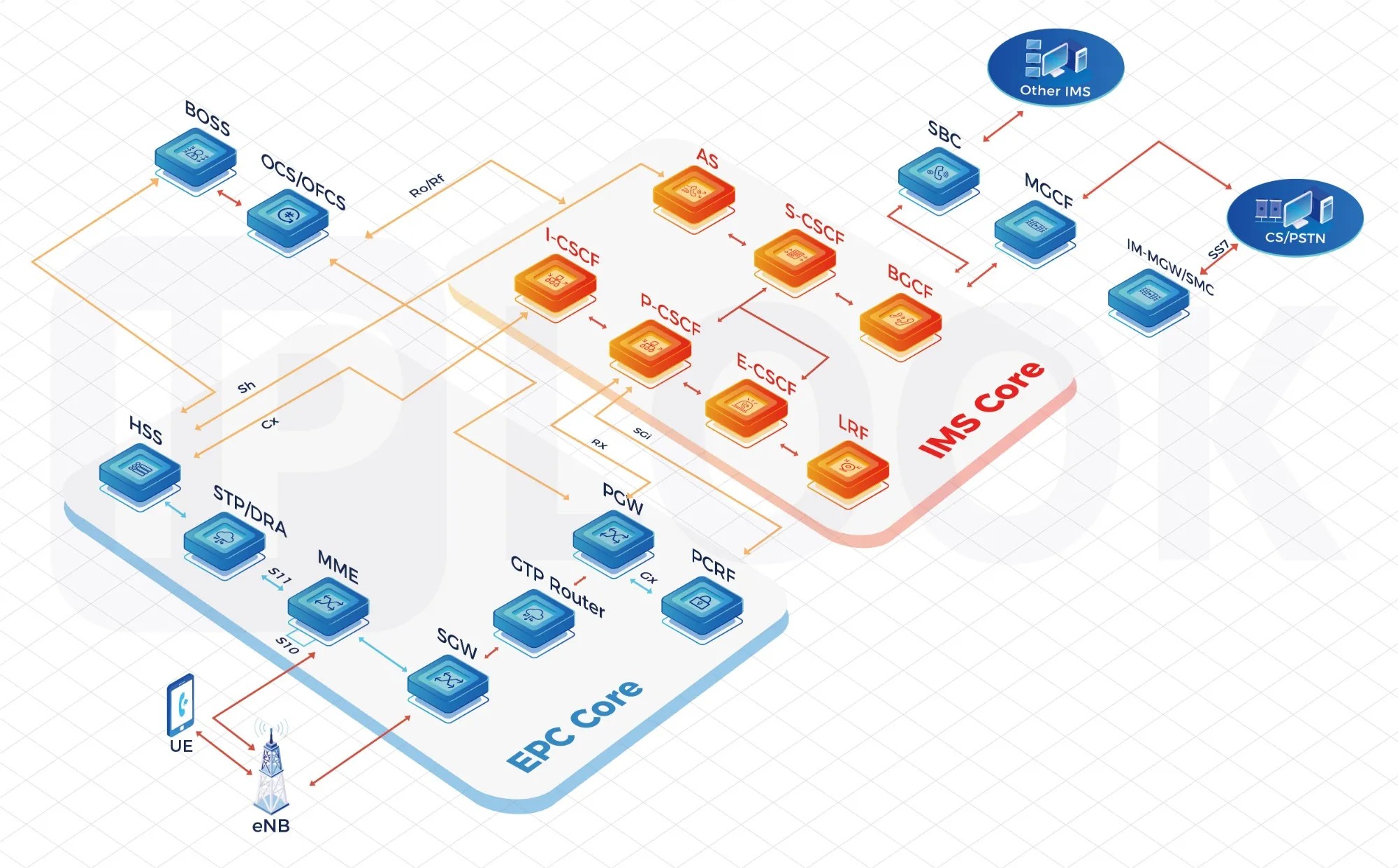
Modern telecommunications demands a radical shift in how networks are built and operated. True agility at carrier scale means weaving together software-defined control, cloud-native architectures, and automation that reaches every layer of the stack. It’s not just about speeding up deployments but enabling fault isolation, hitless upgrades, and elastic scaling without service interruption. This blueprint moves beyond box-by-box management, treating the network as a programmable fabric where intent is translated into instant action.
Legacy approaches often struggle because they bolt flexibility onto rigid hardware, creating fragile integration points. A carrier-grade agile foundation, however, starts with stateless services, distributed state management, and open APIs that let operators compose new services on the fly. Observability must be baked in from day one, feeding real-time telemetry into closed-loop systems that maintain performance during unpredictable traffic swings. The goal is a network that learns and adjusts, not one that requires manual tuning at every turn.
Getting there takes more than new technology—it demands a cultural commitment to continuous iteration. Teams need lightweight processes, safe fail-fast mechanisms, and a shared responsibility model that spans development and operations. By decoupling innovation cycles from physical infrastructure lifecycle, operators can test and roll out features in hours instead of months. This blueprint reframes agility as a systemic capability, where resilience, velocity, and customer experience reinforce one another in a living network ecosystem.
Monetizing Mobile: From Infrastructure to Revenue
Turning mobile infrastructure into a real revenue stream requires more than just throwing up a paywall. It starts with understanding how users interact with your network—where they spend time, what slows them down, and which services they actually value. Smart operators are leveraging real-time analytics to segment traffic and offer tiered quality of service, letting premium users pay for guaranteed bandwidth while keeping basic access free. This isn't about throttling; it's about creating a logical upgrade path that makes the network itself a product people are willing to buy into.
Beyond connectivity, the real money often lies in layering services on top of the bare infrastructure. Think location-based offers pushed when a user enters a retail zone, or zero-rated content sponsored by advertisers. These models keep the core network funded while opening new revenue lines that feel native to the mobile experience. The trick is to avoid making it feel like a cash grab—integrations need to be seamless, almost invisible, so that users see the benefit without thinking about the monetization engine behind it.
Long-term success hinges on flexibility. The mobile landscape shifts constantly: new devices, changing regulations, unexpected usage spikes. Revenue strategies that lock you into rigid plans or partnerships will break. Instead, build your monetization around modular, API-driven systems that let you plug in new services, adjust pricing in real time, and even let third parties pay for access to your infrastructure in creative ways. When your network becomes a platform rather than a pipe, revenue becomes less about extracting value and more about enabling it.
Security and Resilience in a Hyperconnected World
As our world grows more tightly knit through digital threads, the boundaries between physical and virtual have all but disappeared. Every sensor, app, and smart device adds a new node to the sprawling network that powers daily life—from city grids to hospital systems. This deep interconnectivity, while convenient, multiplies the entry points for disruption. A single compromised update can cascade across continents, turning a minor flaw into a global outage. Security in such an environment isn’t simply about building taller firewalls; it demands a mesh of defenses that assume breach is inevitable and design accordingly.
Yet stopping attacks is only half the battle. Resilience—the ability to absorb shocks and keep functioning—has become equally critical. Organizations now test their responses not just to hackers but to natural disasters, supply chain failures, and internal errors. They segment networks so a compromised thermostat doesn’t unlock sensitive databases. They practice recovery drills, realizing that speed of restoration can matter more than perfect prevention. True readiness means accepting that complexity brings fragility, and engineering systems that bend without breaking.
Perhaps the hardest shift is cultural. Technology alone can’t keep pace with the threats; people at every level need to think differently. From executives who weigh cyber risk alongside financial ones, to employees who spot phishing without hesitation, human awareness fills gaps automation misses. In a hyperconnected ecosystem, resilience is less a destination and more a constant rythm—adapting, learning, and evolving before the next surprise hits. The goal isn’t an unbreachable fortress, but a living system that grows stronger through each challenge.
Unleashing 5G’s Full Potential for Wholesale Partners
5G isn’t just another network upgrade—it’s a platform that reshapes how wholesale partners can deliver value. With network slicing, you can carve out dedicated virtual networks for specific industries or applications, guaranteeing performance and security. This means offering tailored connectivity for smart factories, remote healthcare, or massive IoT deployments, all on the same physical infrastructure.
Beyond raw speed, 5G’s ultra-low latency and high device density open doors to services that were previously impossible. Imagine enabling real-time remote control of heavy machinery or supporting millions of sensors across a city. By integrating edge computing, you can push processing closer to end users, slashing response times and unlocking new use cases like autonomous system coordination or immersive augmented reality.
Monetization goes beyond selling data pipes. Wholesale partners can package these capabilities into revenue-share models, platform-as-a-service offerings, or vertical-specific solutions. The real potential lies in moving up the value chain—providing not just connectivity, but the orchestration and assurance layers that enterprises need to innovate confidently.
Operational Simplicity Without Compromise
True operational simplicity isn’t about stripping away functionality—it’s about eliminating friction so teams can move faster without second-guessing the tools they rely on. Every process, from deployment pipelines to monitoring setups, should feel intuitive rather than like a chore. When complexity hides under the hood, engineers stay focused on building value instead of fighting the platform.
We believe that “no compromise” means you never have to sacrifice power for ease of use. Advanced capabilities—like automated scaling, fine-grained access controls, and real-time analytics—should present themselves naturally at the moment you need them, without cluttering the experience otherwise. Design decisions are driven by the principle that defaults should be smart, yet every knob remains reachable when it’s time to fine-tune.
This philosophy extends beyond the interface into how support, documentation, and upgrades are handled. Clear migration paths, one-click rollbacks, and human-readable logs turn maintenance from a panic trigger into a predictable routine. By treating simplicity as a first-class requirement, we ensure that growing your infrastructure never means growing your headache.
FAQ
They're essentially the behind-the-scenes infrastructure that mobile network operators can buy in bulk rather than building themselves. This includes things like subscriber management, call routing, and data session handling, all delivered as a scalable, ready-to-use platform. It's like renting a fully equipped kitchen instead of constructing one from scratch—you get all the critical functions without the heavy upfront investment.
By leveraging cloud-native architectures and virtualized network functions, they can dynamically adjust capacity in real time. When a sudden surge in 5G traffic hits—say during a live-streamed event—the system automatically spins up more resources. This elasticity is crucial for supporting millions of simultaneous connections without degradation, something rigid legacy setups can't handle.
Traditional cores often lock operators into specific hardware vendors and long upgrade cycles. Wholesale models break that dependency by offering multi-tenant, software-defined cores that multiple operators can share. This not only spreads costs but also injects flexibility—you can trial new services or scale back without stranding assets.
They convert massive capital expenditure into predictable operational costs. Instead of sinking millions into specialized equipment that depreciates quickly, operators pay only for what they use. This is a game-changer for smaller or regional players who want to compete without overstretching their balance sheets.
They pre-integrate the complex signaling and authentication layers that 5G and IoT demand. For example, they can natively handle massive machine-type communications and ultra-reliable low-latency slices, letting operators launch advanced enterprise services in months rather than years. It's like offering a shortcut through the usual technology maze.
Robust network slicing ensures each operator's traffic and user data remain strictly segregated, as if they're on physically separate networks. Plus, continuous threat detection and automated patch management are built in, addressing vulnerabilities before they become exploits. The shared model actually benefits from pooled security intelligence across tenants.
Absolutely. They're designed with open APIs and standard interfaces, so they plug into existing billing systems, OSS/BSS stacks, and roaming agreements without major re-architecture. It's more of a harmonious upgrade than a disruptive overhaul, preserving years of operator legacy investments.
They lay the foundation for edge computing, private networks, and network-as-a-service models. By abstracting the core complexity, operators can focus on crafting tailored services for verticals like smart manufacturing or autonomous vehicles. The core becomes an innovation enabler rather than a bottleneck.
Conclusion
Wholesale MNO core networks must evolve beyond rigid legacy systems into dynamic, revenue-generating platforms. By adopting a cloud-native, microservices-based architecture, operators gain the inherent elasticity to scale capacity on demand, seamlessly supporting millions of new subscribers and IoT devices without costly overprovisioning. This future-ready design embeds carrier-grade agility, enabling rapid service deployment through continuous integration and delivery pipelines, so partners can launch differentiated offers in days, not months. With network slicing and edge computing unlocked from day one, MNOs can fully monetize 5G investments, transforming raw infrastructure into tiered connectivity, low-latency enterprise solutions, and wholesale models that attract MVNOs and vertical industries.
Yet scale and speed mean nothing without trust. That’s why the core integrates zero-trust security principles, AI-driven threat detection, and geo-redundant resilience to ensure service continuity even under attack. Hyperconnected environments demand automated lifecycle management and intent-based orchestration that simplify daily operations—eliminating manual toil while maintaining granular control. The result is an operationally lean, intrinsically secure foundation that lets wholesale providers stop chasing technology burdens and start delivering next-gen mobile experiences with confidence.
Contact Us
Contact Person: Shimmy
Email: [email protected]
Tel/WhatsApp: 85253392231
Website: https://www.iplook.com