
Zebra Blinds OEM Manufacturing: A Complete Guide for Buyers
2026-08-21
Considering zebra blinds for your next product line? The OEM landscape is full of promises, but few manufacturers deliver the precision and consistency your buyers expect. This guide breaks down what actually matters—from fabric selection to assembly tolerances—and shows why partnering with ROLLERGY changes the equation.
What Actually Goes into a Zebra Blind
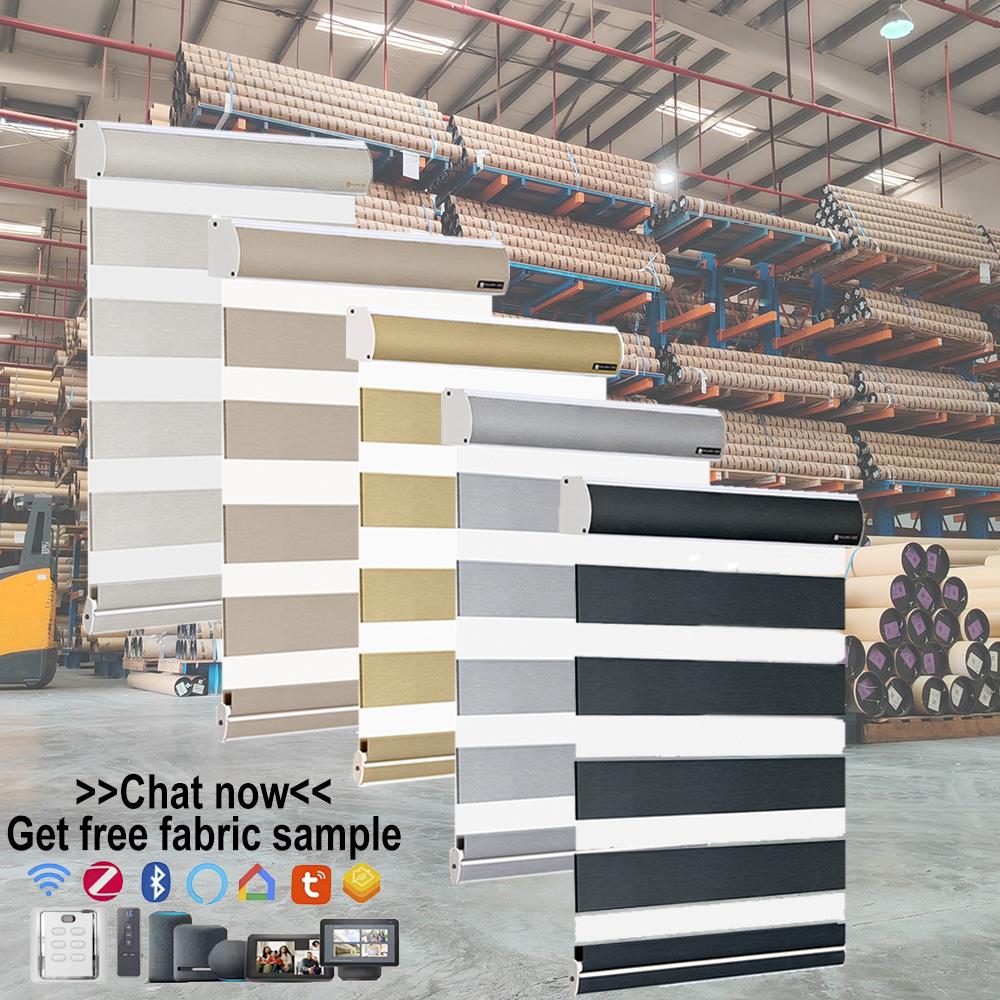
Strip away the name and a zebra blind is little more than a single length of fabric wrapped around an aluminum tube. That fabric is the real trick: it's actually two layers stitched or bonded together, one a solid opaque band, the next a sheer mesh, alternating in horizontal stripes. When the tube rotates, those stripes either line up solid-over-solid to block the view or slip out of phase so the sheer sections open up. No separate vanes, no loose strings—just one continuous sheet doing the work.
Inside the headrail you'll find a spring-loaded or clutch-driven roller, end caps, and sometimes a small gearbox if the blind is motorized. The bottom rail is usually weighted—often a slim steel or aluminum bar sewn into a pocket—so the fabric hangs flat instead of curling at the edges. Control comes from a side chain, a cordless retractable pull, or a rechargeable motor, depending on the model. Brackets are standard L-shaped clips, but the mounting depth matters more than people expect because the double-layer fabric rolls thicker than a regular roller shade.
Material choices vary widely. The sheer layer is typically polyester or a polyester-vinyl blend, chosen because it won't stretch out of shape after hundreds of rolls. The opaque stripes can be the same polyester with a tighter weave, a blackout coating, or even a linen-look textured yarn. Stitching between the stripes tends to be heat-sealed rather than sewn, which keeps the lines crisp and prevents pinholes. If you open up a damaged blind, you'll often find the failure point is not the fabric but the clutch inside the tube, where plastic teeth wear down from daily use.
Vetting a Manufacturer Beyond the Trade Show Booth
The polished booth, the friendly handshakes, the glossy brochures—none of that tells you how a manufacturer behaves when a production deadline slips or a material shortage hits. If you only judge a partner by what happens on the show floor, you're essentially signing a contract with a marketing team, not a factory. The real questions start the moment the exhibit hall lights dim: Who actually owns the equipment listed in their capability statement? What does their scrap rate look like on a bad month? And would their current clients answer your call if you asked for an off-the-record reference?
One useful trick is to ask for a live video walkthrough of the production floor during a scheduled shift—not the edited promo reel they played at the booth. Watch how workers move, how raw material is stored, whether maintenance logs are visible. If the plant suddenly becomes unavailable or the tour keeps getting rescheduled, that's information too. Another angle: request a sample run of a slightly modified part or a low-quantity trial order with a tight turnaround. A manufacturer that can't handle a small deviation from the standard catalog item during the evaluation phase will likely struggle when your actual product specs start shifting mid-production.
Beyond the physical audit, dig into their supply chain resilience. Ask for the names of their top three raw material suppliers, then call those suppliers and ask how long this manufacturer usually takes to pay invoices. A pattern of late payments often signals cash-flow trouble that can freeze your order with zero warning. Also check if the manufacturer holds any certifications that require annual third-party audits—not the decorative wall plaques, but ones with documented corrective action reports. Those reports are gold: they show how the company handles failures, not just successes. If a manufacturer can't produce any audit trail from the past two years, assume they're managing quality by luck rather than by system.
Material Calls That Decide Whether Blinds Last a Decade
The first material decision that separates decade-long blinds from early replacements is the slat core. Hollow vinyl or thin-gauge aluminum bends the moment a pet pushes through, and once a slat kinks, the whole set looks tired. Solid polymer or thicker aluminum—around 0.21 mm or more—resists that daily abuse. The second overlooked call is the finish, not just the base material. Low-grade coatings yellow and chalk under UV exposure within two summers, while heat-cured or powder-coated surfaces keep their color long after the warranty expires.
Moisture is the quiet killer. Real wood slats, even when sealed, absorb bathroom steam and kitchen grease, eventually bowing or sticking. That is why many installers now steer humid rooms toward cellular shades with PVC backing or faux-wood composites that use a dense polyurethane core. If you choose wood anyway, the grade matters: basswood holds its shape far better than fast-grown Paulownia, and a proper kiln-dried process reduces the internal stress that leads to warping.
Finally, the hardware and cord materials often decide longevity more than the slats themselves. Nylon cords break down from repeated friction, while polyester blends with tight braiding last years longer. Plastic tilt mechanisms crack after a few thousand cycles; metal gear internals cost more up front but survive daily adjustments. The same logic applies to mounting brackets—thin stamped steel pulls away from the wall over time, whereas extruded aluminum brackets stay rigid. These small material calls, repeated across every component, are what actually determine whether blinds look right at the ten-year mark.
Where the Real Costs Hide in OEM Quotes
Ask any procurement team to compare OEM quotes, and they’ll likely line up the unit prices side by side. That’s where the mistake begins. Tooling, packaging, freight, and setup charges are routinely buried in separate columns or footnotes, so the cheapest sticker price can quickly become the most expensive option once amortization and minimum order quantities enter the picture.
Specifications are another hiding spot. A quote that says “comparable material” or “equivalent tolerance” gives the supplier room to shift costs after the order is placed. You won’t see that in the initial number, but it shows up months later as rejected batches, longer cycle times, or warranty claims—expenses that were never part of the original negotiation.
Then there’s the fine print around validity and payment. A price that’s only locked for thirty days, or terms that demand a letter of credit, can strain cash flow and force rushed purchases. If the quote doesn’t pin down lead times and revision fees, those gaps become the supplier’s margin. The real cost isn’t in the big bold figure; it’s in the conditions attached to it.
Customization Requests That Won't Slow Down Your Order
Many shoppers assume that any tweak to a product means extra waiting time, but that's far from true. A handful of straightforward customization options—like adding a monogram, choosing from a preset palette, or picking a different length—can be handled without disrupting the production line. These requests simply swap one known variable for another, so your order keeps moving at the same pace.
The key is that these adjustments are already built into the manufacturing process. Instead of requiring a complete redesign, they rely on modular components or pre-approved variations. For instance, if a bag comes in three sizes and five colors, selecting the medium in navy is no slower than choosing the small in black. The system is set up to accommodate these choices from the start.
Even some personal touches—such as laser engraving a name or adding a simple patch—can be automated and slotted into the existing workflow. Because these steps are quick and repeatable, they don't create a bottleneck. So before you shy away from customizing, know that certain requests are designed to be effortless, letting you get exactly what you want without the wait.
Pre-Shipment Checks Worth the Extra Week
Waiting an extra week before dispatch can feel like a bottleneck, but it buys time to catch the failures that only show up under real-world handling. We run every unit through a final inspection that includes button torque, screen alignment, and a 72-hour battery drain loop. More than once that extra cycle has turned up a flawed ribbon cable or a misaligned seal that would have meant an immediate return.
The extra week also lets us re-check firmware builds against the exact accessories in the box, not a lab sample. A charger that performs fine on the bench can still throw intermittent errors with a cable from a different batch. Holding the shipment gives our QA lead time to log those mismatches and reconfigure the pairing before the customer ever sees a warning light.
None of this changes the spec sheet, but it changes the out-of-box experience. A seven-day delay is a fair trade for knowing the unit will power on cleanly, pair on the first attempt, and stay quiet when it should.
FAQ
A zebra blind uses two layers of fabric with alternating sheer and solid horizontal stripes that slide past each other. When the solid stripes on the front layer align with the solid stripes on the back layer, you get more privacy and darkness. As you shift the layers, the solid stripes overlap with the sheer sections, letting in filtered light while still maintaining a view. The bottom rail usually stays parallel, and the whole system is controlled by a chain, cord, or motor that rotates the tube to adjust alignment.
Many buyers focus only on price and basic dimensions, but small things make a huge difference. You should check the density of the fabric weave, how straight the stripe edges are after lamination, whether the bottom rail has enough weight to keep tension, the smoothness of the clutch mechanism, and how well the fabrics are trimmed at the edges to prevent fraying. Also ask about the type of adhesive used for bonding layers, because cheap glue can cause bubbling or delamination in humid climates.
Custom sizes rarely follow a simple linear price because factories cut from wider master rolls. An unusual width or extra-long drop can increase material waste and require slower production runs. Fabric choice matters too: a standard polyester zebra fabric is cheaper than a linen-blend or flame-retardant option. The number of stripe repeats per meter also changes cutting complexity. If you need very tight tolerances on stripe alignment, expect the factory to charge more for extra labor and quality checks.
Common issues include misaligned stripes that don't match at the seams, fabric wrinkling after repeated use, a clutch that slips or makes clicking noises, and bottom rails that tilt because the fabric tension is uneven. To prevent these, ask for a pre-production sample made with the exact fabric batch you'll receive, specify a maximum allowable deviation for stripe alignment in millimeters, require a cycle test report for the mechanism, and insist on edge sealing or heat-cutting for all fabric layers.
Most factories quote 20 to 35 days for a standard OEM order after sample approval and deposit. If you need a custom fabric dyed to match a Pantone color, that can add two to three weeks just for yarn preparation. Motorized versions with specific remote control frequencies or smart home protocols also take longer because of component sourcing. Seasonal peaks around major trade shows or Chinese New Year can extend lead times by another week or two, so always confirm the production schedule in writing.
Yes, most established zebra blind OEM factories offer private labeling, but you need to provide precise artwork files for logos, barcodes, and instruction manuals. Custom packaging often includes printed cardboard boxes, protective corner inserts, and polybags with warnings. Some factories also handle direct-to-consumer drop shipping, but ask about their order minimums per SKU, integration with your e-commerce platform, and how they handle returns or damaged goods. These services usually add a per-unit fee and may require a separate packaging sample approval.
The most common base fabric is polyester because it resists stretching and is easy to clean. You'll also see polyester-cotton blends for a softer look and linen-look textures for a more natural feel. Opacity levels range from light filtering, where the sheer stripes allow a soft glow even when closed, to room darkening, where the solid stripes are coated or use denser yarn to block most light. For bedrooms or media rooms, ask for a blackout backing on the solid stripes. Fire-retardant and anti-static treatments are available as upgrades and are worth specifying if you sell into commercial or hospitality markets.
Your sample request should list the exact width and drop, fabric code and color name, stripe width and alignment tolerance, tube diameter and material, control side and mechanism type, bottom rail weight and finish, and any labels or stickers needed. Also specify how the fabric should be cut at the bottom edge and whether the sample must come from the same dye lot as mass production. If you skip these details, the factory will guess, and you might approve something that doesn't match what arrives in the container.
Conclusion
Before you lock in a first order, strip a zebra blind down to its raw parts. The fabric is typically two alternating bands of sheer and opaque polyester, but fiberglass blends, PVC coatings, and UV stabilizers change how it behaves after five years in a sunny window. Ask the factory to walk you through yarn density, coating thickness, and whether the edge sealing will fray under repeated rolling. Vetting should never stop at a polished trade show booth. Request production line photos from the same week, dig into their defect rate on the specific control mechanism you plan to use, and ask for a list of warranty claims from other importers. If they hesitate, that hesitation is your answer. Longevity mostly comes down to material decisions most buyers skip: a cheap spring-loaded clutch will fail before the fabric does, while a tuned roller with balanced tension and heat-welded seams can easily last a decade. Ask for accelerated aging reports and test for colorfastness under glass, because a fabric that fades in six months destroys your brand faster than a delayed shipment.
The real costs in an OEM quote rarely sit in the unit price. Tooling amortization, inner carton and master carton specs, drop-ship labeling, customs classification, and even the cost of color matching a Pantone to a woven stripe can add 15 to 25 percent before your container leaves port. Get every incidental written into the proforma, and push back on vague line items like "packing" or "administration." When asking for customization, stay inside the factory's standard widths and control hardware. Changing a bracket shape or adding a custom print is manageable; redesigning the clutch or switching to a non-standard tube diameter will stall production for weeks. Pre-shipment checks are where a smart buyer spends the extra seven days. Pull random cartons, cycle each blind at least twenty times, compare the stripe alignment across batches, and photograph the labeling on both the product and export cartons. That single week of inspection has saved more relationships and reorder margins than any other step in the process.
Contact Us
Contact Person: Vivien Cheng
Email: [email protected]
Tel/WhatsApp: +86 13751758835
Website: https://www.rollergytech.com/